
 E-Paper



'No enriched nuclear material will leave Iran': Tehran tells Pakistan army chief Asim Munir amid US peace deal deadlock
Asim Munir is in Tehran as part of Pakistan's renewed push to mediate a peace deal in the conflict between Iran and the US.

 Prefer HTon Google


Iran's security chief Mohsen Rezaei has told Pakistan army chief Asim Munir that Tehran will not allow its enriched uranium to be moved out of the country, while also reiterating that peace talks with the United States would only resume after Iranian demands are met.
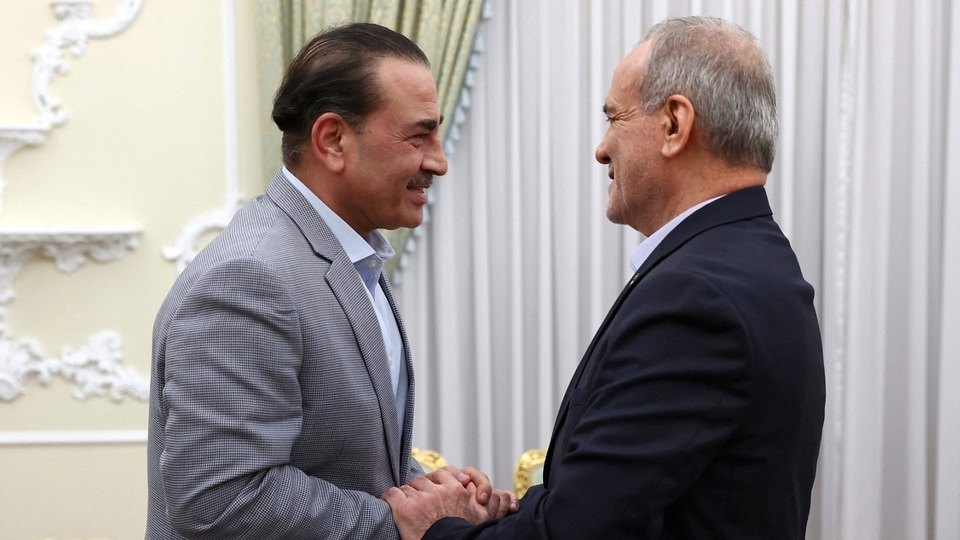
Munir is in Tehran as part of a renewed push to mediate a peace deal in the conflict between the US and Iran. Rezaei, Iran's secretary of the Supreme National Security Council, stated that the nuclear material “constitutes a major asset and national wealth for the Iranian people,” AFP reported.
On dialogue with Washington, Rezaei said, “There will be no negotiations until America takes steps to build trust -- a process that must begin with the fulfilment of Iran's conditions.”
During his meeting with Pakistan's army chief, Rezaei also highlighted Tehran's lack of “trust” in Washington, saying, “Today, our nation does not trust America. It believes that if we enter the negotiations, they (the Americans) will attack us again.”
Rezaei's remarks represent Iran's hardened stance on mediation in the recent past, during which the country has said multiple times that ceasefire talks would only begin after the US accepts its demands. The demands include ending a US blockade on its ports, lifting of all sanctions on Iran's oil exports and the ending of hostilities on all fronts.
Pakistan army chief meets Iran's top leadership
Pakistan army chief Munir, who is on his fifth visit to Iran since June, met the country's top leadership on Tuesday as part of efforts to de-escalate tensions in West Asia.
Munir, who was accompanied by Pakistan's interior minister Mohsin Naqvi, met Iranian President Masoud Pezeshkian, according to Iran's state-run TV. He also met Iran's Parliament Speaker Mohammad Bagher Ghalibaf, who is one of Tehran's chief negotiators.
Ghalibaf too echoed Rezaei's remarks on Iran's eroding “trust” on Washington, while citing what he said were US violations of the earlier ceasefire agreement signed in June. Ghalibaf stressed that Washington must meet Iran's seven conditions, while stating that threats would not change Tehran's strategic decisions, news agency PTI reported.
Ghalibaf's remarks come days after US officials said Washington was reportedly considering using its largest non-nuclear bomb – also known as the “mother of all bombs” – against Iran if Trump orders renewed military operations.
Also Read | 'Hormuz can open in 6 days': Iran urges US to accept conditions, threatens 'enormous damage' if attacked
US-Iran conflict at a volatile impasse
The conflict between Washington and Tehran, which began with US-Israeli strikes on Iran, has dragged on for eight months now. A ceasefire framework was agreed to by both sides in June, but quickly unravelled within a month over sticking points, including navigation in Strait of Hormuz and Iran's nuclear programme.
The latter was one of the issues cited by Trump for the launching of military operations against Iran. The conflict is now locked in a volatile impasse, with Washington demanding a total halt to Iran's nuclear ambitions and exerting economic pressure on Iran through sanctions. Iran has maintained that it would not give up its enriched uranium, while denying seeking any nuclear weapons.


