

 E-Paper


The fight for the soul of the Australian right
Can a special-forces veteran stop the rise of Pauline Hanson?


 Prefer HTon Google


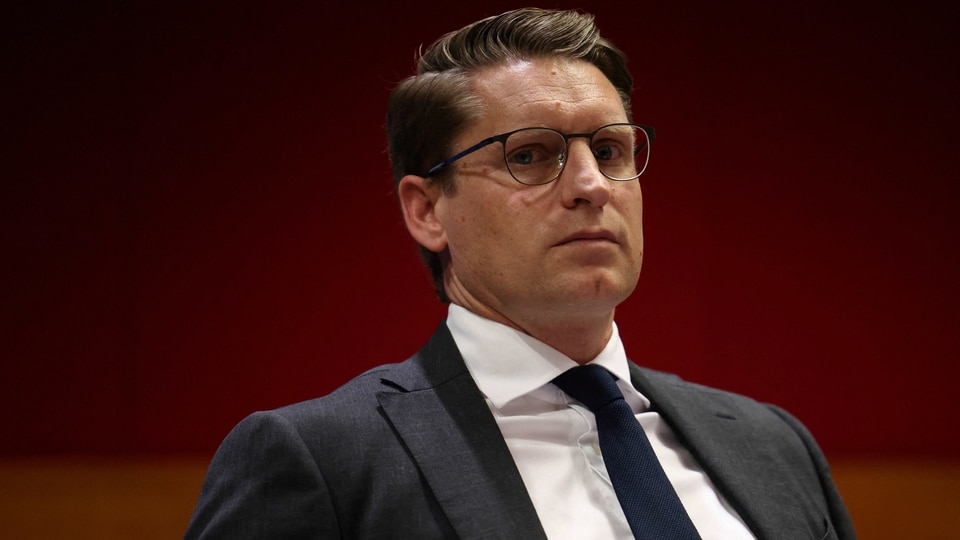
Senator pauline hanson swaggered into Secret Harbour on October 30th like a general inspecting troops in newly conquered territory. It was her first visit since One Nation, her ragtag populist party, won a by-election in the coastal town. The race for a seat in the Western Australia state parliament was the latest in an “orange wave” of wins for One Nation in state and federal elections across the country this year. But Secret Harbour merits special notice, because the town also sits inside the federal constituency of one of Ms Hanson’s most formidable opponents, the special-forces veteran and Liberal Party frontbencher Andrew Hastie (pictured).
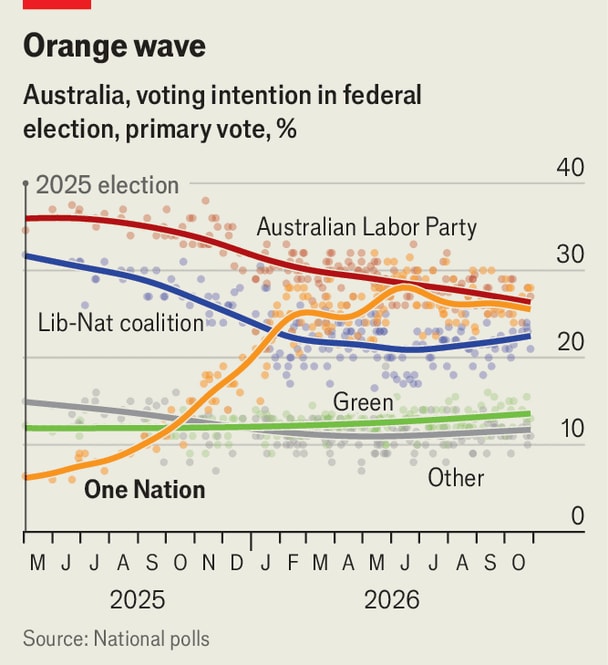
Once dismissed as a gadfly, Ms Hanson is now a force to be reckoned with. In January One Nation passed the Liberals in the polls and has held a steady lead on the right ever since. One Nation is now running neck-and-neck with the governing Labor Party, too. While it still lacks much of the scaffolding of a national organisation, Ms Hanson has shown that she can convert voter anger at the major parties into seats. That has given her party a real shot at replacing the Liberals as the official opposition at the next election, and an outside one at forming the next government.
The election in February of Angus Taylor as the Liberals’ new leader has done little to boost the party’s fortunes. Mr Taylor has mostly avoided confrontation with Ms Hanson, even as she attacks him as a “smarmy management consultant”. Mr Hastie, in contrast, has taken her on directly. Some Liberals argue that he would be a stronger leader than Mr Taylor against a populist challenger like Ms Hanson. “It was obvious that the better choice would have been Hastie,” says Malcolm Turnbull, a former prime minister and Liberal leader. “I’m sure he’ll lead the Liberal party some day—if he doesn’t lose his seat.”
That Mr Hastie might face two such different futures is largely a consequence of one decision that he made: to testify against a fellow soldier accused of war crimes. That has led to an emotional debate on the right, one which Ms Hanson has been eager to use to her advantage. “I was subpoenaed, and then under oath required to tell the truth,” says Mr Hastie in an interview with The Economist in Parliament House in Canberra, the capital. “Would you rather me be in contempt of court and lie?”
Wildly divergent answers to that question have been tearing the Australian right apart since the start of the year. Mr Hastie is now under attack from Ms Hanson and her powerful allies like Gina Rinehart, a mining magnate, and Kerry Stokes, a media baron, some of them once supporters of the Liberals. In July, Ms Hanson published a video calling Mr Hastie a “traitor” and encouraging Liberals to abandon him. The strategy seems to be working. Tony Abbott, the president of the Liberal party and another former prime minister, has distanced himself from Mr Hastie. They are trying, the special forces veteran says, “to destroy me personally”. But the stakes for the Australian right are much greater than that.
The veteran of the elite Special Air Service (SAS) regiment is an unlikely hate figure for the populist right. Mr Hastie has led a push over the past year to drag the Liberal Party to the right on the issues that tend to animate populists in the rich world. On immigration, his call for lower net-migration numbers is now party policy. He’s against women in combat. Like Ms Hanson and many other populists, Mr Hastie bemoans the demise of Australian manufacturing, arguing for more active industrial policy to bring back jobs. But he parts ways with them when it comes to upholding the rule of law.
Mr Hastie links his stand against war crimes to his Christian faith. His testimony against a fellow soldier, he tells supporters, was given under an oath made before God. The son of a Presbyterian minister is more open about his faith than most Australian politicians. “I learned more about politics and leadership watching my father at church than anywhere else,” he says. But, he is at pains to add, “I am not a Christian nationalist.” By contrast, Ms Hanson has called Australia a Christian country while dodging questions about her own religious views.
The lessons from his father’s church sometimes point in unexpected directions. Mr Hastie opposes abortion and gay marriage, but rejects Ms Hanson’s call for a “monocultural” Australia. Worse yet, in his view, are her fans’ calls for racial criteria for immigrants. He recalls his father’s church in Ashfield, then one of Sydney’s most diverse suburbs, which held services in several Asian languages because “everyone is made in God’s image.” Immigrants, he says, should be chosen for their values and skills rather than their ethnicity.
That same philosophy has allowed Mr Hastie to make friends across the aisle. Take Senator Penny Wong, the foreign minister and a Labor stalwart. Ms Wong, gay and born in Malaysia, might seem an unlikely partner. But the two worked well together when Mr Hastie was a backbencher and Ms Wong was in opposition. “It’s always been clear to me…that he is one of the few on his side who believes there is a national interest above partisanship,” says Ms Wong. “While Andrew isn’t really where modern Australia is, he understands that you can’t out-Pauline Pauline.”
That hints at a potential way through for Mr Hastie. Once known as the Liberal Party’s rising right-winger, his fight with One Nation is broadening his appeal. He has no plans to give up his conservative bona fides, but he is seeking out new allies. Within his own party, once-critical moderate grandees like Mr Turnbull now offer cautious praise. At a fundraiser last month 80% of participants were new donors. And he has become a more regular guest on public television and radio shows, whose viewers tend to skew centre-left. That could leave him in a stronger position to lead the Liberal Party in the future.
But first, he must see off Ms Hanson’s campaign to brand him a traitor to the conservative base. And for the moment, he still looks to be under siege. The home-affairs minister has cited unspecified threats in advising police to upgrade security at his home and office. “It’s a bit unnerving,” Mr Hastie says. “But I’m a Christian. I pray about these things, and I’m at peace about it.”


