E-Paper


In 2018, Delaware sank its 325-foot Twin Capes ferry after 43 years of service; the ship now forms part of an offshore artificial reef
A retired ferry that once ran between Lewes and Cape May now rests on the Atlantic seafloor as fish habitat and a dive site off the Delaware coast.

 Prefer HTon Google


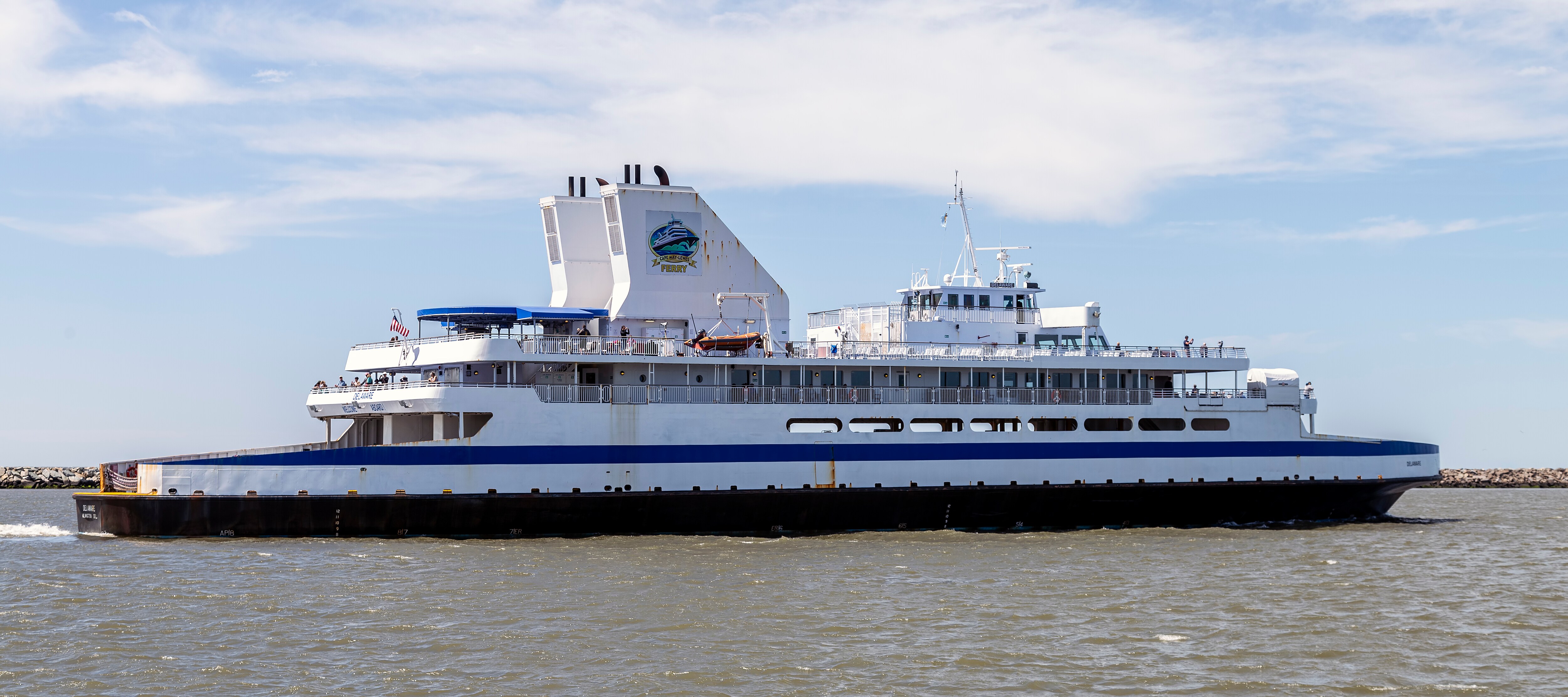
The ferry M/V Twin Capes had been serving passengers for 43 years, traveling between Delaware and New Jersey. The story of this ferry took a new turn on June 15, 2018, when it was sunk intentionally to form part of Delaware's artificial reef complex. According to a 2018 Delaware Department of Natural Resources and Environmental Control (DNREC) press release, the vessel was sunk at 11:55 a.m. at the designated reef site.

The sinking took place at the Del-Jersey-Land Inshore Artificial Reef, which was named for its roughly equal distance from Lewes, Delaware; Cape May, New Jersey; and Ocean City, Maryland. The operation was carried out by Norfolk, Virginia-based marine contracting company Coleen Marine, which had acquired the retired vessel from the Delaware River and Bay Authority in 2017. Its newly created underwater habitat was expected to attract more fish and offer divers a new spot for exploration.
Turning the ferry into an underwater habitat
Twin Capes became one of the first three ferries in the 1970s fleet of the Delaware River and Bay Authority. Launched in 1975, the vessel weighed around 2,100 tons before its major refurbishment in the 1990s. The work included the installation of a new superstructure, four new decks, several lounges, a new pilot house, and distinctive shark-fin smokestacks.
Deep Dive

These features gave the vessel a complex structure that could serve as an artificial reef. Its vertical profile extends approximately 70 feet, providing surfaces and spaces that marine organisms can occupy. Before the sinking, DNREC anticipated that the ferry would attract larger fish, including tunas and sharks, as well as barracudas during certain seasons. The agency also identified recreational diving as one of the main benefits of the deployment.
The Twin Capes joined other large vessels already resting at the Del-Jersey-Land reef, including the U.S. Navy destroyer USS Arthur W. Radford and the Zuni/Tamaroa. At 568 feet, the USS Arthur W. Radford, sunk in 2011, is the longest ship sunk as an artificial reef on the East Coast, according to DNREC. The Zuni/Tamaroa, in contrast, started out as a harbor tug, participated in the Battle of Iwo Jima during WWII, and operated as a U.S. Coast Guard cutter.
What the Delaware Reef Guide tells us
The Delaware Division of Fish and Wildlife's Delaware Reef Guide 2023-2024 lists the vessel as the Twin Capes, a 325-foot ship launched in 1975. Its site is listed as Site 13: the Del-Jersey-Land Reef. The depth of the water is estimated at 121 to 135 feet, a fairly deep dive spot compared to many coastal dive spots.
The guide explains that artificial reefs provide hard surfaces where marine invertebrates can establish communities. These organisms, in turn, offer food and shelter for fish. The resulting three-dimensional structures can perform ecological functions similar to those of natural rocky reefs. At Del-Jersey-Land, the listed marine life includes northern coral, whip coral and anemones, alongside black sea bass, scup, tautog, red hake, bluefish, bluefin tuna and sharks.
The Twin Capes is also featured on the reef guide’s cover alongside the Chesapeake Cruiser, a 215-foot cruise ship sunk at Redbird Reef in 2019. Both vessels were cleaned and prepared for diver exploration before deployment. Their numerous window openings provide additional spaces that fish can use as habitat. The guide presents these ships as part of a wider effort to repurpose large structures for underwater use.
Delaware’s artificial reef network extends well beyond these two vessels. The state has 14 permitted reef sites, with the program incorporating retired ships and other materials, including concrete, subway cars, and tires.
This program is also linked to the economy. The reef guide reports that, in 2021, private-boat anglers made more than 31,000 trips to Delaware's artificial reefs, while charter-boat and head-boat trips exceeded 10,000 and 22,000, respectively. This guide estimates that the program offers annual economic benefits exceeding $6 million to the State. It is mainly funded through the federal Sport Fish Restoration Program, which utilizes taxes from fishing and boating equipment and some federal fuel taxes.
As for the Twin Capes, the ferry-to-reef conversion process meant the end of its ferrying function, but not the end of usefulness of the ship. It became part of a network of underwater structures that serve as habitat for sea organisms and provide destinations for anglers and divers off the Delaware coast.