E-Paper


In 2025, an Arizona researcher spent two weeks in Biosphere 2 with 144 dwarf peas; harvesting them on Day 8 enabled a CO2 comparison
For two weeks, one person shared a sealed Arizona habitat with 144 dwarf peas, and the plants came out on Day 8 to track rising carbon dioxide.

 Prefer HTon Google


In October 2025, a researcher spent two weeks breathing inside a sealed habitat, first alongside 144 dwarf pea plants. The experiment was designed to measure whether the plants could absorb enough of the carbon dioxide released by a human occupant to help regulate air quality in a closed environment.

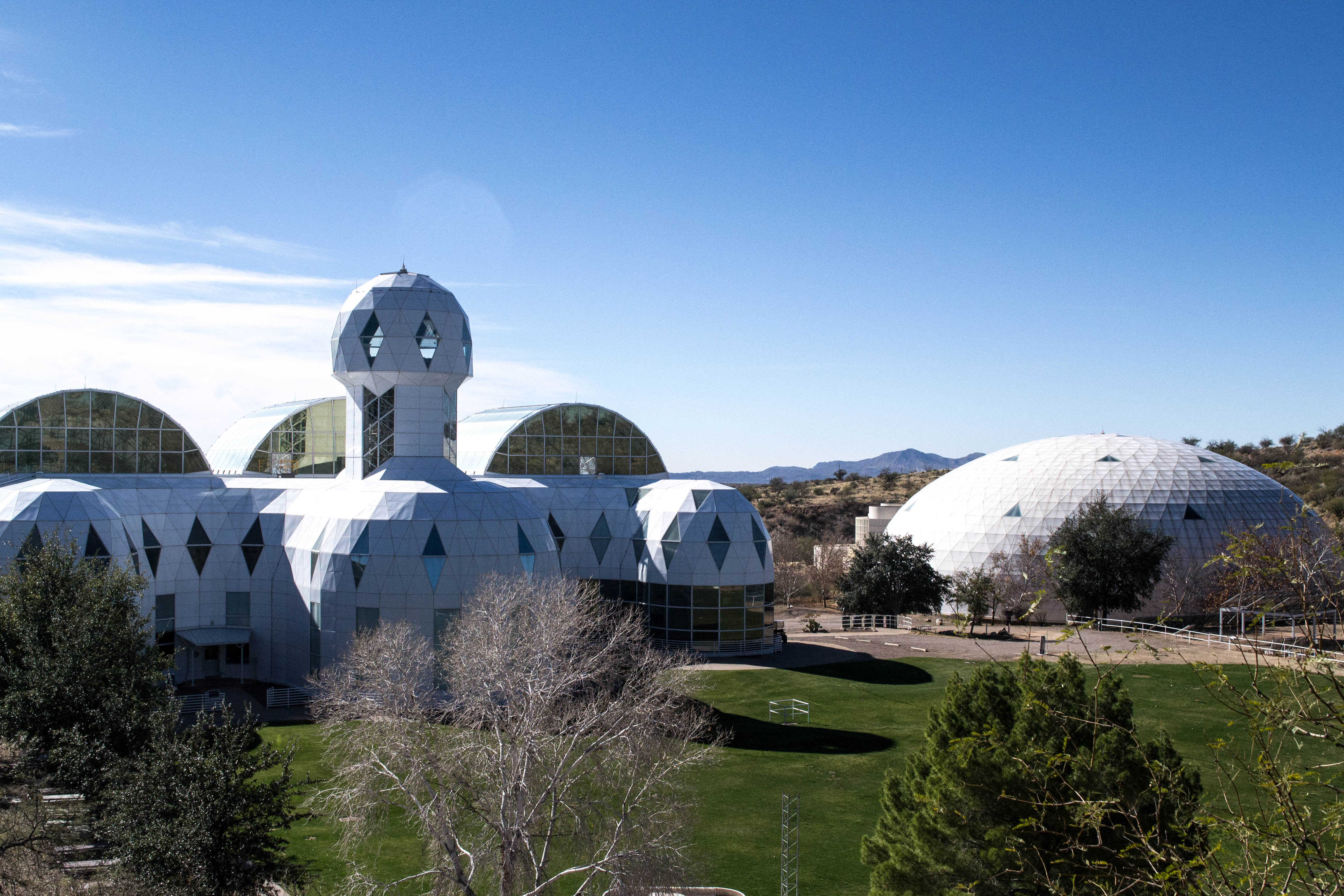
This experiment was conducted within the confines of the Space Analog for the Moon and Mars (SAM) in Biosphere 2 located at the University of Arizona. It involved the measurement of the amount of carbon dioxide that the peas would absorb and the amount of oxygen produced by them in a closed environment using only sunlight, water, and human breathing as inputs. In this experiment, Mattias Beach played the astronaut role. It is described by the University of Arizona as the first bio-regenerative life support experiment that has had human participation in Biosphere 2 since 1994.
Two weeks, two conditions
The design was very straightforward. In the first week, the plants used carbon dioxide from the breath of Beach via the process of photosynthesis to produce oxygen and carbohydrates. On the morning of Day 8, Beach harvested the plants, which were then removed from the habitat through the airlock. The second week acted as a control period, during which carbon dioxide levels could be monitored without plants present to absorb it.
The sensors placed within each of the four chambers of SAM’s testing unit monitored carbon dioxide levels continuously. The airtight conditions prevented outside air from diluting the gas concentrations, allowing researchers to measure even small changes in carbon dioxide levels over time. With this reading, the researchers can determine the amount of carbon captured by the 144 plants. SAM research director Kai Staats also used the sensor data to understand how much carbon dioxide one crew member produced over a single day and how much a pea plant processes. Graduate student Atila Meszaros managed the hydroponic racks with guidance from the university’s Controlled Environment Agriculture Center, and the racks automated water, light, and nutrient delivery to keep conditions stable.
It was not by accident that dwarf plants were selected. They provide a large number of seeds in a relatively small area, allowing astronauts to produce protein food using limited space while also generating seeds for future generations of crops, thereby reducing dependence on food brought from Earth. Space is limited because hydroponic systems require a certain amount of distance between racks. According to Staats, a regular pea plant grows up to two meters in height. What is needed, he said, is a dwarf pea plant that would produce the same amount of peas and oxygen without taking up much space.
Constructing a plant database in space
The pea experiment is just one part of an overall project by Staats and his colleagues to construct an open-access database containing 22 different food plants, including peas, wheat, rice, sweet potatoes, and white potatoes, which will record how well each does in a closed system. The goal is to test all 22 crops under the same conditions. The idea is to help mission planners at organizations like NASA to figure out how many plants and how many square meters of each crop will sustain the astronauts and how much carbon the crops can cycle.
This experiment also fell under a larger program. The experiment took place alongside the World’s Biggest Analog, a joint two-week mission held from October 13 to 27, 2025, that involved 16 space habitat analogs across four continents. As other crew members tested their abilities in operations and psychology, Staats concentrated on proving whether it is possible for plants to regulate the air quality for humans in long-term space missions beyond Earth. Beach, who predicted that someone would reach Mars in the next 30 to 40 years, called the work “real science.”