
 E-Paper



70% JNU teachers feel online education cannot replicate classroom learning: Report
Out of 576 teachers in the varsity, the report states that 310 faculty members were involved in online education, according to the administration.


Even as digital education gains prominence during the Covid-19 lockdown, over 70% of 131 teachers who participated in a survey at Jawaharlal Nehru University (JNU) said online education cannot replicate classroom learning. The findings were published in a report prepared by two former JNU teachers’ association (JNUTA) presidents, Ayesha Kidwai and Atul Sood.
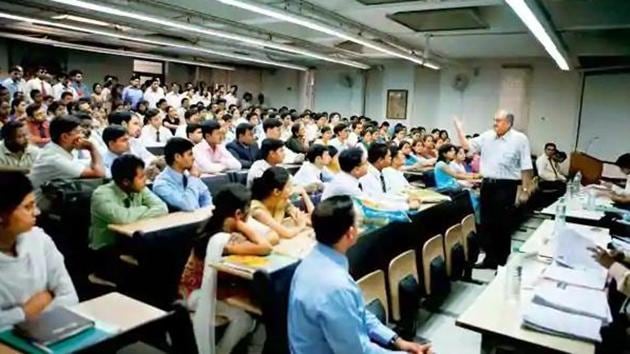
“More than 70% of teachers do not think online education successfully replicates the offline in-person classroom in terms of students’ needs and attainments or creates the conditions for a particularly smooth or fair exercise for the instructor,” the report said.
Out of 576 teachers in the varsity, the report states that 310 faculty members were involved in online education, according to the administration. Kidwai said that the online form was circulated in the university and 131 teachers responded to the survey designed to assess the shortcomings of the online education system and problems faced by students.
According to data submitted by the varsity to MHRD in April, only 35.6% male students and 29.7% female students participated in online education due to a lack of access to the internet, stable bandwidth and requisite devices, the report states.
JNU V-C Jagadesh Kumar did not respond to calls and messages sent by HT seeking his response on the matter.
“Teachers can only conduct exams after teaching has been done. If a student doesn’t have a laptop or internet and cannot receive what I am sending, it is not fair to conduct their examinations online or offline,” said Kidwai, who teaches at the Centre for Linguistics, School of Language, Literature and Culture Studies. Atul Sood teaches at JNU’s School of Social Sciences.
Kidwai also pointed out that several students staying in hostels were sent back to their homes where they don’t have the necessary infrastructure to access online education.
“We are not asking students to come back to the campus risking their health. But institutional practices have to be put in place to facilitate learning. Sending a paper or email is not just online teaching. This is not viable in the long run,” she added.
The recommendations listed in the report include procurement of an institutional licence for online meetings and instructions for the use of teachers and students, a reformulated programme curriculum at Centres and Schools approved by statutory bodies, and allocation of special funds to students from socially and economically disadvantaged sections for digital devices and internet connectivity. The report calls for limiting the scope of ongoing PhDs since Covid-19 pandemic has made fieldwork-based research difficult.
The report recommended a prolonged academic session and delayed admissions. “About two-thirds of the teachers (66.2%) agree admissions for the academic year 2020-21 should be delayed until January 2021 ... An overwhelming percentage of teachers (above 70%) were in support of extending the semester from 45 to 60 days after the date of reopening and conducting in-class evaluations both for continuing and final-year students,” it said.
The report also called for immediate discussion at both informal levels as well as in official statutory bodies including student-faculty committee members, board of studies, and academic council, with the full involvement of student representatives. “It is important that these meetings be held on a video-conferencing platform so that colleagues may actually converse and debate in real-time,” the report said.
JNU students’ union vice-president Saket Moon said, “Online learning or exams cannot be made mandatory due to the digital divide and lack of access to internet. Students who don’t have access should also be accommodated in some way. Administration should facilitate access before pushing for online education.”


Stay updated with all top Cities including, Bengaluru, Delhi, Mumbai and more across India. Stay informed on the latest happenings in World News along with Delhi Election 2025 and Delhi Election Result 2025 Live, New Delhi Election Result Live, Kalkaji Election Result Live at Hindustan Times.


