E-Paper



HT Interview | Domicile quota in private jobs not right approach: Haryana CM Nayab Singh Saini
He highlighted job creation and investment plans, while outlining priorities for industry, skills and urban infrastructure.

 Prefer HTon Google


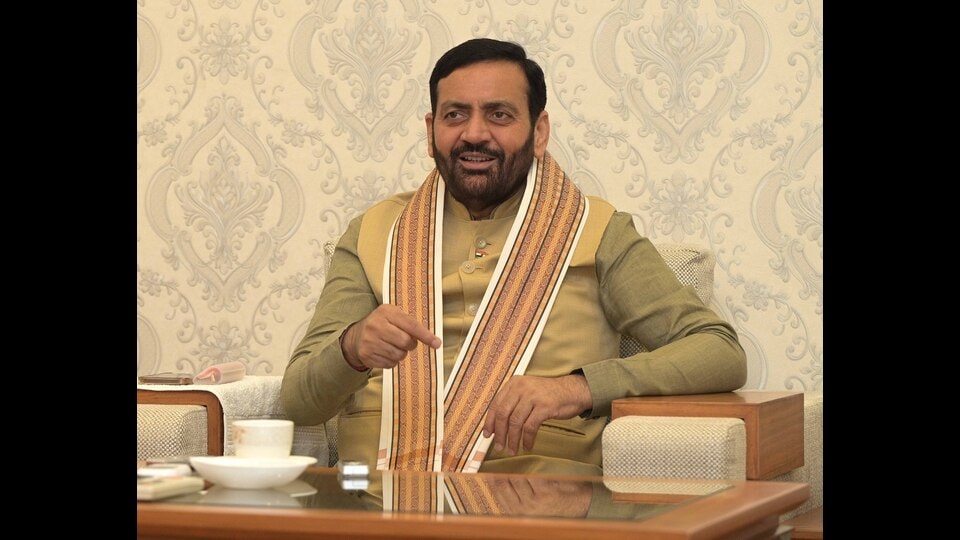
Two years into his government’s tenure, Haryana chief minister Nayab Singh Saini sits firmly in the political saddle, allowing him to focus on fulfilling the over 200 promises outlined in the BJP’s poll manifesto. While his administration has delivered on several welfare pledges, questions remain over employment, law and order, industrial growth, and the quality of urban infrastructure. In a wide-ranging sit-down interview with Hindustan Times at his residence in Chandigarh on Thursday, Saini, 56, spoke about his performance, priorities, and challenges, besides the BJP’s poll prospects in neighbouring Punjab, where he has been making frequent forays ahead of the assembly elections early next year. Edited excerpts:
Government Performance and Commitments
How do you assess your government’s performance after two years in office?
Every government has an agenda outlined in its Sankalp Patra (manifesto). We made 217 commitments to the people, and in the first two years, we have fulfilled 76 of them. Many political parties believe that because they have a five-year mandate, they can wait until the final stretch—closer to the next election when they need votes—to deliver on their promises. However, under the leadership of Prime Minister Narendra Modi, we believe in delivering from the very day we form the government.
What are the major commitments you have fulfilled so far?
One major promise was to procure the entire produce of farmers at the minimum support price (MSP). We fulfilled this in the very first year. Today, every crop grown by Haryana’s farmers is purchased at MSP; it is the state government’s responsibility to ensure that. We implemented the promise to provide ₹2,100 a month to women in our first year itself, transferring more than ₹2,500 crore over the last two years. In contrast, the AAP government in Punjab made a similar promise, yet started paying women just three months before their elections.
We are also providing LPG cylinders at ₹500 to women from families with an annual income of less than ₹1.8 lakh, and free dialysis for all kidney patients. In fact, the very first file I signed after assuming office was to make dialysis free across the state.
Also Read | ₹100 crore green climate resilience fund">Haryana sets up ₹100 crore green climate resilience fund
Employment and Industrial Investment
Employment generation for our youth remains a priority. Over the past 12 years of our party’s rule in Haryana, more than two lakh people have been given government jobs without parchi or kharchi (favouritism or bribery). In the past two years alone, we provided 46,500 jobs, and recruitment for another 16,500 is underway. To attract industrial investment, I announced the development of 10 Industrial Model Townships (IMTs). Land acquisition for the IMTs in Naraingarh and Ambala has reached the final stage. Progress is also steady on the Hisar and Kharkhauda IMTs, we have identified land in Jind, and groundwork is complete for an industrial hub at Nangal Chaudhary. We are actively engaging investors both in India and abroad.
What is the total value of the MoUs signed so far?
We signed MoUs worth ₹4,000 crore in Japan, and nearly 80% of that investment has already moved to the implementation stage. During my recent visit to Mumbai, we signed MoUs worth ₹5,500 crore, while another ₹5,000 crore worth of agreements were inked in Singapore—both are progressing well. I also visited Sweden recently, where investors are exploring land for projects. Overall, since launching our industrial policy, MoUs worth ₹1.1 lakh crore have been signed, and nearly 50% of that investment is already being implemented on the ground.
What is the status of the long-pending Global City project in Gurugram?
We have prepared the detailed project report (DPR) and will enter the tendering process very soon. We have already spent approximately ₹1,100 crore on foundational infrastructure for the project, including the construction of roads and a tunnel.
The opposition frequently targets your government over high unemployment in the state.
The opposition has nothing to offer except falsehoods; they keep making misleading statements simply to stay visible in the public eye. During the Congress regime, the employment system was exploitative. Young people were trapped in a contractor-driven setup where middlemen paid them just ₹3,000 or ₹4,000 a month, while forcing them to work 12 to 14 hours a day. We dismantled that exploitative system by introducing the Haryana Kaushal Rozgar Nigam (HKRN).
Also Read | Viksit Bharat-2047 vision: Haryana to become country’s first fully developed state, says Saini
Law and Order and Punjab Politics
Concerns have also been raised about law and order, particularly extortion calls and gangster-related shootings.
You have raised a valid point, and maintaining law and order is our government’s responsibility. We have successfully deported 22 hardcore criminals from abroad who were making extortion calls from overseas. As a result, such calls have dropped significantly. We are pursuing the remaining offenders as well—two more individuals were recently detained abroad and are in the process of being deported. Overall, the crime rate has declined despite a growing population.
You’ve held several meetings with the Punjab CM (Bhagwant Mann) over the Sutlej-Yamuna Link (SYL) Canal without a breakthrough, with Punjab maintaining it has no surplus water to share. Would you support a scientific reassessment of river waters?
The Supreme Court is monitoring the matter and periodically directs both states to hold parleys. Prime Minister Modi has said that India’s share of river water currently flowing into Pakistan should be utilised domestically. Once that water is harnessed within the country, Punjab will also have access to additional water.
You have been visiting Punjab frequently and have emerged as a prominent BJP campaign face ahead of the assembly polls there. Why this heavy involvement?
The people of Punjab love and respect me. They invite me, and I respond to their affection. They believe Punjab can truly progress under Modi’s leadership. Today, industrialists in Punjab live in fear, and many are migrating out of the state. Women feel unsafe, young people are insecure, and law and order is deteriorating. The AAP government promised to wipe out drugs within six months of taking office. Now, with barely a month left before the elections, Punjab’s youth remain trapped in the drug menace. They also promised 25 lakh jobs, which turned out to be a case of ‘khoda pahaar nikli chuhiya (much ado about nothing)’. People are frustrated by the lack of jobs and rising corruption. Innocent voters backed Arvind Kejriwal believing his party was committed to honesty, but they feel let down.
Why should voters in Punjab choose the BJP?
The people of Punjab are closely watching the BJP’s Haryana model of governance and want to replicate it in their state. The BJP will definitely form the next government in Punjab.
The BJP was previously allied with the Shiromani Akali Dal (SAD). What is your view on renewing that alliance?
Whatever decision the central leadership takes will be acceptable to us. At present, our alliance is directly with the people of Punjab. Union home minister Amit Shah has committed to making Punjab drug-free by 2029. Once the BJP forms the government there, drug traffickers will either abandon their illegal trade or flee the state.
Gurugram’s Civic Infrastructure
Gurugram is a corporate hub, yet it struggles with civic issues — traffic congestion, water shortage, pollution, and monsoon waterlogging. How are you fixing these?
Previously, there were over 100 identified waterlogging hotspots in Gurugram where residents endured flooded roads for days, sometimes weeks. This year, there has been marked improvement. While climate change is causing extreme rainfall that tests even well-established drainage networks, water accumulation in Gurugram is now down to about nine locations—and even there, water drains within an hour or so. We repaired existing rainwater harvesting systems and installed new ones to improve groundwater seepage. We also signed an MoU with a Japanese firm, which is preparing a DPR for Gurugram’s low-lying areas. A dedicated drainage channel will be built to carry rainwater from these areas toward Sohna and eventually into the Yamuna river to prevent flooding.
What about Gurugram’s traffic bottlenecks?
We are building flyovers at high-congestion junctions with the objective of making Gurugram largely signal-free. Two key projects have reached the tendering stage: One at Bhardwaj Chowk, a major choke point, and another flyover on MG Road toward Faridabad, where the DPR is ready and tendering is complete.
How do you plan to resolve the city’s drinking water scarcity?
We have prepared a DPR for a comprehensive drinking water project, with tenders set to be floated within the next fortnight.
New water treatment plants are being developed at multiple locations to ensure Gurugram and Manesar do not face water shortages for the next 50 years. This project will supply about 650 cusecs of drinking water, up sharply from the current supply of around 150 cusecs.
Solid waste management remains a headache for Gurugram’s civic authorities. What is the plan to streamline it?
We have allotted land and signed an MoU with Indian Oil Corporation (IOC) to set up a waste-to-energy plant in Gurugram. The project is moving toward tendering and should be operational within 12 to 18 months so that garbage does not pile up in the city. Additionally, we have awarded a major cleanliness and waste collection contract to an agency handling similar operations in Mumbai and Lucknow, and much of their machinery has already arrived in Gurugram. While the agency handles collection, IOC will process the waste into energy. In all, we signed MoUs for five such plants across Haryana—one each for Gurugram, Faridabad, Hisar, and Ambala, while a plant in Sonepat is already operational.
Also Read | Saini launches portal to address Lal Dora property objections
Policy and Priorities
Several BJP-ruled states like Uttarakhand, Gujarat, and Assam have moved ahead on the Uniform Civil Code (UCC). Where does Haryana stand?
We are working on it as well. The Union home minister (Amit Shah) has said all states should implement the code. However, I cannot give a specific timeline right now as the legislation is currently being drafted.
You recently took a swift decision regarding the privatisation of power distribution in Gurugram and Nuh. With the matter now before APTEL, how do you plan to proceed?
We will not go ahead with privatisation in the power sector. That is our firm decision right now. Instead, our government is focused on strengthening and upgrading the existing power networks.
What are your priorities for the remaining three years of your term?
Our biggest priority is accelerating industrial investment in Haryana. Along with that, we are focusing on education and skill development. I recently commissioned a study to map the gap between industry requirements and the skills our youth possess. The findings were encouraging—it revealed that 60% of young people want private-sector jobs, while 40% prefer government employment.
There has been a debate in Haryana over reserving private-sector jobs for local youth. What is your government’s stand?
Reservation is not the right approach because every Indian should have the freedom to come to Haryana and work. Moreover, suitable candidates are sometimes not available locally, forcing companies to hire from outside the state. Instead, we have introduced an incentive-based model under our new industrial policy.
If a company hires a Haryana domicile, the government will give the employer an incentive of ₹1 lakh per recruit. If they hire a woman or a person with a disability from Haryana, that incentive rises to ₹1.2 lakh per employee. Giving companies a direct financial benefit naturally encourages them to prioritise local youth.
Frequently Asked Questions