E-Paper



2027 Uttar Pradesh polls: As BJP looks to recast ‘jungle raj’ attack, can SP counter it?
In the run-up to the 2027 Uttar Pradesh polls, the BJP is sharpening its long-standing law-and-order narrative against the SP. The strategy is reflected in Yogi’s ‘ask your parents’ appeal to Gen Z while Akhilesh asks party workers to tread with caution on discipline front

 Prefer HTon Google


As the Bharatiya Janata Party recasts the ‘jungle raj’ narrative against the Samajwadi Party in poll-bound Uttar Pradesh, the question arises as to whether the principal Opposition party in the state will be able to counter the pitch.
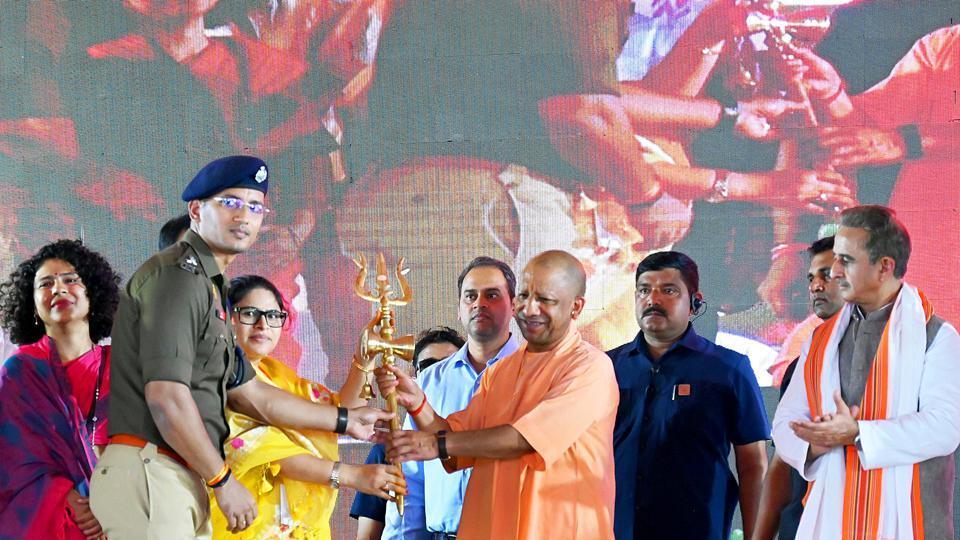
The ruling party strategists are building a “then versus now” campaign that highlights safer streets, reduced organised crime, and investment inflows under chief minister Yogi Adityanath, aiming to neutralise the SP’s caste-based PDA outreach by focusing on governance.
The BJP strategy was reflected when Adityanath called the Samajwadi Party a “shraap” (curse) on Uttar Pradesh, alleging that every time it came to power it brought crime, anarchy, riots and chaos.
Inaugurating development projects in Gonda on November 2, Adityanath addressed younger voters—those now aged 25 to 28 and who were under 15 during the last SP government—and urged them to ask their parents about the curfews and riots, how houses of the poor were looted, how employment was lost, and how the safety of women and girls was compromised.
He contrasted this with the present government’s record of peaceful festivals, improved infrastructure, and zero tolerance for crime.
Union home minister Amit Shah reinforced this line, stressing law and order, corruption, and alleged lawlessness as key attack points against the SP while outlining the BJP’s 2027 roadmap at the party’s state working committee meeting on October 30 in Lucknow.
Law and order remains one of the BJP’s strongest planks, especially among women, urban professionals, and first-time voters who have little direct memory of the earlier era.
In the 2022 assembly polls too, the BJP raised a similar law and order pitch against the SP after the two parties seemed locked in a neck-and-neck race until the third phase of the seven-phase elections. The script changed thereafter and the BJP went on to win a second successive term in the state under Yogi.
Perhaps wary of the BJP ploy this time, Akhilesh Yadav, after recent Legislative Council election successes, instructed workers against holding victory processions or creating any public commotion. He warned of potential conspiracies and false allegations designed to tarnish the party’s image ahead of the assembly polls.
Earlier on August 29, 2026, Yadav reinforced the message of discipline by redefining his core political acronym, “PDA” (originally Pichhde, Dalit, Alpsankhyak) to mean “Patience, Discipline, Action” in a graphic shared on X (formerly Twitter), highlighting these three traits as keys to success for the upcoming 2027 elections.
Reacting to the recent attacks by the BJP leadership on the SP regarding law and order, former MLC and senior SP leader Udaiveer Singh said, “The statements by CM Yogi Adityanath are a proof that even they have acknowledged the Samajwadi Party is forming the government in UP in 2027. Also they (BJP) want us to become defensive and not speak about their failures.”
With both sides already in campaign mode, the law and order plank is set to remain central to the 2027 contest in India’s most populous state.
The SP national president has told cadres to strengthen booths, remain united, and be more careful in 2027 than in 2022, while accusing the BJP of conspiracies.
He has worked to reposition the SP away from the “goonda raj” and hooliganism tag associated with earlier regimes.
UP BJP chief spokesperson Dinesh Pratap Singh said, “Today’s youngsters do not know what UP looked like during the SP regime, which featured disrupted electricity supply, ‘goonda-gardi’, and mafia raj. They should ask their parents to learn about it.”
“Samajwadi Party people have already started threatening by saying that they are noting down the names of officers and making a list of BJP workers. This has been their character, they have supported and strengthened the mafia rule. Now the people of UP do not want to go back to the pre-2017 era, they want development and good governance.”
Last year, the ‘jungle raj’ campaign played out during the assembly polls in Bihar where Prime Minister Narendra Modi repeatedly highlighted provocative Bhojpuri and Magahi songs circulating among RJD supporters.
Those songs glorified gun culture, with lyrics referring to celebrating Diwali with double-barrel guns, becoming “rangdaar” under a Tejashwi Yadav government, and even threatening to lift people from their homes at gunpoint once “bhaiya” returned to power. Modi played or recited lines from these tracks in rallies, warning voters that such content signalled a return to the lawlessness associated with the Lalu Prasad Yadav era. The messaging helped reinforce the NDA’s governance contrast.
Shortly after the Bihar results, Akhilesh Yadav publicly appealed to folk singers and artists not to create similar songs linked to the SP or him.
In mid-March 2026, while addressing workers at the party headquarters during a ‘Digital Democracy Dialogue’ programme, Akhilesh Yadav specifically urged restraint and discipline.
Around October 15, he advised party workers to remain disciplined and avoid any behaviour that could give anyone cause to complain.