
 E-Paper



India, Russia in talks to acquire 5 more S-400 air defence systems
The Russian S-400 system ensured that Pak Air Force did not fly east of Indus on May 10 during Operation Sindoor.

 Prefer HTon Google


Top defence ministry officials will meet their Russian counterparts this week to consider either joint manufacture or outright purchase of five more S-400 air defence systems from Moscow with an objective of enhancing India’s long range defensive capabilities.
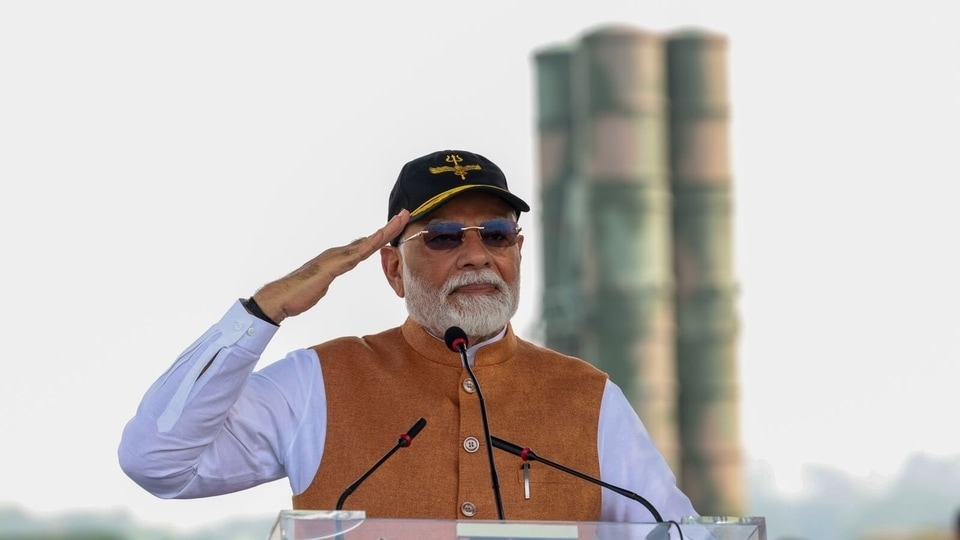
The deal is expected to be given a green signal before Russian President Vladimir Putin arrives in India on December 5 for the annual summit with Prime Minister Narendra Modi.
While two of the five S-400 systems, part of the October 5, 2018, $5.43 billion deal, will be delivered by 2026-end, India and Russia are talking about the purchase of another five systems to protect any attack across the country’s 7000-km-plus coastline and to plug the air defence gap in the northern command area.
HT learns that the two sides have already agreed on the cost of the additional five systems with annual escalation from the 2018 price. The modalities are not final yet and there’s talk that three of the five systems will be purchased outright and the remaining will be built by Indian private sector companies under transfer of technology route.

The deal will be government to government with maintenance, repair and overhaul facilities set up in collaboration with the Indian private sector, people familiar with the matter said on condition of anonymity. They added that reports of India buying the S-500 system are incorrect as such a system is still on the drawing board in Russia.
India is also looking for a RVV-BD, a more than 200 km range air to air missile, from Russia to make its Su-30 MKI fleet more potent as even Pakistan is operating Chinese built 200 km range PL 15 air to air missile and used it against India during Operation Sindoor. The Russian R-37 missile or RVV-BD will have to be integrated into Su-30 MKI with upgradation of the on-board radar of the Russian developed fighter.
Although IAF’s chief Air Chief Marshal Amar Preet Singh talked about his force considering the possibility of acquiring the Su-57 Russian fifth generation fighter, the government is still to take any view on that as well as on the US F-35 fighter.
The Russian S-400 Triumf system lived up to expectations during Operation Sindoor in term of its attack capability as well as its survival as Pakistan repeatedly targeted the system at Adampur and Bhuj air base using Chinese long range weapons. After the initial attack on May 7, such was the fear of the S-400 system that Pakistan had to move all its air assets beyond 300 km from Indian border with hardly any aircraft getting airborne on May 10. The S-400 long range missiles not only took down a Pak ELINT aircraft 314 km away in Punjab, Pakistan but also brought down Pakistan F-16 and JF-17 fighters up north. S-400 proved not only to be a powerful stand-off weapon but also served as a huge deterrent against Pakistan air borne offensive.


