
 E-Paper



Master Plan 2047: What Delhi can learn from Tamil Nadu on rental housing
The success of the southern state lies in its approach that treats rental housing as industrial infrastructure rather than a standalone real-estate product.

 Prefer HTon Google


To accommodate the large number of migrant workers arriving in the city, the newly notified Master Plan for Delhi 2047 has incorporated rental housing into the city’s statutory planning framework for the first time.
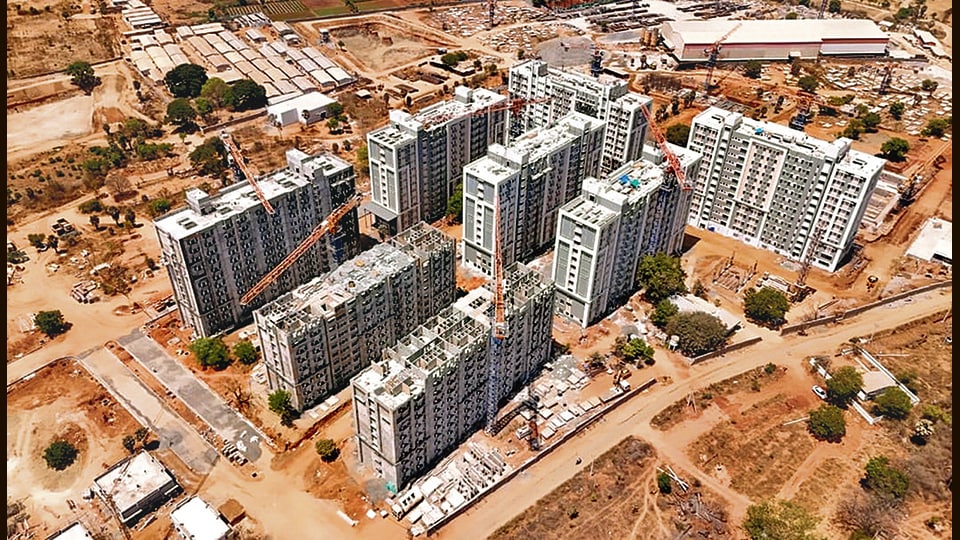
It also renewed optimism for the Centre’s six-year-old initiative to develop formal rental housing under the flagship Pradhan Mantri Awas Yojana-Urban (PMAY-U), which has resulted in fewer than 47,000 occupied units nationwide, with as many as 40,630 in just one state—Tamil Nadu. The success of the southern state lies in its approach that treats rental housing as industrial infrastructure rather than a standalone real-estate product.
According to Delhi MP 2047, notified last week, Affordable Rental Housing Complexes (ARHC) will come as single-bedroom and double-bedroom units, with carpet areas of up to 30 sqm and 60 sqm respectively, as well as dormitories and basic common facilities. Dedicated ARHC premises will be allowed a maximum floor area ratio (FAR) of 300, subject to a minimum plot size of 2,000 sqm and a 12-metre abutting road.
To curb misuse, residents will hold “licence rights” rather than tenancy rights, with a minimum tenure of three months and a maximum of three years. No more than one-third of dwelling units in an ARHC project can be in the double-bedroom format.
Much like Tamil Nadu, the Delhi Master Plan will also allow industrial plots and parks to be used for worker housing and ARHCs, while rental housing will be permitted under upcoming unauthorised-colony regeneration schemes. Public agencies can outsource operations to professional rental management agencies and work with housing aggregators to improve listings and transparency, the master plan proposes.
Also Read | Delhi master plan: FAQs, creatives rolled out for public outreach
A national scheme that has not scaled
The Delhi framework is being introduced against a backdrop of limited progress under the Centre’s ARHC sub-scheme, carved out of the PMAY-U in 2020 specifically to provide cheap, dignified rental units close to workplaces for migrants who cannot buy homes because of high costs and job mobility.
According to the UN-Habitat World Cities Report 2026, urban homelessness in India stands at 13 per 10,000 people, while the share of affordable housing in new supply in the country’s eight largest cities declined from 52% in 2018 to 17% in 2025.
But under ARHC, among the 83,534 vacant government houses identified nationally for conversion under Model-1, only 5,783, about 7%, have become rental housing, with just 80% of those occupied. Another 7,413 units are “under process” across Gujarat, Himachal Pradesh, Haryana, Madhya Pradesh and Rajasthan.
A separate industrial housing scheme meant to complement ARHC is similarly stalled. It received its first dedicated budget allocation of ₹2,500 crore in 2025-26, but this was cut to zero at the revised estimate stage. Its 2026-27 budget estimate has fallen to ₹400 crore. The union housing and urban affairs ministry told the parliamentary panel in a parliamentary standing committee report tabled on August 11 that the scheme remains “under conceptualisation”, with stakeholder consultations continuing before it can go to the cabinet for approval.
Also Read | Delhi opens door for 100-plus floor buildings under Master Plan 2047
Why ARHC is not working
A senior municipal official in Gujarat’s Rajkot pointed to the dearth of interested private players in converting the 698 chosen units into rental housing units. “Even after tenders were floated, selected bidders refused to take up operations. Subsequent attempts to find an operator also failed,” the official said.
Jaikishan Challa, chief executive of Curated Living Solutions, said the deeper problem is the mismatch between traditional real estate and rental housing. “It requires long-term asset management, institutional financing and operational capabilities that are often missing from the current market players,” he said, adding that without dedicated state rental policies, fiscal incentives and regulatory support, private-sector participation is likely to stay limited.
Delhi and Maharashtra, which together account for 61,457 identified vacant houses, illustrate the same pattern. The ministry told a parliamentary panel these were “not feasible” for conversion “due to various reasons”, without specifying what those reasons were.
Justin Jebakumar of Habitat for Humanity India, which helps beneficiaries access formal finance for such housing, said that in most cases, the reason is logistics: “Much of the existing housing stock deemed for rental is either too far from employment hubs, social infrastructure such as schools, anganwadis or hospitals, pushing blue-collar workers toward informal settlements charging ₹3,000-4,000 a month without formal protections.”
Under Model-2 (new construction), 83,298 units have been approved across India so far, of which 40,630 are complete, according to a reply in Parliament on August 10, and all of them are in Tamil Nadu. The other six states with approved projects—Chhattisgarh, Assam, Uttar Pradesh, Gujarat, Telangana and Andhra Pradesh—account for 21,887 units sanctioned for entities, including Indian Oil Corporation and Sivani Infra, none of which have been completed.
Tamil Nadu alone accounts for 61,411 (74%) of the 83,298 approved Model-2 units and all 40,630 completed ones, built mainly by SPR City Estates and SPR Construction in Sriperumbudur, Tata Electronics in Hosur, and the State Industries Promotion Corporation of Tamil Nadu (SIPCOT) in Chennai.
Also Read | Delhi master plan introduces ‘negative list’ of activities for residential, commercial zones
What Tamil Nadu is doing differently
Under PMAY’s ARHC, new projects using approved innovative construction technologies can receive a technology innovation grant of ₹3,000 per sqm from the Centre and ₹2,000 per sqm from the states, alongside some incentives such as free additional FAR/TDR.
Industry insiders say the difference is that Tamil Nadu treats rental housing as industrial infrastructure rather than a standalone real-estate product. “The model also works because of the nature of the state’s industrial clusters,” said Khush Pomani, industrial housing lead at SPR Group, which has developed more than 15,000 of the state’s units in Sriperumbudur and Hosur. “Large concentrations of migrant and contract labour, often 5,000 to 10,000 workers in a single belt, particularly in electronics manufacturing, create a steady and predictable demand for rental housing,” he said, adding that this also reduces companies’ dependence on contractors for accommodation and transport logistics.
A senior official at the state-owned Tamil Nadu Infrastructure Fund Management Corporation, which funds several of the state’s affordable-housing projects, said the model is designed around demand: “Rental housing in the state is positioned as part of industrial infrastructure, ensuring a steady pipeline of occupants.” The official, speaking anonymously and citing the budget session in the state assembly, said the programme will continue under the new state government, as affordable housing has received an increased allocation in the budget estimates.
That demand is underwritten by low-cost land and financing. Land is typically leased for up to 99 years at nominal rates, reducing upfront costs, while the state-backed shelter fund provides concessional long-term capital, often blended with central subsidies under schemes such as ARHC. “Combined grants of 50-60% and concessional capital for the remainder bring rents down from a market rate of ₹10,000-12,000 to about ₹3,000-5,000 a month,” he said. Scale matters too, only at about 200-500-unit complexes tend to be sustainable, the official added.
Researchers say states will need to emulate TN by creating this additional layer of incentives to ensure progress of ARHC.
Debarpita Roy, lead research centre for public policy on housing and habitat at NIUA, said scaling affordable rental housing will require stronger state-private sector engagement. “The ARHC sub-scheme is a good setup, states now need to work with the private sector and vice-versa to make rental housing work,” she said.


