E-Paper



Tap out: Are we at the stage where we need to curate our own friction?

 Prefer HTon Google


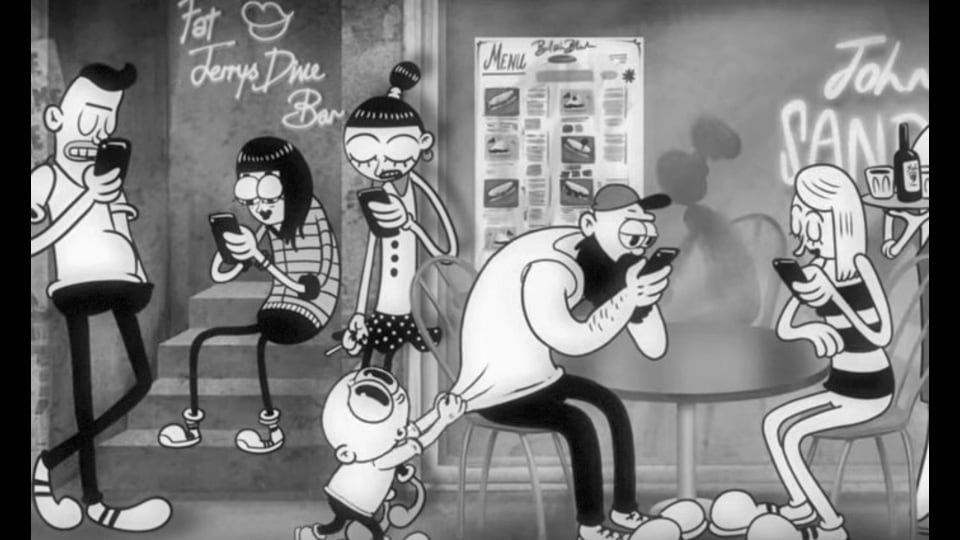
There is a magic to the seamlessness screens offer. And there are ways around the loneliness they cause. Wknd offers a few easy steps to get you started.
“It’s gonna get easier and easier... and more and more pleasurable, to be alone with images on a screen, given to us by people who do not love us but want our money.”
That was David Foster Wallace, author of the modern classic Infinite Jest (1996), talking to David Lipsky for Rolling Stone magazine, about the potential impact of the internet.
This was in 1996, and it turns out he couldn’t have been more right.
There is, of course, a magic to the seamlessness screens offer: taxis glide to the door, plumbers and electricians turn up as needed, groceries and meals arrive without a word needing to be exchanged. “Generations couldn’t have dreamed up the luxuries we now treat as routine,” says life coach Chetna Chakravarthy.
What does it do to us, though, when we pay a premium so we don’t have to engage with people that once formed part of our community?
It frays networks, of course, that until a decade ago were still intact: the local taxi driver whose life story one knew; the shopkeeper who had watched all the neighbourhood children grow up; the electrician whose father had tended to fans and refrigerators in the area too.
Chakravarthy argues that we don’t have to lose it all. We can have a version of the best of two worlds. What would that look like?
SOMETIMES, PICK THE LESS CONVENIENT ROUTE
The human desire for small casual social interactions doesn’t go away. We saw this in the pandemic. Part of the void came from losing the momentary high we got from waving good morning to the security guard, chatting with the stranger in line for coffee, helping a new colleague work the printer.
A 2013 study analysed social interactions between a barista and customers and concluded that these casual interactions were vital, because humans “have a need to belong, and experience lower physical and emotional well-being when they struggle to fill this need”. (The study was published in Social Psychological and Personality Science, and conducted by researchers from University of British Columbia.)
With so much of the friction ironed out of the day, some people are now curating a little of their own, in order to restore some of these interactions.
“I choose to sometimes go to the market, or to the local Chinese restaurant with the grumpy owner I’ve known for years, who still only grudgingly allows customisation,” says journalist, author and entrepreneur Charles Assisi, who writes the Life Hacks column for Wknd. “I also sometimes take an autorickshaw. Not because these are the most convenient options, but because I want to connect with people and support a different model too.”
Start small, if this sounds appealing. Walk to the coffee shop near the office, instead of swiping and clicking online. Make this a habit. Even a few such interactions, a few times a month, can help set a routine, Chakravarthy says.
REPOPULATE THE CIRCLE
If there was a person on our contact list whom we hadn’t met, it used to mean we didn’t know them very well. That’s changed, particularly since the pandemic.
We are likely now to have at least a few people in our social circle whom we talk to, confide in and may even turn to for help, but either rarely meet or have never met in person.
The apps made this possible, says Assisi. And it should translate to more social connection than before.
Sadly, that isn’t how it tends to work out. Because the screen-centric relationships feel more frictionless and demand less of us, we are more likely to make time for them over the people really in our inner circle.
In a loneliness special last June (click here to revisit it), Wknd talked to cultural historian Fay Bound Alberti, author of A Biography of Loneliness (2019), about the effects of this. Interaction isn’t the same as connection, she said.
The pandemic is over. We can reset the balance.
Set aside time for the inner circle, the cousins or school groups. The momentary high from an exchange of funny gifs may feel like a reasonable alternative. Numerous studies show it isn’t. (There’s more on this at the link above too.)
RECLAIM THE RIGHT TO CHOOSE
It wasn’t meant to be the answer to everything: what to eat, where to shop, how to spend a few leisure hours.
It’s easy enough to reclaim, from quick commerce, ecommerce and responsive algorithms, the right to really choose, and the joy of discovery. All one has to do is set the apps aside.
Go to the supermarket or farmer’s market and choose from options that haven’t been optimised based on everyone’s subscription plans. Watch that niche documentary and learn something entirely new — like how loud the sun would sound, on Earth, if sound could travel through space (the answer is as loud as a jackhammer; all the time). Discover a new cheese, a new cafe or a new interest.
Make room for more of life’s happy accidents.
BE PRESENT
This one is simple: Try to remember how rude it once was, to look away and start reading while someone was in the middle of a sentence.
We need to relearn how to prioritise the people in the room, over the mini sound and light shows constantly playing out on our phones.
Try muting all alerts during free time, family time, meal times, or on that rare occasion when that group of friends has actually managed to meet.
Make the uncomfortable call, to someone you’ve lost touch with and really don’t want to lose or the relative who called so often, until it became clear you had other things to do.
Make time for people.
Make time for the self too. Go for a walk. Go to the dog park. Go window-shopping.
Spend time being neither product nor consumer; just you.