
 E-Paper



India’s continuing tradition of celebrating its teachers
Knowledge enables us to see beyond the immediate, understand more deeply, and make thoughtful choices. The teacher plays a vital role in this process.

 Prefer HTon Google


In the Indian tradition, education has always been understood as a journey that shapes the individual and enriches society. From the gurukuls of ancient India to the classrooms of today, the relationship between the teacher and the learner has remained at the heart of this journey, and Teachers’ Day gives us an opportunity to celebrate it.
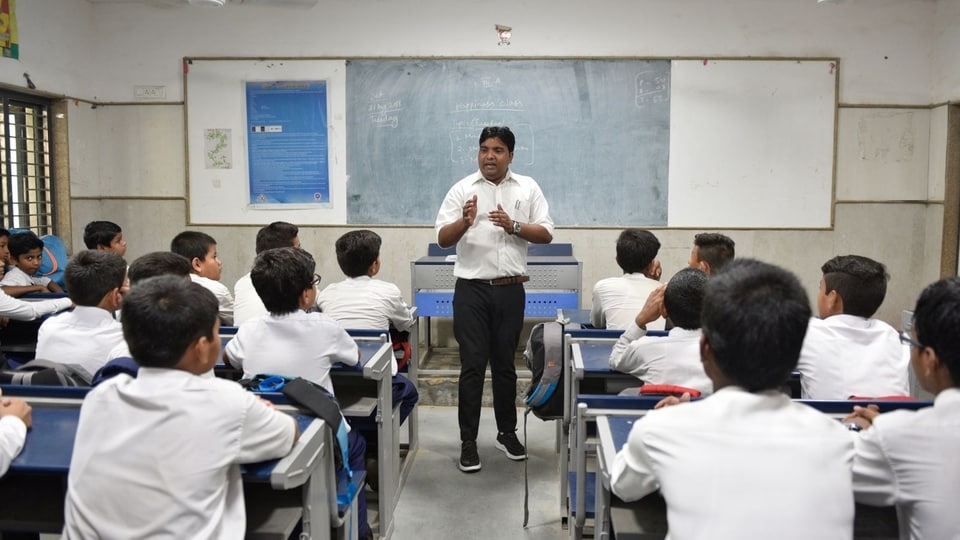
Every year on September 5, we celebrate Teachers’ Day in the memory of distinguished scholar, teacher, philosopher and India’s second President Sarvepalli Radhakrishnan.
The spirit of “guru devo bhavah” (teacher equated with God) expressed the deep respect accorded to the teacher, whose role extended to nurturing discipline, character, values, and a sense of responsibility.
The guru-shishya parampara (teacher- pupil tradition) is still alive in India’s education system. A teacher’s contribution goes beyond academic learning and plays an important role in the overall development of a person.
Also Read | Schools as markers of class and aspirations
This rich educational tradition is visible across India’s long history of learning. Our ancient centres of education, including Takshashila, Vikramashila, and Nalanda, attracted students and scholars from different parts of India and beyond.
The Sanskrit expression “gyanam manujasya tritiya netram” describes knowledge as the third eye of a person. Knowledge enables us to see beyond the immediate, understand more deeply, and make thoughtful choices. The teacher plays a vital role in this process by guiding the learner from information towards understanding, and from understanding towards wisdom. These ideas remain deeply relevant as India prepares its education system for the opportunities of the 21st century. Under the leadership of Prime Minister (PM) Narendra Modi, education has been placed at the centre of India’s journey towards becoming a developed and knowledge-driven nation. The National Education Policy 2020 represents a significant step in this direction, placing the learner at the centre of education.
Technology is opening new avenues for accessing information and learning at an unprecedented scale. The teacher gives this learning context, direction, and human connection. A classroom equipped with the latest technology becomes truly meaningful when a teacher inspires students to question, explore, understand, and apply what they learn.
The changing nature of knowledge also makes the teacher’s role increasingly significant. Students today have access to an extraordinary range of information. Teachers help them examine ideas carefully, distinguish between information and understanding, ask meaningful questions, and use knowledge responsibly.
The PM has consistently emphasised the importance of teachers in shaping the India of the future. His vision of Viksit Bharat 2047 places young people at the centre of India’s development journey, and the foundations of that future are being laid through the everyday work of teachers.
Also Read | Why India needs multiple pathways to learning
The journey from the gurukul to the digital classroom reflects India’s remarkable ability to carry its civilisational wisdom forward while embracing new possibilities.
As we honour our teachers this Teachers’ Day, let us celebrate the timeless Indian tradition that places knowledge among the highest pursuits of human life and accords deep respect to those who impart it.
Pralhad Joshi is Union education minister. The views are personal


