
 E-Paper



Non-alignment died long ago, burying it took time
The test of foreign policy doctrine is whether & how it helps a country in its pursuit of power and security in the world as it exists, & one that is changing

 Prefer HTon Google


Whose side is India on? It is perhaps the oldest question asked of Indian foreign policy and its architects. It returns with every great-power rivalry, every crisis, every major war — and it comes from friends and adversaries alike.
Eight decades since the county’s Independence from colonial rule and a dozen governments of various political colours later, the question has outlived all of them. So, has India’s answer, which is usually some elegant and diplomatic version of “neither side”. In my book India After Nonalignment, I suggest that there is a better question to ask of India: “What does India want?” Because whose side India is on depends on what India wants.
Governments have changed. Ideologies have changed. Prime ministers (PMs) who agree on almost nothing have come and gone in New Delhi. And the world too has changed. But the way India sees itself and its place in the world, I argue in the book, have remained unchanged in a 100 years.
For at least a century, Indians have thought of their country as a pole in international politics: A centre of power, of ideas and norms, with an orbit of its own. It was evident in the Congress Party’s sessions in the 1920s and 1930s, when India was still a colony. It was articulated in the Constituent Assembly debates, when India was desperately trying to survive. Swami Vivekananda said it in Chicago, Rabindranath Tagore in Tokyo and Jawaharlal Nehru at Bandung; Savarkar and the Indian Left articulated the idea in their own words. Left, Right, or the centre, the country’s political conviction about its destiny has remained unchanged — that India belongs at the centre of world affairs, and it will not be anyone’s junior partner.
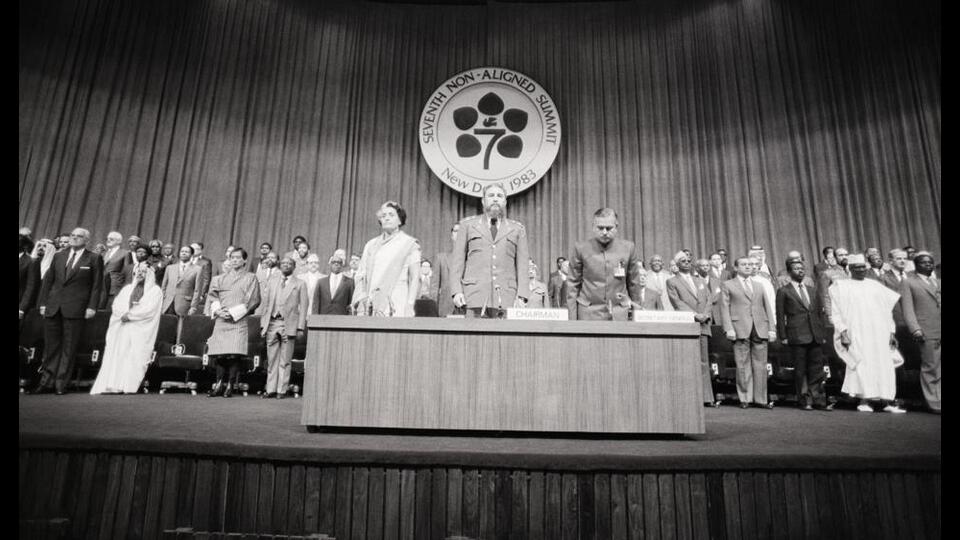
That desire found its first policy vocabulary in non-alignment, which, in turn, created an elaborate political and intellectual ecosystem that dominated India’s foreign policy narrative for decades. Then came strategic autonomy, replacing non-alignment.
But today, that entire vocabulary is dying away. The BJP left out both non-alignment and strategic autonomy from its manifestos in 2019 and 2024. The Congress mentioned non-alignment in 2019 and dropped it in 2024, giving strategic autonomy one mention in its place. No Indian PM has attended a regular summit of the Non-Aligned Movement since 2012. In 2019, the then foreign secretary, Vijay Gokhale, said in public that India had moved on from its non-aligned past.
So it is reasonable to argue that non-alignment, as the organising principle of India’s foreign policy, is dead. But the ambition underneath the phraseology is not.
It is perhaps instructive to ask why the phrase lasted as long as it did and whether it helped the country’s national interest. Non-alignment created an overwhelming intellectual ecosystem, which turned the policy into an article of faith. Diplomats were socialised in its idiom, political parties wrote it into their programmes, universities produced courses and doctoral theses around it, and careers and intellectual reputations were built on how true one were to the precepts of the ecosystem. Loyalty to non-alignment was the right of passage in the Indian foreign policy ecosystem for decades. Over time, even when the policy itself moved on, the ecosystem was unwilling to move on, and was unwilling to let the policy move on. The rhetoric became more important than the policy objectives that gave rise to it.
In 1977, when the Janata government came to power, it included people who had been among non-alignment’s staunch critics, especially after the 1962 war with China. Yet with Atal Bihari Vajpayee as foreign minister, the new government promised “genuine non-alignment”. The Communist Party of India, which was initially not a fan of the policy, accused the Janata government of weakening genuine non-alignment. Political Delhi and the intellectual ecosystem around it were busy arguing about who was more faithful to the doctrine, without bothering with the underlying objective behind it.
A policy that becomes an article of faith will find it hard to change course, because doing so looks like disloyalty towards national interest. So in the Indian case, it was bypassed without declaring any policy change. When strategic autonomy arrived in the late 1990s, it came through the back door, keeping the instinct of non-alignment but shedding the ideology and the rhetoric. Non-alignment was never officially retired, which is perhaps why an Indian abstention at the United Nations is still routinely described abroad as non-alignment, or some variation of it.
Ecosystem capture of State policies — initially crafted to serve national interests — is dangerous because successor governments can easily inherit the same trap. More so, once a policy becomes a sacred cow, shifting course becomes nearly impossible. That is what happened to the policy of non-alignment over time rather than it remaining merely an instrument of State policy.
Ultimately, the test of any foreign policy doctrine is whether and how it helps a country in its pursuit of power and security in the world as it exists, in a world that keeps changing. So we should ask of each doctrine, policy, and idea, every few years — strategic autonomy or malalignment — whether it is still useful, and whether the problem it was meant to solve still exists. Any phrase, old or new, that gets in the way of a State’s pursuit of power and security should be retired without sentiment.
Shorn of the phraseology and doctrines of non-alignment and strategic autonomy, what India wants has not changed in a 100 years. It seeks to be a pole in the international system. Such clarity of objective will allow us to stay clear of the ideological and political mythmaking that happens in our foreign policy ecosystem.
Happymon Jacob is the author of India After Nonalignment and editor, INDIA’S WORLD magazine. The views expressed are personal


