
 E-Paper



Agent Orange: How the US used toxic herbicides in Vietnam War, leaving a legacy of suffering
What may come as news to many is that the US military used chemical herbicides during the Vietnam War

 Prefer HTon Google


Not too long ago, US President Donald Trump remarked that he could have won the Vietnam War within a week. Coincidentally, his comment came in the month that marks the beginning of the Vietnam War, when the US Military Assistance Advisory Group (MAAG) took over military support for South Vietnam.

The roughly 20-year-long war (1955 to 1975) was driven by the US's desire to prevent the spread of communism in Southeast Asia. Guided by the Domino Theory, Washington believed that if Vietnam fell to communism, other Southeast Asian countries would follow.
However, the war's consequences extended far beyond ideological differences. It not only claimed lives but also devastated generations that followed.
What may come as news to many is that the US military used chemical herbicides during the Vietnam War to strip forests of their vegetation and destroy crops that provided food and cover to North Vietnamese and Viet Cong troops. The War Remnants Museum in Ho Chi Minh City documents the scale of their use and the lasting impact on the Vietnamese population.
Agent Orange
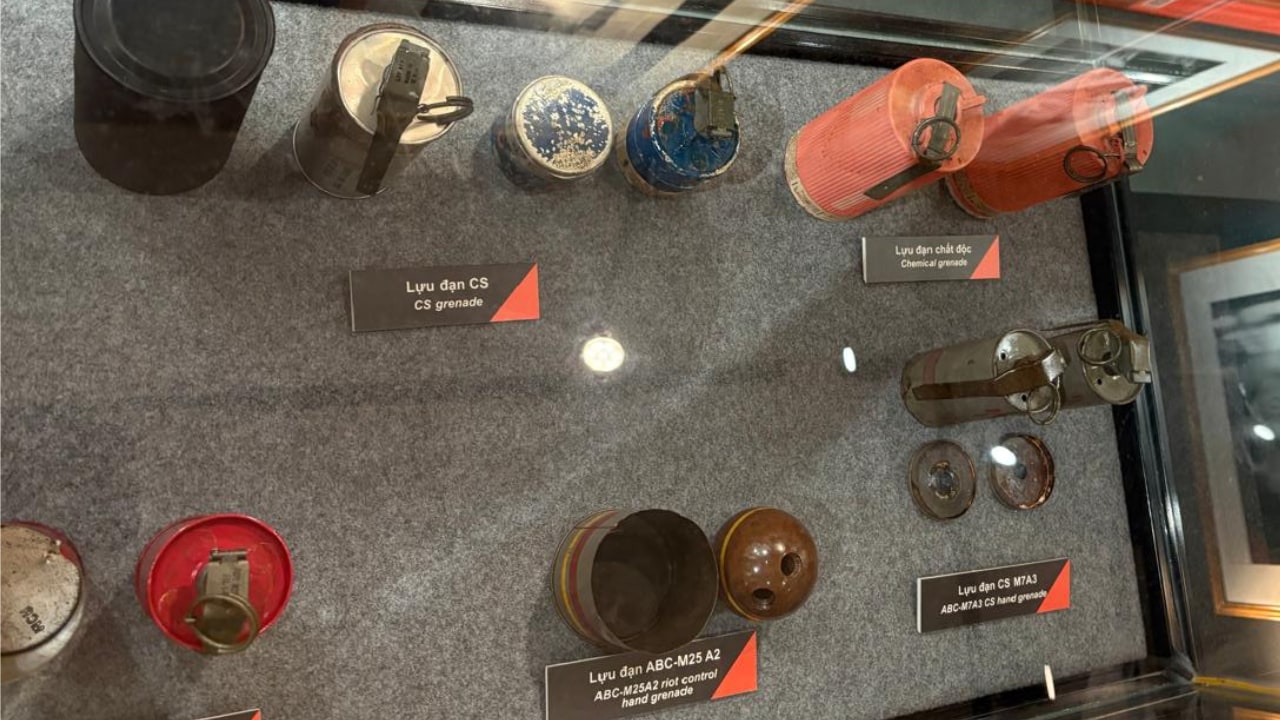
Among the many colour-coded herbicides used by the US military, Agent Orange had some of the most devastating consequences, with its toxic contaminant, dioxin, persisting in the environment long after the spraying operations ended.
About 60% of the herbicides used during the war were Agent Orange, with more than 43 million litres sprayed between 1962 and 1970. Additionally, over 30 million litres of other herbicides, including Agent White, Blue, Purple, Pink and Green, were also used.
According to the War Remnants Museum, between 1961 and 1971, the US Army conducted around 19,905 spraying missions, releasing 80 million litres of toxic chemicals. Of this, 61% was Agent Orange, containing an estimated 366 kilograms of dioxin. The chemicals were sprayed over nearly 26,000 villages and an area spanning 3.06 million hectares.
The museum has dedicated an entire gallery to Agent Orange. One of its displays cites scientists as describing dioxin as "the most harmful and toxic chemical ever discovered by mankind to date".
The lasting impact
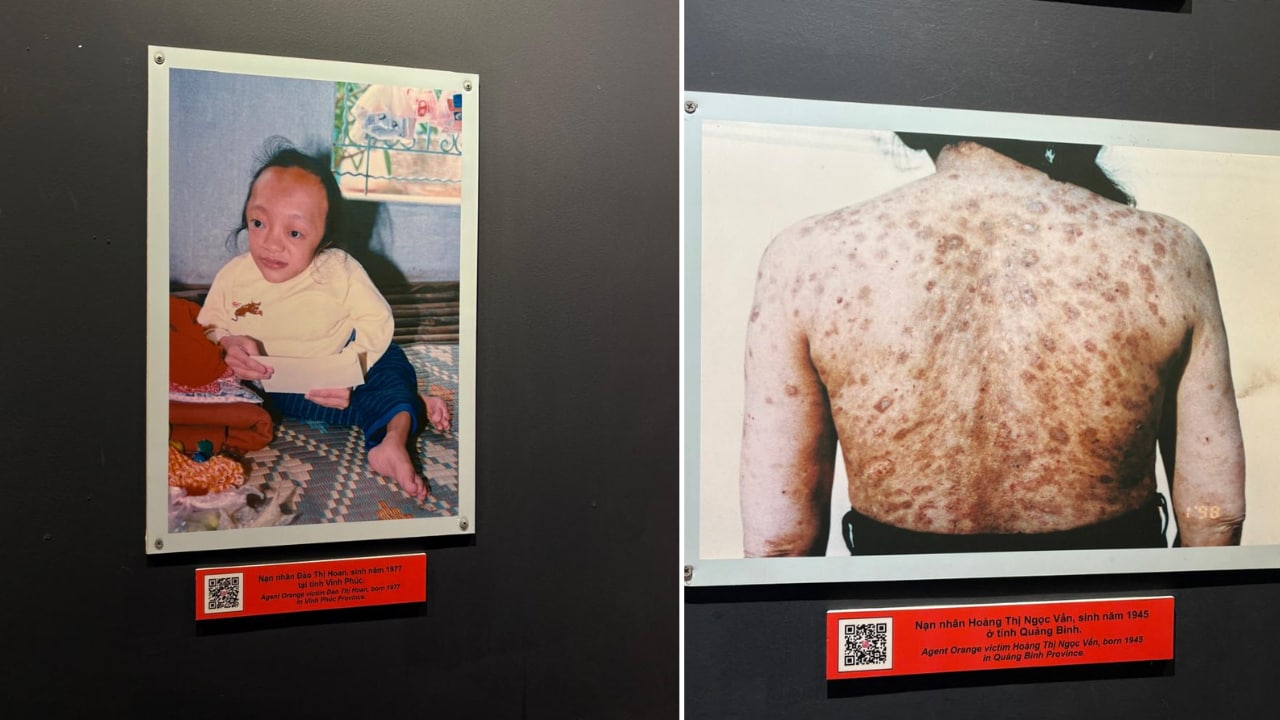
The impact of Agent Orange extended far beyond the war years. Its toxic contaminant, TCDD, a highly persistent form of dioxin, can remain in the environment for years, contaminating soil, river and lake sediments and entering the food chain.
Dioxin exposure has been linked to several serious health conditions, including cancer, type 2 diabetes, immune system disorders, nerve and muscular dysfunction, hormonal disruption and heart disease. Short-term exposure can cause liver problems, skin darkening and chloracne, a severe acne-like skin condition. Developing foetuses are particularly vulnerable, with exposure associated with miscarriages, spina bifida and impaired development of the brain and nervous system.
The scale of the damage is also reflected in the museum's documentation of successive generations affected by Agent Orange. The museum records more than 150,000 victims in the second generation, 35,000 in the third and 2,000 in the fourth. These include people living with birth defects, physical deformities, paralysis, blindness, deafness and severe intellectual disabilities. The museum also highlights the lasting consequences of dioxin exposure across generations, with its exhibits documenting the impact on families long after the war ended.
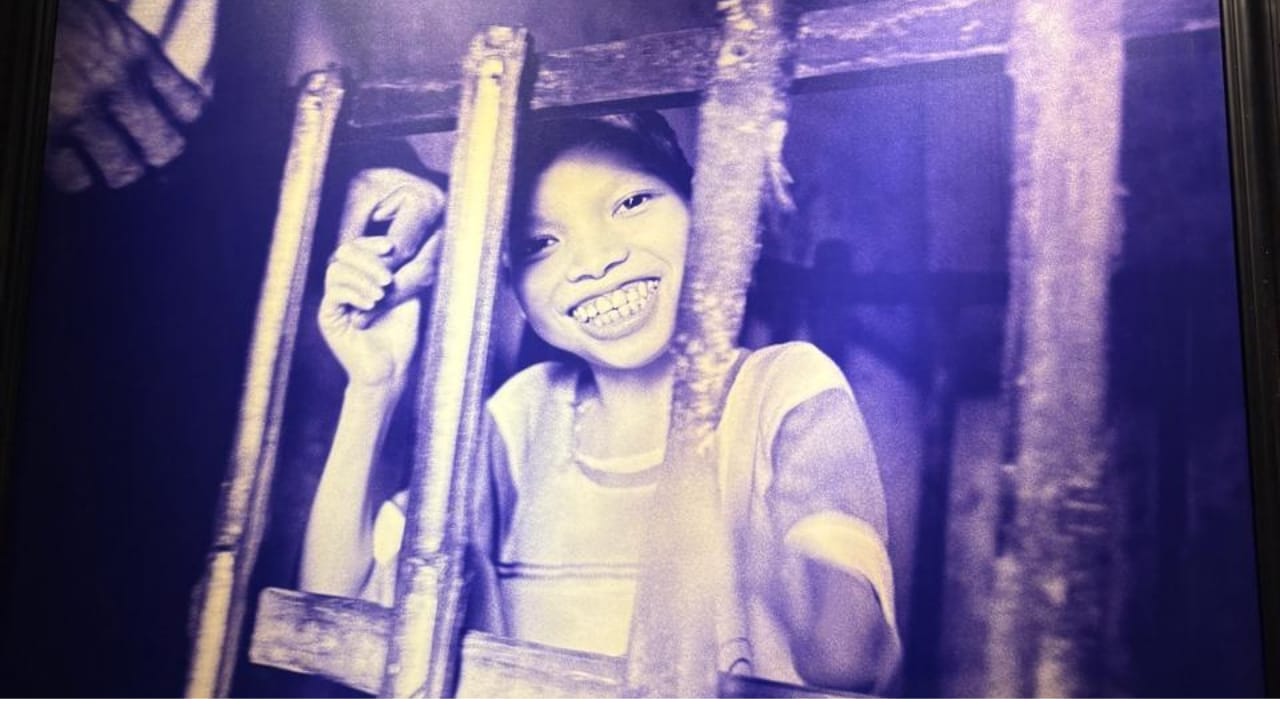
One of the case studies featured in the gallery is that of 21-year-old Nguyễn Thị Mến from Vũ Thư District in Thái Bình Province. According to the museum, her father, Nguyễn Văn Hằng, was exposed to dioxin while serving on the Trường Sơn battlefield. The exhibit documents Mến's severe neurological impairment, which causes her to chew and swallow objects within her reach. She has to live inside a wooden, cage-like enclosure.
A photograph by Đoàn Đức Minh captures what the exhibit describes as the "most human moment" of her life: the moment she recognises her father and reaches a hand through the wooden bars to hold his.
Living with hope
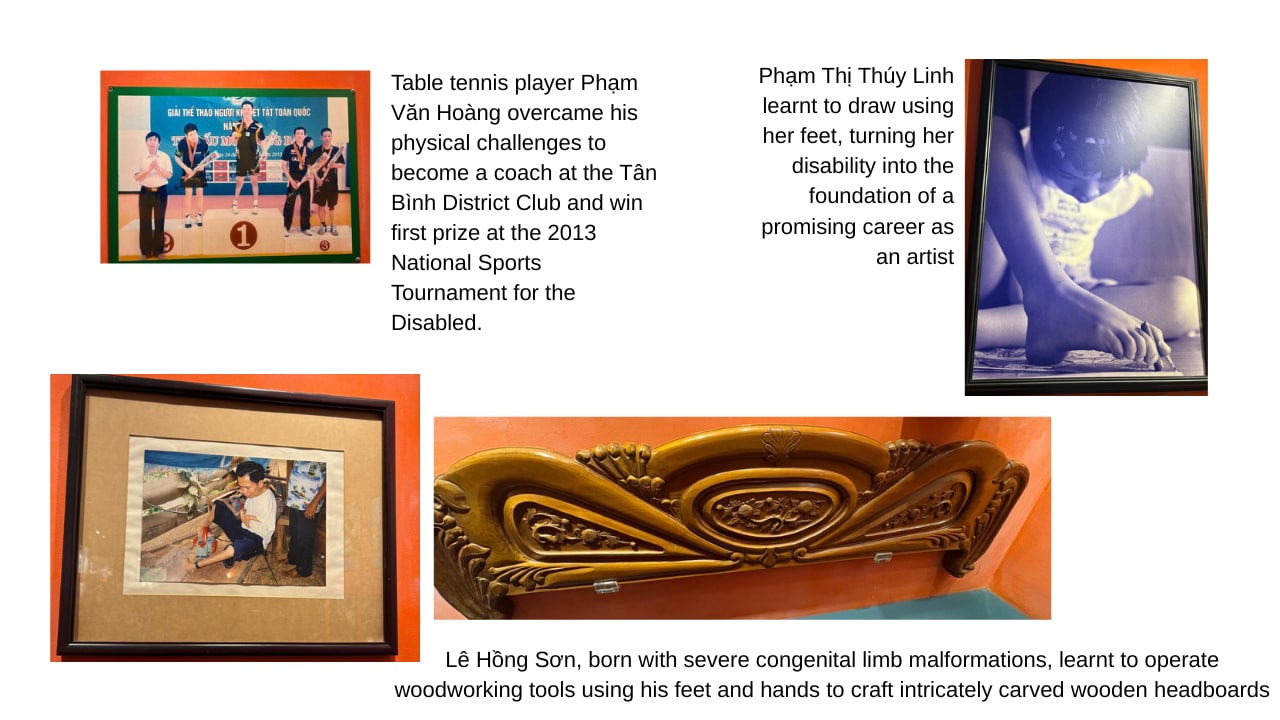
Despite the devastating consequences, several victims have found ways to adapt, pursue their interests and build fulfilling lives.
Born without arms, Phạm Thị Thúy Linh learnt to draw using her feet, turning her disability into the foundation of a promising career as an artist. Blind musician Nguyễn Thanh Tùng from Hà Nội has shared his talent through performances across Vietnam and internationally. Meanwhile, table tennis player Phạm Văn Hoàng overcame his physical challenges to become a coach at the Tân Bình District Club and win first prize at the 2013 National Sports Tournament for the Disabled.
Lê Hồng Sơn, born with severe congenital limb malformations, learnt to operate woodworking tools using his feet and hands to craft intricately carved wooden headboards. He went on to establish his own carpentry workshop, employing other disabled workers, and earned national recognition for his creative work.
The effects were not limited to the Vietnamese population; US veterans and their families also suffered illnesses and birth defects, sparking a prolonged legal battle over accountability.
This tragedy reveals a striking irony when measured against the founding promise of the nation that deployed it:
"We hold these truths to be self-evident, that all men are created equal, that they are endowed by their Creator with certain unalienable rights, that among these are Life, Liberty and the pursuit of Happiness," declares the US Declaration of Independence adopted on July 4, 1776.


