
 E-Paper


From an ‘illegal’ vote to ‘I Voted’ stickers: The life and legacy of suffragette Susan Anthony
Voters continue to honour Susan B. Anthony with ‘I Voted’ stickers at Mount Hope Cemetery in Rochester, New York, where she is buried.

 Prefer HTon Google


It was November 5, 1872. Over 150 years ago, women's rights activist Susan B Anthony walked into a polling station in the United States and did something women were not legally allowed to do at the time: vote. Her act of defiance would land her in court but also become a landmark moment in the fight for women's suffrage.

Weeks later, Anthony was arrested and put on trial. She was found guilty after the judge directed the jury to return a guilty verdict and was fined $100.
Anthony died in 1906, before women won the constitutional right to vote. Her legacy, though, lived on through the 19th Amendment, ratified in 1920. Popularly known as the 'Susan B. Anthony Amendment', it prohibited denying citizens the right to vote on the basis of sex.
Anti-slavery views and the suffrage movement
Born on February 15, 1820, in Adams, Massachusetts, Susan B Anthony was the second of seven siblings. Her family became actively involved in the anti-slavery movement after moving to Rochester, New York, according to the National Susan B. Anthony Museum & House.
ALSO READ | Chess's gender problem: Harassment, bias and the debate over women-only categories
Their farm soon became a meeting place for abolitionists and activists, including Frederick Douglass. In 1856, Anthony joined the American Anti-Slavery Society as an agent. Her work as a teacher also exposed her to gender inequality. After learning that male teachers were paid significantly more than their female counterparts, she became increasingly involved in the fight for women's rights.
The ‘illegal’ vote on November 5, 1872
In 1851, Anthony met writer-activist Elizabeth Cady Stanton, known for co-founding the first Women's Rights Convention in Seneca Falls. The two began a partnership that lasted the rest of their lives. They launched the newspaper ‘The Revolution’, which covered suffrage, equal pay, marriage and divorce, and labour rights, according to National Women's History Museum.
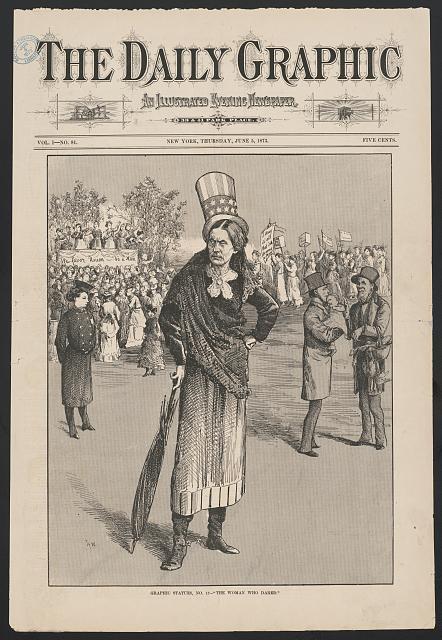
Anthony joined Stanton and Lucy Stone in 1863, to establish the Women’s Loyal National League, which campaigned for a constitutional amendment to abolish slavery. Their objective was achieved with the ratification of the 13th Amendment two years later.
In 1872, Anthony, along with her sisters and a group of women registered to vote at a Rochester barber shop, and she cast her ballot on November 5 for the Republican candidate Ulysses Grant and two congressmen.
According to NPR, she asked whether the 14th Amendment made her a citizen with a right to vote. “She wanted to know if under (the 14th Amendment) she was a citizen and had a right to vote,” an election official said. He then described how the supervisor of elections, responded, “At this time, Mr. Warner (the supervisor) said, ‘young man, how are you going to get around that? I think you will have to register their names’—or something to that effect.”
ALSO READ | The battle over sex and gender identity reaches India’s Supreme Court
Two weeks later, a US marshal arrested her at her home. At her 1873 trial, the judge instructed the jury to find her guilty and was fined $100, which she refused to pay. The judge did not send her to prison, which denied her the chance to appeal.
Rift over 15th amendment
The 15th amendment barred states from denying the vote on grounds of race, but not sex. Activists Douglass and Lucy Stone supported it, arguing that Black men’s suffrage could not wait. Anthony and Stanton however, opposed it.
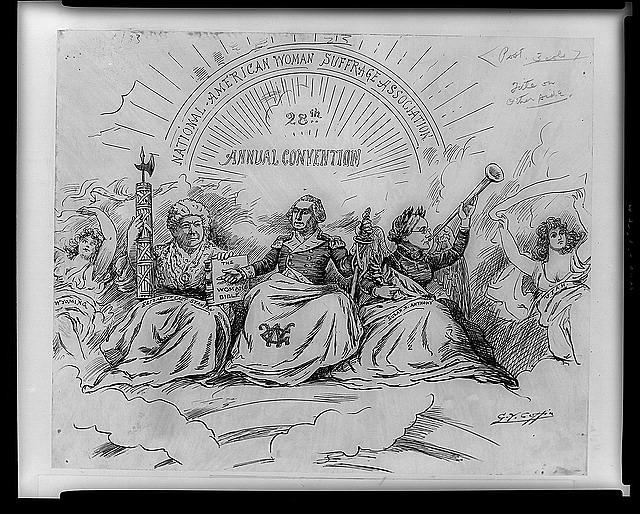
"I will cut off this right arm of mine before I ever work or demand the ballot for the Negro and not the woman," Anthony famously said at the time.
The rift produced two rival organisations, which reunited in 1890 as National American Woman Suffrage Association. Anthony became president of the merged body in 1892.
Anthony met US president Theodore Roosevelt in 1905, to discuss introducing a women's suffrage amendment in congress. She delivered her famous “Failure Is Impossible” speech at her 86th birthday celebration in DC, and died the same year in March.
‘I Voted’ stickers on Anthony's headstone
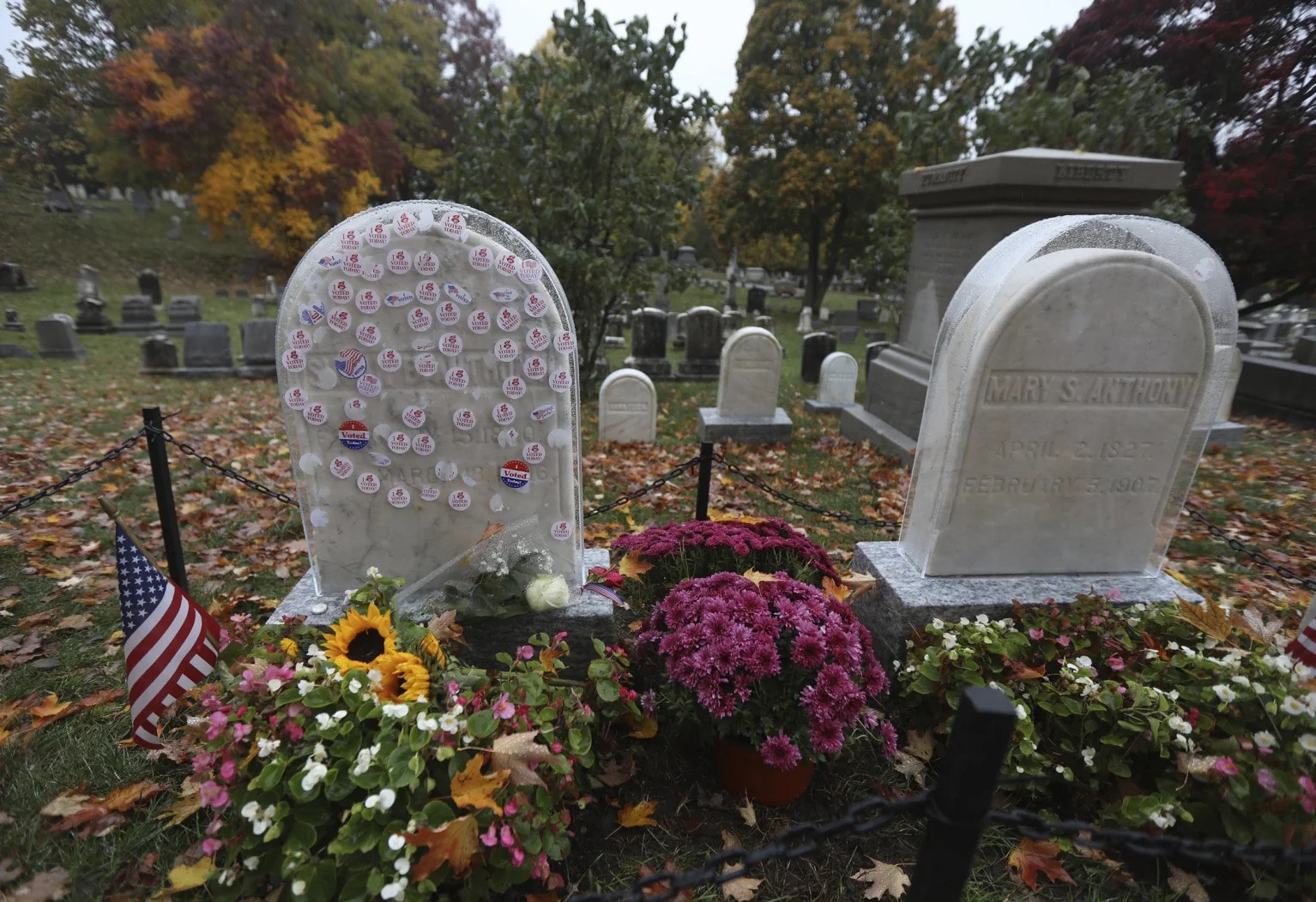
Since 2016, voters have been putting their “I Voted” stickers on Susan Anthony and her sister Mary Anthony's headstone in Rochester, New York. According to the Associated Press, as many as 12,000 voters visited Mount Hope Cemetery that day to pay tribute and mark the first time Americans could vote for a woman presidential candidate from a major political party, Hillary Clinton.
Even this year, many voters made their way to the cemetery on November 3, the day of midterm elections, to honour Anthony.


