
 E-Paper



Review: Consumerism in World History by Peter N Stearns
On the psychology and context of consumerism, acquisition as a means of fulfilment, and the myth of consumerism as a late phenomenon in history

 Prefer HTon Google


Despite the overarching attempts to explore substitutes for consumerism from the early 20th century onward seeking alternatives ranging from rabid nationalism to more spiritual definitions of happiness, from the anti-consumerist youth protest movement of the 1960s – the blossoming of back-to-nature hippie communes – to the 1979 revolution in Iran, it is by now established that consumerism, despite all the opposition, seems to be “the ‘ism’ that won”. To borrow further from Gary Cross, one who has explored the social, cultural and political dimensions of consumption extensively, consumerism “did succeed where other ideologies and discourses failed”, such as Marxism that usually gestured in the direction of a working class as retainers of “a revolutionary consciousness” uncorrupted by consumerism. No matter whether we like it or not, the earth is being held up by the muscular arms of its entrepreneur-plutocrats.

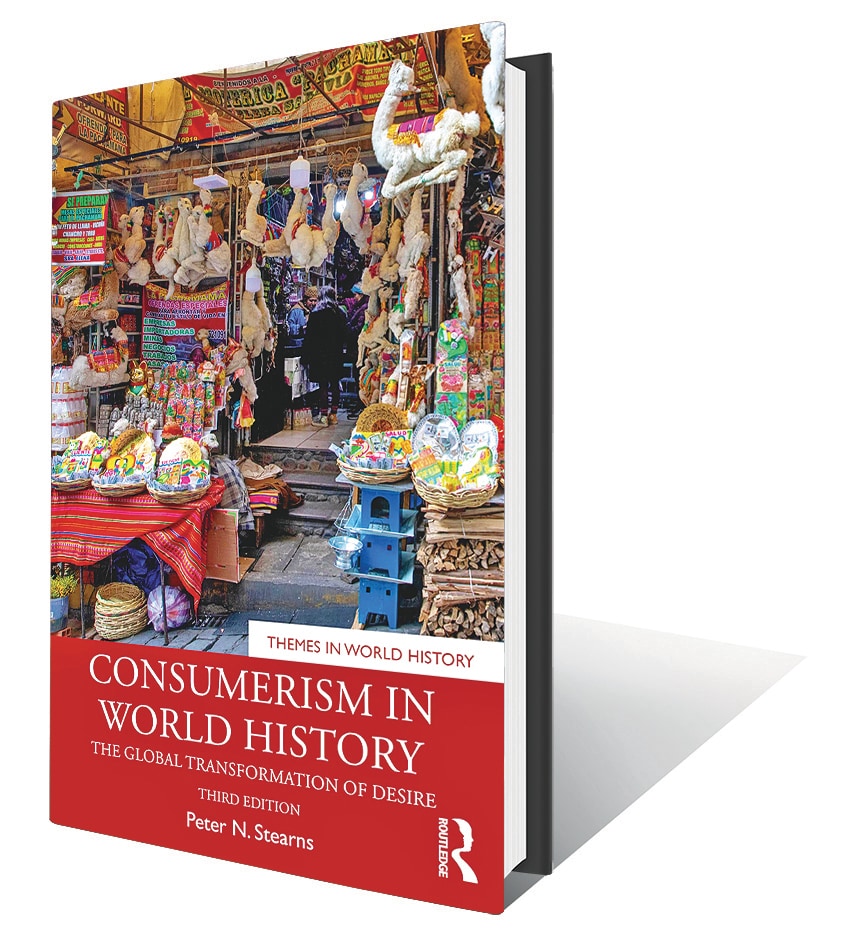
In Consumerism in World History: The Global Transformation of Desire, Peter N Stearns provides an insight into the psychology and context of consumerism, disbands the myth that consumerism is a late phenomenon in history, and wonders if it is a natural instinct for a group of people to gain the necessary resources to be able to focus strongly on acquisition as a means of fulfilment. The proliferation of swanky shopping malls are but versions of ancient bazaars in Middle Eastern cities filled with a rich variety of goods that are emblematic of the human acquisitive spirit.
Consumerism is as old as civilisation. Almost 24,000 artefacts from more than 230 sites in Portugal, Spain, France, Switzerland, and Germany were mapped and analysed using geostatistical techniques to reveal different patterns of consumption in different places and at different times. Greek pottery was exported around the ancient world in vast quantities over a period of several centuries and consumed by people in the western Mediterranean and trans-Alpine Europe from 800-300 BCE.
Some books try to enlighten us about how, with the establishment of the People’s Republic of China in 1949, the Chinese Communist Party aimed to end capitalism and how, ironically, despite the socialist rhetoric of class warfare and egalitarianism, Communist Party policies actually developed a variety of capitalism and expanded consumerism, negating the goals of the Communist Revolution across the Mao era (1949-1976) down to the present.
The book under review gives a broader overview of history. Take the story of lapis lazuli mined in Afghanistan and admired for its use as jewellery that became an object of exchange between what is now Afghanistan and present-day Pakistan (Indus River valley) as early as the 7000 BCE. Gold was being mined as early as 4500 BCE, as burial items discovered in present-day Bulgaria and ample references to gold jewellery in ancient Egypt attest. The great “Silk Roads” that fanned out from Western China to Central Asia, the Middle East and the Mediterranean testify to the value of a luxury product which, by the 1st century BCE had become a coveted product in places as far from China as the Mediterranean.
It is curious to read that trade in spices, particularly from South and Southeast Asia, rivalled interest in gold and precious stones. Egypt was seeking spices from present-day Somalia by 2500 BCE. In the centuries after 1500 BCE, more substantial trade linked what is now Indonesia with India, the Middle East, East Africa and China, featuring items like nutmeg. Rome supported a massive trade in pepper with India – this was actually the costliest interregional trade for the Empire.
The democratisation of chairs as a consumer product – as much taken for granted as forks for eating today – is interesting in view of the fact that chairs were long reserved for rulers and religious leaders. Decorated chairs – from ancient Egypt to Mexico – were available for dignitaries but it was not until the 12th century that they became common for the wealthy. In China, chairs were uncommon before the Tang dynasty. Cushioning developed for chairs by the 17th and 18th centuries.
Adoption of western style dress came primarily in the cities and particularly among groups like Indian members of the colonial civil service. By the 1920s, some were dressing like Westerners altogether, except on special occasions such as weddings. During the same period, an even larger number of Indians began to adopt tea as their basic beverage. This was not a traditional national drink. However, in the 19th century the British began to expand tea growing, to reduce their dependence on imports from China. China’s loss was India’s gain.
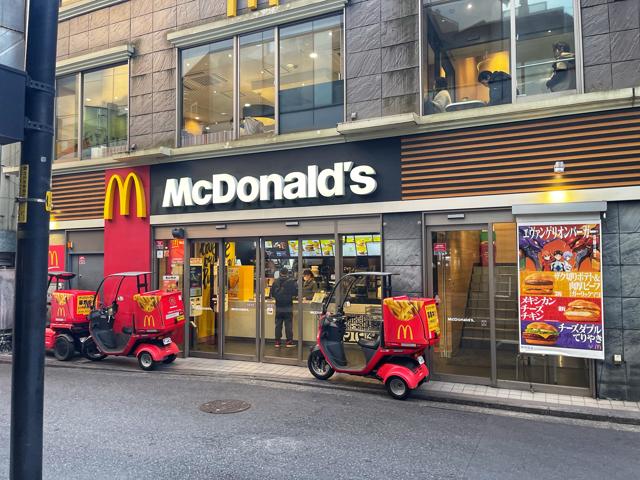
In 1999, Thomas Friedman argued that no two societies that had McDonalds would go to war with each other. McDonalds, it was assumed, would prompt citizens, and therefore their governments, to avoid disruptions like war in favour of maintaining the good life, a proposition proved wrong by Russia’s invasion of Ukraine, in 2022, involving two nations with McDonald’s chains. Stearns points to the indigenisation of global consumerism as McDonalds offers teriyaki burgers in Japan, vegetarian fare in India, wine and beer in France, and special meals after sunset during Ramadan in Morocco. Mexico began copying comics from the United States in the 1940s setting different standards of beauty and upholding its national and political values, where Mexican heroes were often pitted against American villains, like “Invincible Jack Superman of Indianapolis”. The gringo characters lost every time.

The book talks a lot about pre-modern consumerism, but not on post-modern consumerism. Perhaps the theme limits its scope to details like what accounts for a “widening array of imports”, such as the rapidly expanding silk industry in Japan or the fast-growing rug manufacturing in Türkiye, or how consumer products such as plastic (introduced around 1850), vulcanized rubber, photographic film, and (in the early 20th century) how artificial fibres such as rayon and nylon became central to modern living. The knowledge that products like lipstick, rouge and mascara surged, particularly in the 20th century as “movie stars provided compellingly attractive role models” remains as a teaser without contextual information. If we want to know if Marilyn Monroe used Vaseline for a dewy glow, contoured with five different red lipstick shades and often used half-lashes on the outer corners, or if Rita Hayworth employed dramatic hair dye and precise, vibrant makeup to transition into a “starlet” image, or if Audrey Hepburn attained her natural yet refined look by utilizing soft pink lipstick and understated makeup, the book won’t help.
Consumerism in World History is notably silent on how oil, an important fossil fuel to set an entire universe of consumerism in motion, defined economies, fanned wars and engineered regime changes. “Consumerism is a mobilising force at the heart of twentieth-century social and political history”, he writes, but the omission of its driving force is obvious. Western cultures portrayed Arab countries as backward and barbaric while glossing over their own crimes and violence and setting about a civilizing mission that served to justify their domination of Arab nations and their control of those nations’ valuable resources, especially petroleum.
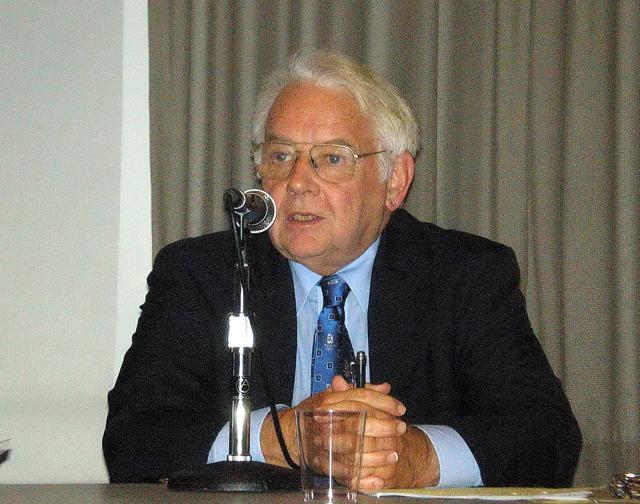
However, Stearns is absolutely clear that consumerism has been both an ideological triumph and a triumph over politics, even though capitalism and communism were engaged in a fight-to-the-death during the Cold War. But at what cost? “A nation of consumers is a nation of hogs,” declared Nicholas von Hoffman, a journalist, in 1977. “Unlike the public- oriented citizen,” he claimed, “the consumer is antisocial,” reconfirming the ironic American phrase, “when the going gets tough, the tough go shopping”. As it looms increasingly large, the subversive side of consumerism, played to the full, is beginning to rob the world of its precious resources with catastrophic consequences. That, perhaps, could be the staple of another book.
Prasenjit Chowdhury is an independent writer. He lives in Kolkata.


