
 E-Paper



MCD solid waste management draft bye-laws propose up to ₹300 monthly waste fee, prior nod for large gatherings
The draft also calls for annual returns from bulk waste generators and prior permission for gatherings of more than 100 people.

 Prefer HTon Google


The draft of Solid Waste Management (SWM) Bye-Laws 2026 prepared by the Municipal Corporation of Delhi (MCD) proposes a monthly garbage user charges of up to ₹300 for residential dwelling units depending on the property type and area, steeper charges for commercial units, annual returns by bulk waste generators and mandated prior permission for holding large gatherings.
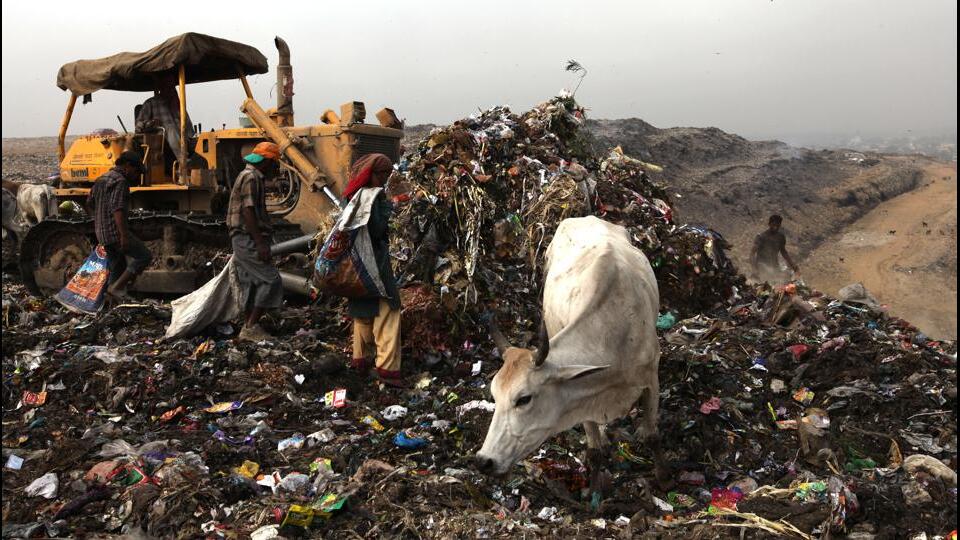
The draft bye-laws, seen by HT, also propose annual audits of the biomining process at landfill sites before December every year.
A senior municipal official said on Sunday that councillors will take up the draft bye-laws at the next MCD House meeting before finalising them. “The draft bye-laws mandate that the user fee will be paid for garbage collection and transportation services. The proposal divides colonies into two groups,” the official said.
Garbage user charges are municipal fees levied on residents and businesses for collecting, transporting, and disposing of solid waste, and they have met stiff resistance in the past.
Residential charges vary by colony category
Compared to the 2018 bye-laws, the 2026 proposal suggests higher fees for property owners in categories A–D, and lower fees for those in categories E–H. Delhi’s colonies are categorised from A to H for circle rates, with H being the lowest category.
The monthly fee for properties up to 50 square yards—previously ₹50—is now proposed at ₹75 for the first category (A–D) and ₹40 for the second category (E–H).
Category A colonies include Vasant Vihar, Shanti Niketan, Maharani Bagh, New Friends Colony and Anand Niketan, while Category B includes Defence Colony, Nizamuddin East, Greater Kailash, Hauz Khas, Green Park and Safdarjung Enclave.
Category E includes residential colonies in older parts of the city and specific extensions such as Chandni Chowk, Kashmere Gate, Khirki Extension, Pandav Nagar and Moti Nagar. The lower categories include unauthorised colonies.

For properties ranging from 50 to 200 square metres, the proposed monthly fee is ₹150 for the first category and ₹75 for the second. For properties over 200 square metres, the proposed monthly fee is ₹300 for the first category and ₹150 for the second. Additionally, the proposed fee for street vendors is ₹150—up from the previously proposed ₹100.
HT reported on September 22 that MCD is likely to try once again to introduce garbage user charges, dividing residential colonies into two separate payment slabs.
A senior MCD official said that the user charges were previously set uniformly across the three former municipal corporations. “The economic profiles of residents vary significantly depending on the category of their colony—whether in east, south, or north Delhi. Consequently, implementation proved difficult, and the public did not receive the charges well. In light of this, we have formulated revised sub-rules more rationally. Under this framework, charges for residential properties are determined based on the category of the colony, ensuring that the financial burden on residents remains manageable and that the policy is more readily accepted upon implementation,” the official added.
Also read: MCG steps up pollution-control measures under revised Grap
Commercial fees and bulk waste generator requirements
Draft bye-laws state that hostels will pay a monthly fee of ₹3,000; restaurants (more than 50 seats) ₹5,000; clinics and dispensaries (up to 50 beds) ₹3,000; and auditoriums and community spaces ₹7,500. The user fee will increase by 5% annually from January 1 each year, and a 10% late payment surcharge will be imposed after a 30-day delay.
The bye-laws also mandate annual audits of biomining at landfill sites by DPCC before December and place greater responsibility on bulk waste generators in the city.
The draft states that every bulk waste generator must submit an annual return on the Central Pollution Control Board (CPCB) portal by June 30 every year, and all bulk waste generators need an extended bulk waste generator responsibility certificate. The certification cost will depend on the quantum of waste generated, and the corporation will set a per-unit fee.
Also read: India’s waste challenge: From managing discards to designing out waste
Prior permission proposed for large gatherings
The draft bye-laws also restrict gatherings of more than 100 persons, requiring prior permission three days in advance, payment of a user fee, and arrangements for waste collection.
Section 8 of the bye-laws states: “No person shall organise an event or gathering of more than 100 persons at any unlicensed place without intimating MCD online along with payment of user fee as prescribed in the schedule at least three working days in advance. The organisers will be required to seek permission from MCD and Delhi police.”
An official explained that all such gatherings must ensure waste segregation, provide colour-coded bins, and hand over only segregated waste.
Also read: Building a truly circular e-waste ecosystem in India
Proposal deferred amid past opposition to charges
The committee introduced the proposal as an “on-table” agenda item at the previous MCD House meeting, but deferred it to the next meeting for further consultation.
In its last attempt, the MCD began levying the garbage user charge in April 2025 under the 2018 by-laws, linking it to annual property-tax payments, which triggered large-scale opposition and led to a rollback in June.
Meanwhile, Atul Goel, who heads URJA, an umbrella body of RWAs, said the proposal needs to account for the parallel waste-collection network that has emerged because of gaps in municipal services. “People pay their local garbage collectors. Why should they pay MCD for its failure? The solid waste management rules had also mandated that the municipalities would integrate informal sector workers in the system,” he said.
Goel said MCD auto-tippers often pass through residential lanes without providing doorstep collection. “Around 70-80% of households are already paying some form of charge to their local informal waste collector. Why can’t MCD concessionaires integrate them into the system?” he asked.
Frequently Asked Questions


Stay updated with all top Cities including, Bengaluru, Delhi, Mumbai and more across India. Stay informed on the latest happenings in World News along with Delhi Election 2025 and Delhi Election Result 2025 Live, New Delhi Election Result Live, Kalkaji Election Result Live at Hindustan Times.


