
 E-Paper



CBSE revises Class 9 curriculum, drops CT and AI modules for current batch
The revision comes six days after the National Council of Educational Research and Training (NCERT) released its introductory CT and AI module on October 23.

 Prefer HTon Google


The Central Board of Secondary Education (CBSE) on Thursday dropped the three curricular components, including the modules on computational technology (CT) and artificial intelligence (AI), for Class 9 students in the current academic session to provide clarity to the current batch as students progress to Class 10, people aware of the matter said.
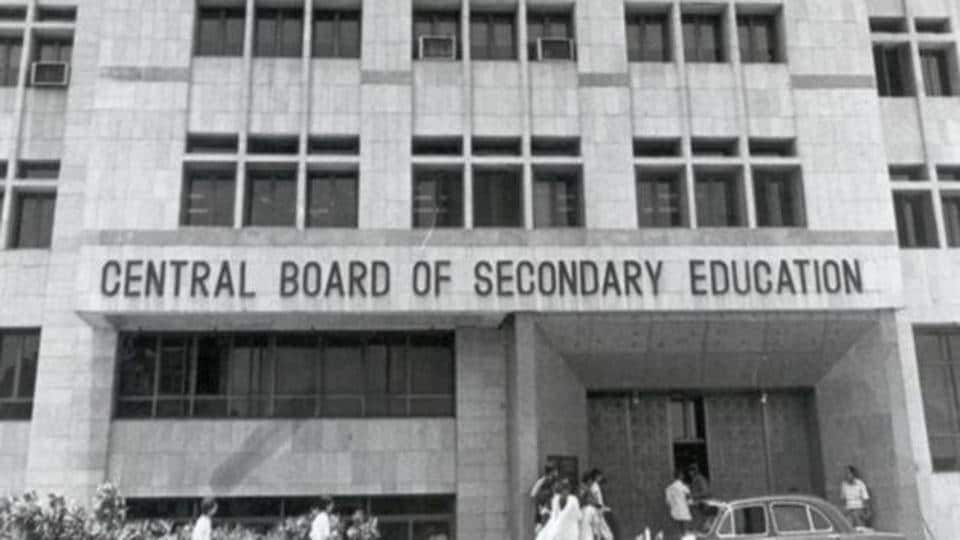
In a circular, the board said Individuals in Society and the CT and AI modules would not be part of the Class 9 curriculum for 2026-27, while Environmental Education would be excluded from Class 10 for the same cohort in 2027-28. However, the existing scheme will continue for students currently in Class 10.
MCD schools to introduce activities to teach children moral values
The revision comes six days after the National Council of Educational Research and Training (NCERT) released its introductory CT and AI module on October 23.
The circular, signed by Dr Praggya M Singh, professor and director (academics), said the changes were intended “to align the introduction of this curricular area with the implementation schedule”. It did not specify when the three components would be introduced for subsequent batches.
The latest revision follows a series of announcements around CBSE’s new scheme of studies. The official framework defining the mandatory and optional subjects, language requirements and internal assessment rules that schools must follow from Classes 9 to 12.
In April, CBSE introduced a revised scheme for Class 9 aligned with the National Education Policy (NEP) 2020 and the National Curriculum Framework for School Education (NCF-SE) 2023. It envisaged Individuals in Society as an interdisciplinary subject in Class 9, Environmental Education in Class 10, and CT and AI modules as part of the curriculum.
SSC SI Result 2026 for PET/PST declared at ssc.gov.in, direct link to check here
On April 9, the board said NCERT would provide CT and AI modules for Classes 9 to 12 for the 2026-27 session, to be taught and assessed internally in schools. NCERT released a 20-hour introductory CT and AI module for Classes 9 to 12 on October 23. However, it is yet to release the textbooks for Individuals in Society and Environmental Education.
NCERT did not respond to queries sent by HT seeking clarity on the reasons for dropping the three components for the current batch, the timeline for their introduction for subsequent batches, and the status of the other two textbooks.
However, people familiar with the development said the latest circular was intended to provide clarity to the current Class 9 batch as students progress to Class 10. “Our foremost priority is to safeguard students’ interests by clearly communicating the academic and examination-related provisions well in advance. The emphasis is on encouraging students to focus on meaningful learning rather than solely the examinations,” one of them said.
JNVST Class 6 Admit Card 2027 released at navodaya.gov.in, download link here
Nine compulsory subjects, vocational choice retained
The revised scheme requires students in the current Class 9 batch to study nine subjects: three languages (R1, R2 and R3), Mathematics, Science, Social Science, Art Education, Physical Education and Well-being, and Vocational Education. Students may also opt for one additional subject, in accordance with board’s rules.
Vocational Education remains compulsory, but students can choose between Kaushal Vikas and one of 22 skill subjects. Kaushal Vikas is assessed through school-based internal assessment; schools will issue their own certificate to students securing at least 33%. Students opting for one of the 22 skill subjects — which include Information Technology, Retail, Tourism, Healthcare, Agriculture, Artificial Intelligence and Data Science — will have to appear for a board examination in that subject in Class 10. Those who pass will also receive a certificate under the National Skills Qualifications Framework (NSQF).
Board’s latest circular in its frequently asked questions (FAQs) also clarified the Class 10 examination and pass criteria. Students must secure at least 33% in each of the five compulsory board-exam subjects — R1, R2, Mathematics, Science and Social Science — calculated by combining internal assessment and board examination marks.
A student who fails Mathematics, Science or Social Science but passes a chosen skill subject can have the skill subject substituted for the failed subject while the Class 10 result is calculated. This provision does not apply to students who choose Kaushal Vikas. The FAQs also specify that students can choose optional subjects, including Mathematics Advanced or Science Advanced, which carry board examinations.
For Children with Special Needs (CwSN), the scheme provides additional flexibility in subject selection. They must study one compulsory language with a board examination, while the remaining four board-examination subjects can be chosen from a specified list that includes Mathematics, Science, Social Science, another language, music, painting, Home Science, selected commerce-related subjects and up to two skill subjects, subject to the board’s restrictions.
Sudha Acharya, principal of Delhi-based ITL School, said the revised arrangement could ease the examination burden while allowing students greater choice.
“Having five compulsory Board-examination subjects in Class 10 can help reduce unnecessary examination pressure and allow students to focus more on learning rather than examinations alone. Students are also relieved of the additional burden of studying Individuals in Society and the CT&AI module, while the flexibility to choose skill subjects gives them greater scope to pursue their interests. The specific provisions for subject selection for Children with Special Needs (CwSN) are another positive step towards making the scheme more inclusive and responsive to individual learning requirements,” she said.


