
 E-Paper



Rain, then ruin: The science of why roads in India crater after monsoon showers
Water strips the bitumen off the stone, weakens the ground beneath, and hollows the layers in between, the science shows.

 Prefer HTon Google


Ever noticed why every year, after the monsoon rainfall, roads turn into off-road courses?
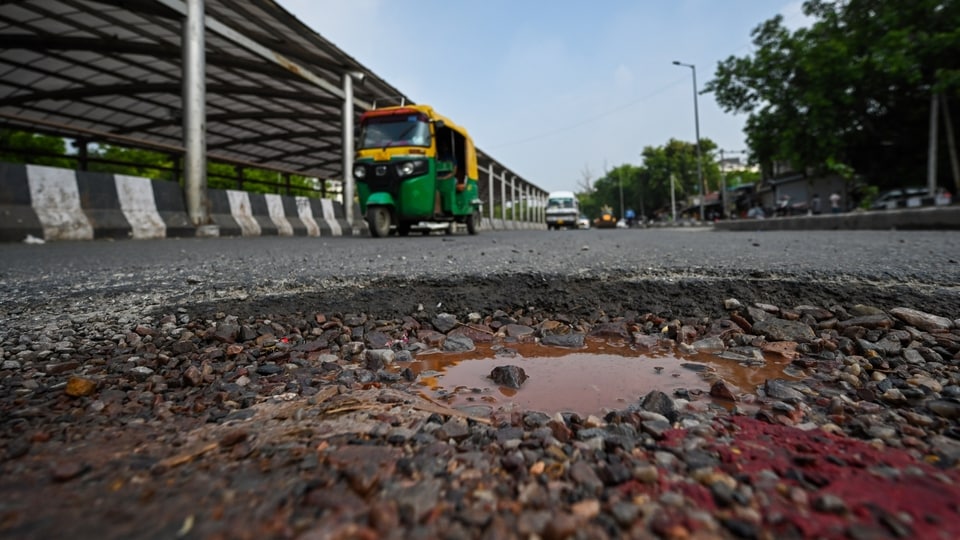
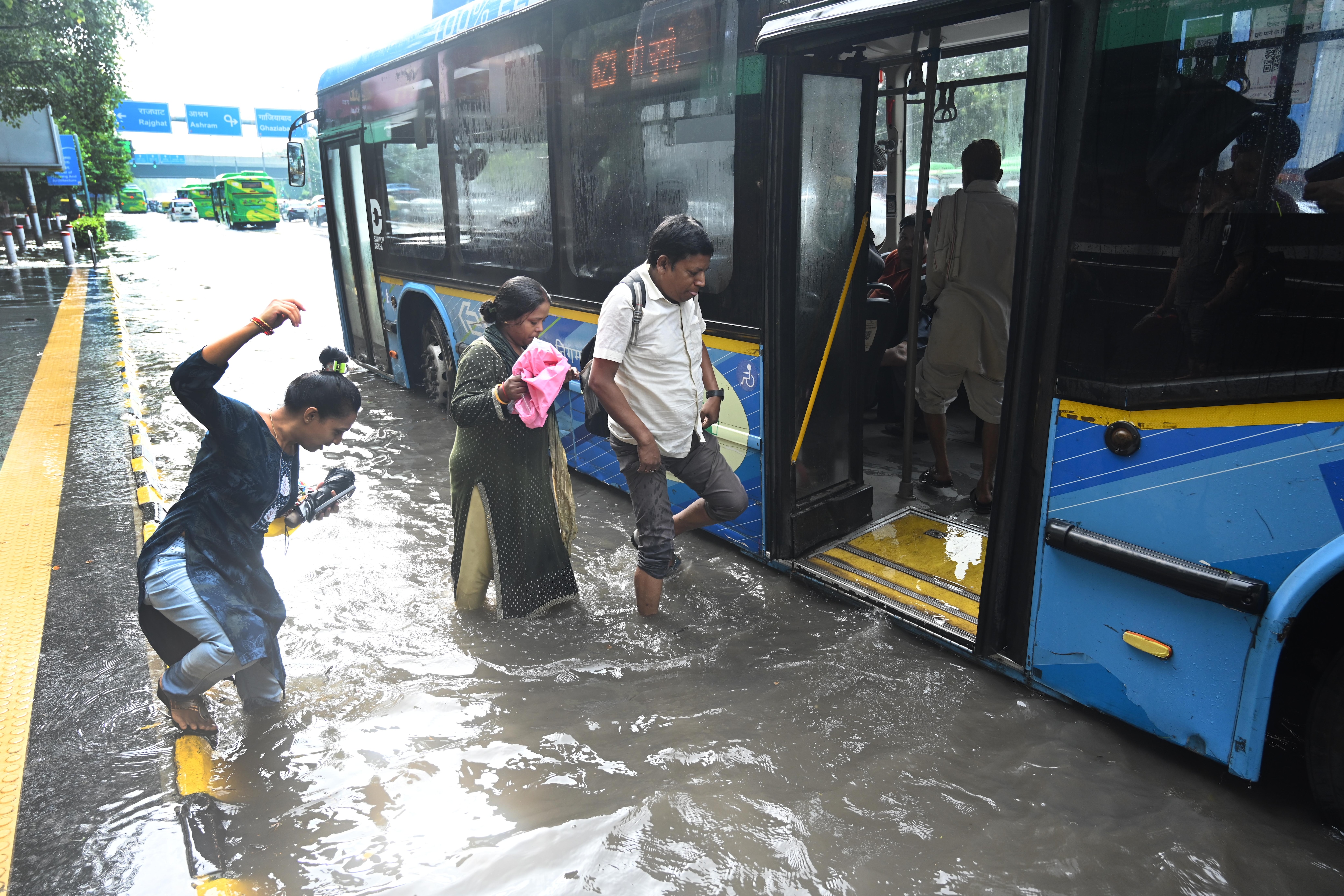
When floodwaters recede, roads — from narrow colony streets to flowing highways --turn into obstacle courses. Commuters are forced to zig-zag, brake hard or, for the odd crater that turns up suddenly, bounce over back-breaking surfaces.
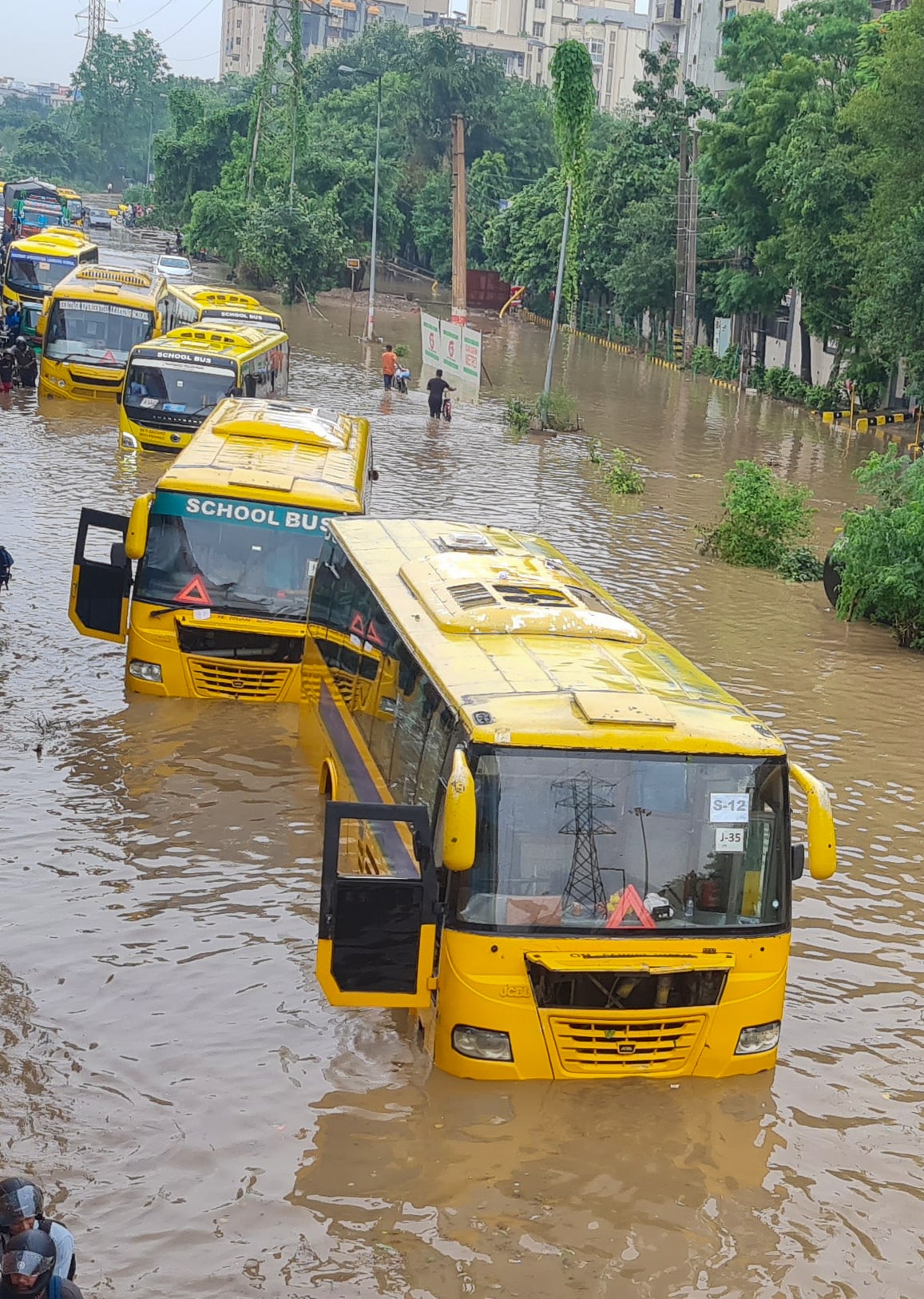
Waterlogging is blamed on drainage systems that have not kept pace with concretisation. The causes for the disappearing road surface, though, may lie beneath the tarmac.
Roads, a sum of layers
To understand why roads disintegrate, it helps to understand how roads are laid. A modern bituminous road is built as a stack of layers. At the top sits a thin wearing course — the topmost layer — of stone chips glued together with bitumen, the sticky black residue left over when crude oil is refined. Beneath it comes a thicker base of coarser crushed stone, then a compacted gravel sub-base, and at the bottom, the natural soil that the structure rests on, called the subgrade.
Each layer's job is to spread the weight of a passing lorry wide enough that by the time the load reaches the earth, the pressure is something the ground can bear.
But water attacks the layers in four ways.
One, the glue lets go. When rainwater seeps through voids in the wearing course, it works its way between the bitumen film and the stone chip. The bond breaks. Passing tyres then flick loose stones out of the surface, and a fresh pothole begins with the characteristic loose-gravel edge. Engineers call this stripping.
India's Central Road Research Institute, or CRRI — the Council of Scientific and Industrial Research (CSIR) laboratory that has set the country's road testing standards since 1952 — describes stripping as a primary route to rutting, ravelling and eventual pothole formation. Much of the crushed stone used in Indian construction, granites and quartzites in particular, is chemically water-loving. Water bonds to it more readily than bitumen does.
Anti-stripping additives — essentially chemical primers, usually hydrated lime or specific amines — fix this issue.
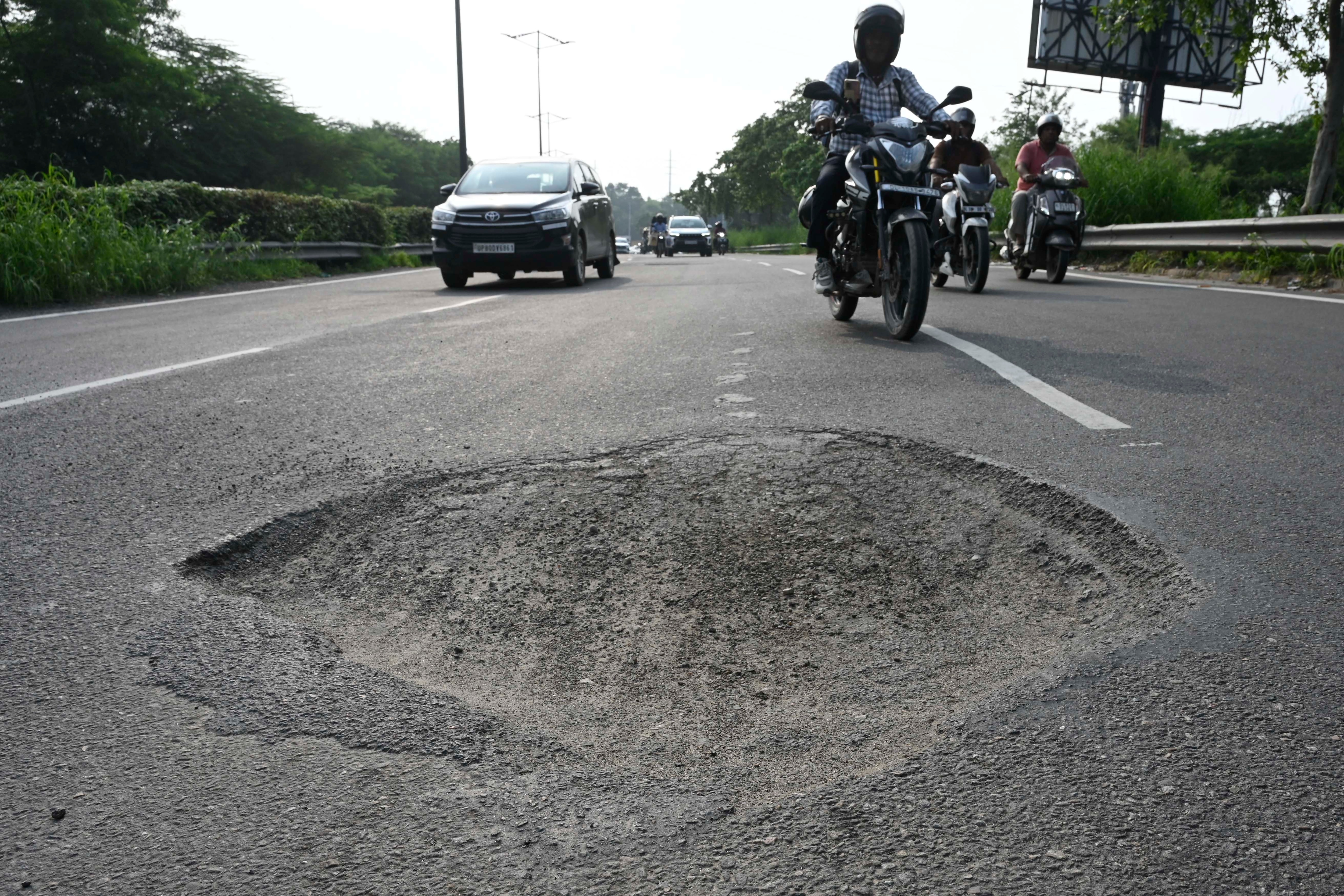
While the science is straightforward, roadmaking – and maintaining – is hardly so. In India, roads are built and maintained by a raft of agencies depending on how wide a road is, or where it is located. And often, it is not the government agency that carries out the laying but a contractor.
The Union ministry of road transport and highways' rulebook for road and bridge works — the chapter known as Section 500, which governs all bituminous work on Indian highways — requires these additives only when the stone the contractor plans to use has been shown to bond poorly with bitumen. The contractor is expected to make that call in the first place. In practice, that leaves substantial discretion at the field level.
Also read: Despite '95% desilted' claim, Delhi drains fail again in Monday downpour
Two, the ground goes soft. Compacted subgrade soil that feels rock-hard when dry can lose half or more of its bearing strength when it gets saturated with water, as it does when a road is waterlogged. Engineers measure this with the California Bearing Ratio, or CBR. Once the ground beneath the pavement softens, the upper layers flex too much under a passing lorry, hairline cracks open on the surface, and more rain enters. The cycle repeats with each wet week.
Three, water hammer. This is the mechanism that causes potholes to appear overnight. Water trapped in surface cracks or in the base layer is briefly pressurised each time a wheel rolls over it. That pressure ejects the fine particles — sand, silt — out through the cracks, hollowing the layers underneath. The surface, now unsupported, collapses. Engineers call this pumping.
Four, the thermal whipsaw. Indian roads also endure an extreme climate cycle. In May and June, dark bitumen surfaces can cross 60°C, softening the binder and letting lorry tyres press permanent ruts into the surface. Months – or sometimes weeks – later, monsoon saturates the same pavement with water. The material fatigues from opposite directions across the year.
Why in India
Professor Prithvi Singh Kandhal, associate director emeritus of the National Center for Asphalt Technology at Auburn University in Alabama who has for long criticised the Indian mix design, has written in NBM&CW, a construction industry trade magazine, that Indian construction code still permits so-called "semi-dense" and "open-graded" bituminous mixes that water can penetrate.
His 2008 review in the Journal of the Indian Roads Congress, co-authored with professor A Veeraragavan, then at IIT Madras, argued for withdrawing several such mixes from Indian practice.
Nearly two decades on, they remain in use.
Researchers say overloading compounds the material problem. A 2016 paper by Donia Savio and colleagues in Transportation Research Procedia analysed a stretch of National Highway 13 and found that Indian bituminous pavements fail before their design life because axle loads regularly exceed what the code assumed. The authors said this was due to inappropriate material selection, unreliable traffic and axle-load data, and thin information on how distresses actually develop in the field.
Also read: Gurugram sewer line breach causes road cave-in at IFFCO Chowk; traffic diverted
The construction cycle can add friction. Contracts frequently require laying bitumen through the monsoon, when wet aggregates and low ambient temperatures compromise compaction. Thin overlays are also laid over failed bases — cosmetic work that hides structural collapse until the next downpour exposes it.
Audits by the Comptroller and Auditor General (CAG) of national and state highway contracts have repeatedly flagged such issues with standards of construction.
What rainy countries do
The Netherlands paves more than 80% of its national road network in a porous mix called ZOAB — very-open asphalt concrete — with about 20% air voids that let rainwater drain through the surface into a collection system below, according to TNO, the Dutch national applied-research organisation. The roads there tend not to flood because water doesn't gather on them.
Japan follows a similar route. A 2013 paper by Shigeki Takahashi of East Nippon Expressway Company, published in the peer-reviewed Road Materials and Pavement Design, reported that porous asphalt has been the standard surface course material on Japanese expressways since 1998, and can be credited with reducing wet-weather accident rates.
But the paper flagged a downside too. Because water passes through the surface, the layer immediately below has to be re-engineered for the water it gets exposed to. Another trade-off for porous asphalt is that the surface voids get clogged with road grime and require regular vacuum-cleaning by specialised trucks.
Germany and the UK design heavy-traffic corridors on the assumption that the subgrade will saturate with water, so pavement thickness is calibrated to wet-CBR values rather than dry. They use polymer-modified binders and stone mastic asphalt, a denser wearing course that resists water penetration, as standard.
What of others
Bituminous mixes can be engineered for hot climates. Harder binder grades and polymer modifiers are used in the American south and parts of Australia to withstand high pavement temperatures.
For places that face both high heat and heavy rain, the dominant international framework is the Superpave Performance Grade system, developed in the US in the 1990s. It matches the binder to the maximum seven-day pavement temperature the road is expected to withstand, and the coldest low it must survive.
In Florida and along the US southern coast, which combine heat with heavy summer rainfall, road agencies typically specify a polymer-modified binder in a dense-graded or stone mastic asphalt mix, with compulsory anti-stripping additives. India's own codes contain a similar toolkit.
Some newer road corridors in India have also moved closer to the international benchmark. The Mumbai-Pune Expressway, opened in 2002, was built with 94.5 km of six-lane concrete pavement, one of the first Indian projects to do so at scale, according to the Maharashtra State Road Development Corporation.
Further, the National Highways Authority of India (NHAI) has since expanded the use of pavement quality concrete — PQC, a high-strength rigid pavement — on high-traffic new construction under the Bharatmala programme.
India's road-building rules also draw on international engineering standards that American and European road agencies use — AASHTO in the US, ASTM globally. The Indian Roads Congress, or IRC, the body that sets India's road specifications, has largely aligned its own codes with those benchmarks.
Kandhal has argued that engineering knowledge already exists in India. The shortfalls, experts say, are at the level of mix selection, tender conditions, quality control on site and axle-load enforcement.


