
 E-Paper



Enumeration for Census begins in snow-clad areas
This census marks the first time in independent India that a question of caste has been included in the enumeration.

 Prefer HTon Google


Door-to-door population enumeration for the 2027 census kicked off on Tuesday in snow-bound areas across four states and Union territories with officials fanning out across mountainous terrain and remote villages to record information on 40 questions, including those on caste and a raft of personal identity documents.
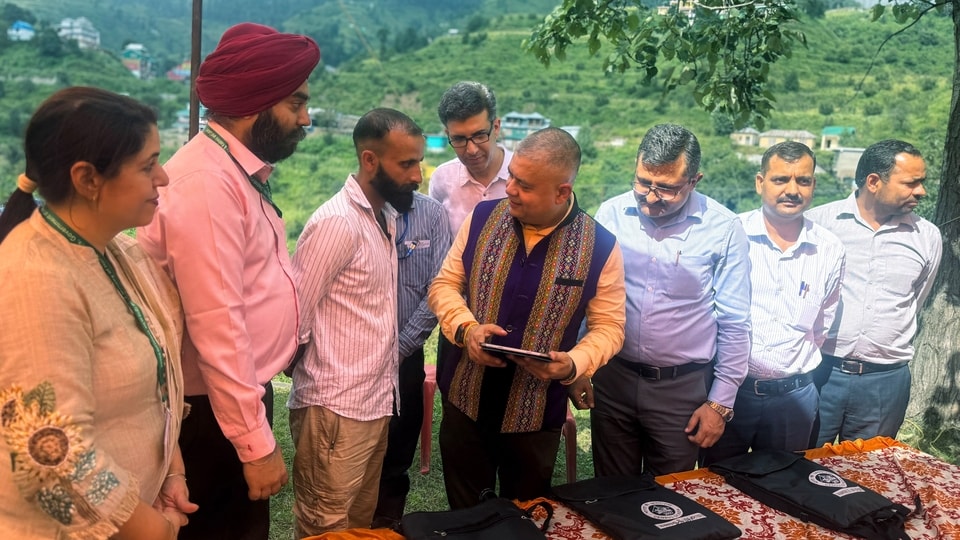
In the rest of the country, the door-to-door enumeration will happen in early 2027. The census is carried out in two phases – house-listing, which has already been captured, and population enumeration, which started for snow-clad areas of Himalayan states after online self-enumeration closed on August 31.
This is the first time in independent India that enumerators will ask a question on caste.
Also Read I Census 2027 and politics of counting caste
Himachal residents reveal census questions
Ram Sharan, 44 — the first respondent from the remote tribal village of Bharmour in Chamba district of Himachal Pradesh— said the enumerator first asked about his personal details, including his name and date of birth, and recorded his Aadhaar details as well. “I was asked about my caste, which I provided. My caste was recorded along with my religion, language and dialect,” he said, adding that information about his parents, marital status and educational qualifications was also recorded.
Deshraj, 37, a resident of Reckong Peo in Himachal’s Kinnaur district, said, “The enumerator collected my Aadhaar and Voter ID details. The details about my job and my duration of stay in Kinnaur were also recorded. I have lived here since 2017.”
Sunita Devi was the first person to be enumerated in Mana — the country’s last village before the China border in Uttarakhand. She said the enumerator asked her whether she had an Aadhaar. “When I said yes, they just ticked on the mobile app without asking for the number,” she said.
Mahendra Arya, the naib tehsildar of Joshimath and in-charge of the population census for the snow-bound areas, said the process started by asking the prescribed questions and entering the responses through the Population Enumeration (PE) app.
Sandeep Sanawal, enumerator for one of the blocks in Mana, said heavy rain constrained work and they were able to fill eight census forms on Tuesday.
Also Read I Three thresholds for census data collection
Census enumeration in Uttarkashi district
Enumeration also took place in Niti village in Chamoli and Gangotri Dham and Mukhba village in the Uttarkashi district. The special exercise covers 131 snow-bound villages and three towns — Badrinath, Kedarnath and Gangotri — across Chamoli, Uttarkashi, Rudraprayag and Pithoragarh districts. A total of 182 trained personnel, comprising 139 enumerators and 43 supervisors, were deployed for the exercise.
Rajendra Singh, 52, said the questions ranged from caste and number of family members to occupation, Aadhaar card, religion and mother tongue. “I did not face any problem in providing answers to the questions. They did not seek any document and noted down my Aadhaar number,” he said.
Deepak Kumar, census secretary of Uttarakhand, said, “There are only 35 villages in the district to be covered under this exercise.”
Operations in snow-bound areas
The population enumeration also started in the snow-bound areas of the UTs of Jammu and Kashmir and Ladakh.
Amit Sharma, chief principal census officer and director, Census Operations, J&K and Ladakh, said: “The commencement of population enumeration from Dudu and Basantgarh carries particular significance as it reflects the Directorate’s commitment to taking the Census to every part of the UTs, including areas where terrain, distance and weather present formidable field challenges.”
Also Read I Govt defers Census 2027 in Manipur amid protests, demand for NRC
He also said that J&K emerged as the top-performing state/UT among all the snow-bound areas covered under the September 2026 Population Enumeration schedule, recording the highest number of self-enumeration submissions.
Last month, the Centre notified 40 questions, including a query on caste for the first time in independent India, to be asked of respondents.


