
 E-Paper



India's 2nd nuclear missile submarine to be commissioned by Rajnath Singh today
With commissioning of INS Arighat, India will have a credible nuclear deterrent and strong second strike capability.

 Prefer HTon Google


New Delhi: Defence minister Rajnath Singh is set to commission India’s second nuclear-powered ballistic missile submarine (SSBN), INS Arighat or S-3, in the presence of top naval officials at a quiet event in Visakhapatnam on Thursday, according to people aware of the matter. The commissioning will be attended by chief of Naval Staff Admiral Dinesh Tripathi, head of Indian strategic command Vice Admiral Suraj Berry and top DRDO officials. The SSBN will function under India's strategic command.
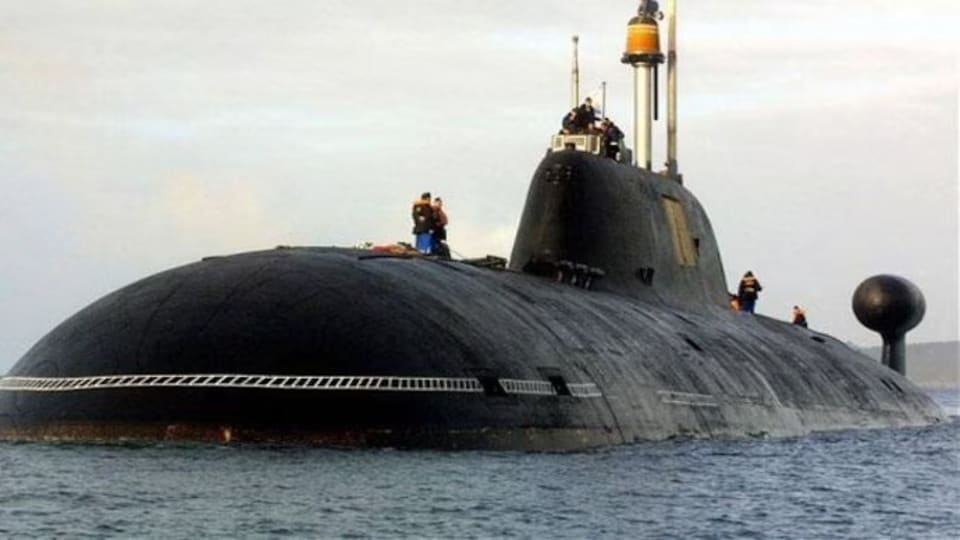
While the defence ministry was tight-lipped about the classified project, HT has learnt that the 6,000-tonne INS Arighat is set to embark on a long-range patrol of the Indo-Pacific armed with 750-km range nuclear ballistic missiles K-15. India’s third SSBN, INS Aridaman or S4, is also set to be commissioned next year, followed shortly after by a fourth SSBN codenamed S-4*, the people said on condition of anonymity.
India will now have two SSBNs – INS Arihant (S-2) and INS Arighat -- patrolling the high seas as a crucial part of the country’s nuclear triad and second-strike capability (due to its no-first-use policy).
The Indian Navy has already approached the Narendra Modi government for the approval of two nuclear-powered conventionally armed submarines (SSNs). The SSBN, like SSNs, can remain under water for months, and their range limitation is only due to logistics, supplies and crew changes. Diesel electric attack submarines, or SSKs, on the other hand, need to surface almost every other day to charge their batteries.
Two SSBNs can act as a deterrent to any navy trying to flex muscles
Given India’s location at the centre of the Indo-Pacific, the two SSBNs can offer huge strategic leverage and act as a deterrent to any navy trying to flex its muscles in the region. Both the INS Arihant-class submarines are powered with an indigenous nuclear reactor and indigenous nuclear missile. Since INS Arihant was a technology demonstrator, INS Arighat has plugged all technological gaps and, in that context, is a more advanced version.
Once the S-4* SSBN is commissioned, India is set to launch the next class of submarines that are much larger -- will be able to carry 3,000km range nuclear ballistic missiles and will have more missile tubes -- the people said.
Since India already has land-based nuclear missiles such as the Agni series, and air launch nuclear capability, the SSBN becomes the most potent weapon in the nuclear triad.
Meanwhile, the Indian Navy is set to acquire more teeth with the latest guided missile stealth destroyer INS Surat, stealth guided missile frigate INS Taragiri, and the sixth of the Kalveri class attack submarines INS Vagsheer – all set to be commissioned in the next few six months. Orders for three more Kalveri class submarines are expected to be placed with Mumbai’s Mazgaon Dock Shipbuilders Ltd this year, the people said.


