E-Paper



Step inside this 1942 Maharaja Mahendrasinhji’s Gujarat palace that blends European and Indian traditions

 Prefer HTon Google


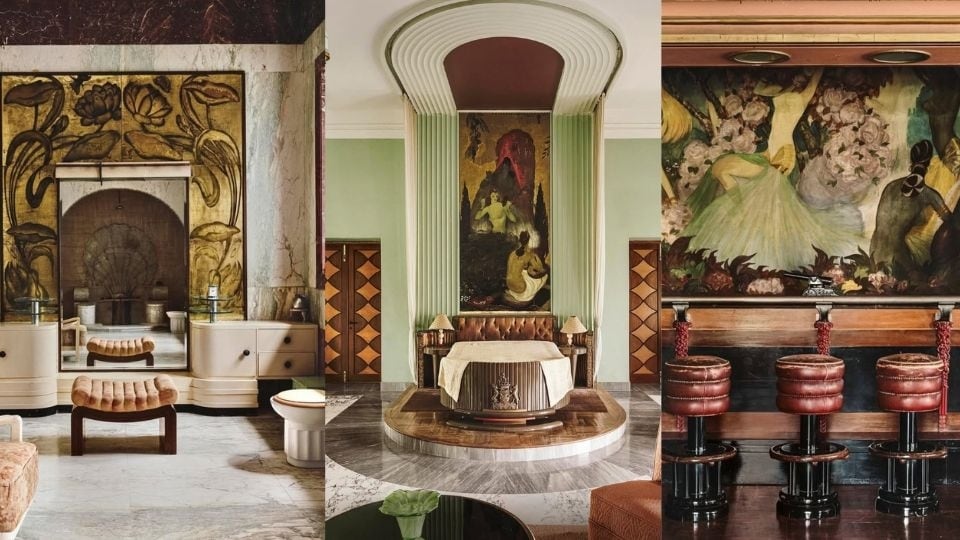
Here’s a sneak peek into a 1942 Gujarat Palace built for Maharaja Mahendrasinhji that perfectly blends European charm with traditional Indian design.
Nestled in the sleepy town of Ahmedabad, sits one of the most beautiful art deco masterpieces, a maharaja’s palace where European style meets Indian craftsmanship. Built in 1942, the palace showcases a radical shift from the traditional architectural style of the time. As the last maharaja of Morvi town, Maharaja Mahendrasinhji christened a new design in his palace. Here’s a closer look inside the Morvi palace in Gujarat shared by Tatler Travel on an Instagram post dated April 14, 2026.
Also read | Step inside Geeta Basra and Harbhajan Singh’s stylish sanctuary in Mumbai
Inside Morvi Palace
Designed by Gregson, Batley and King, the palace features terrazzo corridors, serene inner courtyards, and cylindrical columns. It was built as a new palace by the last Maharaja of Morvi, reflecting a modern approach to royal residences. The geometric pattern and precision throughout the palace made it a timeless icon of style. The palace is a striking fusion of European and Indian styles. This two-storey palace’s exterior layout incorporates two open inner courtyards equipped with fountains, which showcase Indian cooling methods.
Interiors of the palace
The interiors of the palace exemplify Art Deco opulence in every corner. It blends European style with Indian motifs through lavish furnishings and artistic elements. From living room to dining room, study to bedroom, each space is elaborately decorated with wall-to-wall carpeting, mother-of-pearl-tables, cabinets filled with fine crockery, and several sofas. It also features a grand staircase that evokes the grandeur of the palace, serving as the focal point of gatherings. There is a designated corner for the bar that stands out with its leopard-print upholstery, intricate mirror work on walls and ceilings, and erotic murals depicting men and women.
There is an indoor swimming pool as well, connected seamlessly to a gymnasium equipped with vintage exercise machines. Another beautiful space was the maharaja’s office, which is lined with bookshelves containing historical literature and his achievements. The palace’s artistic highlights include artwork by Polish artist Stefan Norblin. His pieces were integrated into walls, complemented by family portraits. Napoleon marble columns, Botticino marble architraves, Cuban mahogany chairs, and French walnut pedestals also enhanced the palace’s interior. The palace walls were adorned with trophies, medallions, oil canvases of horse riders and polo players, and larger-than-life portraits of ancestors, including his father, Lakhdhirji Bahadur, and grandfather, Waghji Bahadur, dressed in all their finery. The colour selection for the entire palace, from pastels to muted shades, patterns to textures, added a European flair to the palace. The luxurious furnishings in the palace were taken from London, showcasing the maharaj’s love for artistic pieces.