E-Paper



Why is Anthony Fauci testifying before Congress? All you need to know about Rand Paul hearing
Anthony Fauci testified before a Senate committee, where he invoked the Fifth Amendment amidst accusations from Senator Rand Paul.

 Prefer HTon Google


Former National Institute of Allergy and Infectious Diseases (NIAID) Director Anthony Fauci returned to Capitol Hill on Wednesday for a closely watched Senate hearing led by Republican Senator Rand Paul, reigniting a years-long dispute over the origins of COVID-19 and government-funded virus research.
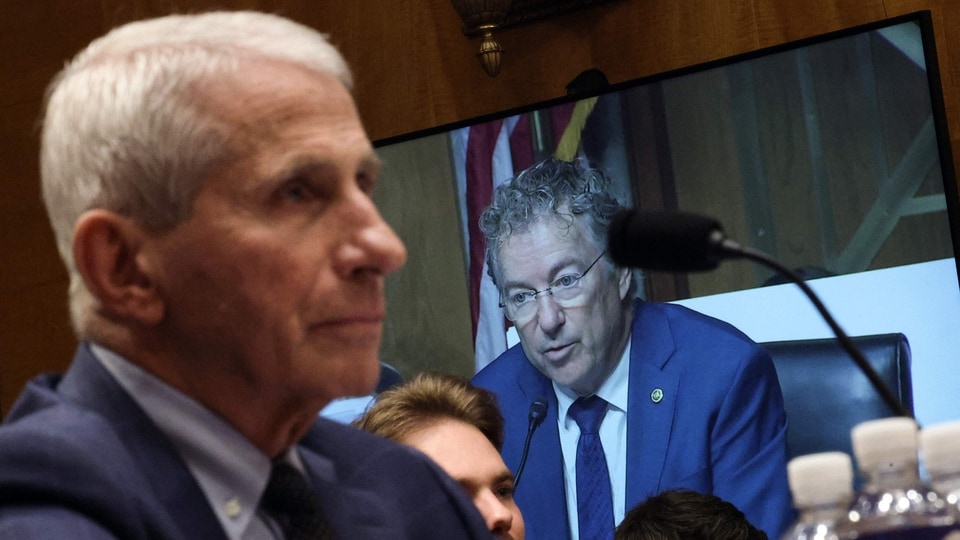
However, rather than answering lawmakers' questions, Fauci invoked his Fifth Amendment right against self-incrimination, accusing Paul of running an "unhinged" campaign to see him prosecuted.
The hearing before the Senate Homeland Security and Governmental Affairs Committee came after Fauci was subpoenaed to testify by Paul, who has repeatedly accused him of misleading Congress about COVID-19-related research.
Here's what led to the latest hearing and why it has once again put the former top US public health official in the spotlight.
Why is Anthony Fauci testifying before Congress?
Fauci was called to testify before the Senate committee chaired by Paul, one of his most outspoken critics since the COVID-19 pandemic. For years, the Kentucky Republican has alleged that Fauci misled Congress about whether the National Institutes of Health (NIH) funded gain-of-function research involving coronaviruses at the Wuhan Institute of Virology in China.
Paul has repeatedly called for Fauci to be criminally prosecuted, accusing him of lying to Congress about the research. Fauci has consistently rejected those allegations, saying the NIH-funded work did not meet the federal government's regulatory definition of gain-of-function research and that he has testified truthfully before Congress on multiple occasions.
The hearing came just days after Paul released more than 1,100 pages of Fauci's pandemic-era diary entries, claiming they contradicted the public narrative surrounding COVID-19.
Representatives for Fauci disputed that characterization, saying the entries were consistent with his public statements, including that he had kept an open mind about a possible lab leak while emphasizing that no definitive conclusion had been reached.
Why did Fauci invoke the Fifth Amendment?
Rather than answering lawmakers' questions, Fauci told the committee he was invoking his Fifth Amendment right against self-incrimination on the advice of his attorneys.
In his opening statement, Fauci argued that Paul's repeated public calls for his prosecution and the recent release of his unredacted personal diary left him with little choice but to remain silent.
"The only conclusion I can reach is that the sole reason he is calling me before this Committee is to get me to say something that could vindicate his repeated public pledges that I end up, in his words, 'behind bars,'" Fauci said. He also described Paul's campaign against him as an "unhinged obsession."
Fauci's attorney, David Schertler, defended the former health official, calling Paul's pursuit "an obsessive vendetta" and describing the accusations against Fauci as "false and disgraceful."
What is the dispute over?
At the heart of the long-running dispute is whether NIH-backed research connected to the Wuhan Institute of Virology amounted to gain-of-function research, work that modifies pathogens in ways that could make them more transmissible or dangerous.
Scientists have long disagreed over how narrowly the term should be defined, a disagreement that underpins the clash between Paul and Fauci.
The origins of COVID-19 also remain unresolved. According to Reuters, the FBI has assessed that a laboratory leak is the likely source of the pandemic, while the CIA reached a similar conclusion with "low confidence."
Four other US intelligence agencies and the National Intelligence Council continue to assess that the virus most likely emerged through natural transmission.
The hearing also came a day after the Trump administration announced a new policy barring federal funding for what it described as "dangerous gain-of-function" research.