
 E-Paper





Anita Goswami is a Senior Content Producer at Hindustan Times, where she primarily covers Indian and international news. With four years of industry experience, she has led coverage of Indian General elections, Assembly elections, and national polls in the United States, Canada, Bangladesh, and Nepal. Her reporting covers global wars and major events, including Operation Sindoor, Sheikh Hasina's ouster and the Mahakumbh Mela. She verifies facts and uses clear sources to ensure accurate reporting. As former Chief Copy Editor at Storytailors, she managed teams to produce top-quality content for networks like NDTV, Profit, CNBC-TV18, Upstox and News18. Her work is featured in NDTV, Meaww, and Global Pulse. Throughout her tenure, Anita has collaborated with and been mentored by top industry experts. When not reading, Anita can be found outdoors or at a bakery. Fields of interest: Indian political history, international elections, historical policy analysis, global conflicts, cultural events, Formula 1, art, media ethics and reporting on socio-political change over time.
 Trending News
Defence, space, trade: The 75-year-old ‘iron brotherhood’ of China and Pakistan
The cooperation includes the jointly developed JF-17 fighter jet, military exercises and major projects under the China-Pakistan Economic Corridor (CPEC).


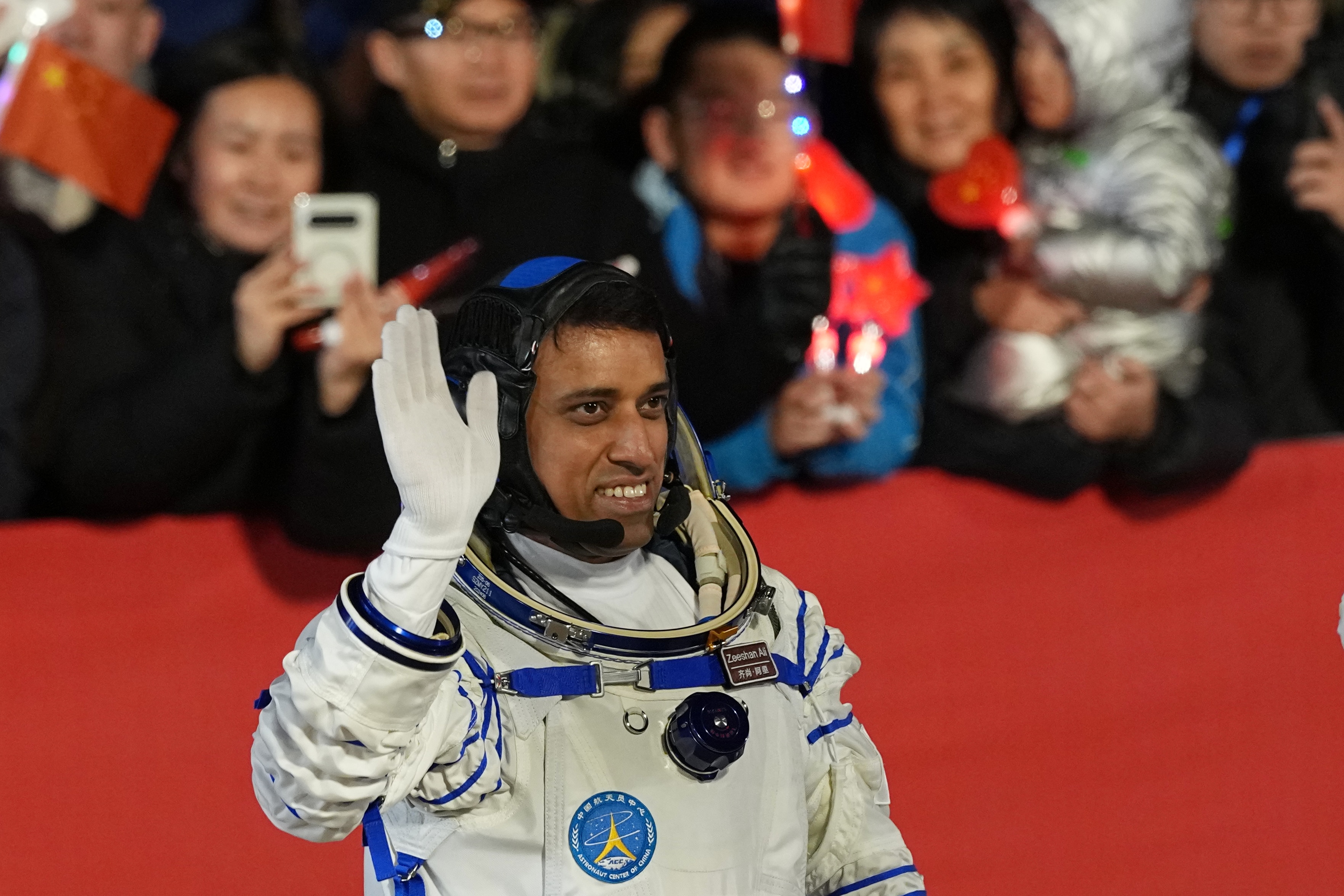
Pakistan and China have long called each other ‘iron brothers’, a relationship built over decades of cooperation in defence, trade and infrastructure. Their latest collaboration has taken this partnership into space, with Pakistani astronaut Muhammad Zeeshan Ali joining China's Shenzhou-24 mission on Wednesday.
Ali travelled to China's Tiangong space station alongside Chinese astronauts Tang Hongbo and Wu Yi. He is the first Pakistani to travel into orbit and the first foreign astronaut to participate in China's crewed space programme. The two countries have completed 75 years of diplomatic relations.
Pakistan-China defence ties: JF-17 fighter jets, submarines and military exercises
The two countries work together on military equipment, technology, training and joint exercises. China is also Pakistan's largest supplier of major weapons.
One of the biggest examples of this cooperation is the JF-17 Thunder fighter jet, jointly developed by China's Chengdu Aircraft Corporation and Pakistan Aeronautical Complex. The aircraft is produced in Pakistan with support from both countries.
Pakistan has also started selling the fighter jet to other countries. In September 2024, it announced a deal to supply JF-17 Block III jets to Azerbaijan, Reuters reported.
The defence partnership also includes naval cooperation. Pakistan is acquiring eight Chinese-designed Hangor-class submarines under a deal that includes technology transfer, Reuters reported in April. Four submarines are being built in China, while the remaining four are being built in Pakistan.
Earlier this year, Pakistan commissioned its first Hangor-class submarine at a ceremony in China attended by Pakistan's President Asif Ali Zardari, AP reported.
The two countries also hold regular joint military exercises. These include Warrior for their armies, Shaheen for their air forces and Sea Guardian for their navies.
ALSO READ | ‘China working to suppress India’s rise, backed Pakistan after Operation Sindoor’: US panel’s report
The fourth edition of the Sea Guardian naval exercise concluded in April, following drills in the North Arabian Sea.
China also supplied 80% of Pakistan's major arms imports between 2021 and 2025, according to the Stockholm International Peace Research Institute (SIPRI).
CPEC: China's major infrastructure partnership with Pakistan
The China-Pakistan Economic Corridor (CPEC) is one of the biggest economic projects between the two countries and a key part of China's Belt and Road Initiative (BRI).
Launched in 2013, CPEC gained momentum during Chinese President Xi Jinping's visit to Pakistan in April 2015. The project aims to connect China with Pakistan's Arabian Sea coast through a network of roads, railways, power plants and other infrastructure projects, as per Chinese media.
An important part of the corridor is Gwadar Port in Balochistan, which China has helped develop, as per a report in Carnegie Endowment for International Peace.
Several road and transport projects have also been completed under CPEC. These include the 120-km Havelian-Thakot section of the Karakoram Highway, which has improved connectivity between northern Pakistan and China, and the 392-km Multan-Sukkur Motorway, part of the wider Peshawar-Karachi motorway network. The projects also include Lahore’s 27-km Orange Line Metro, which has 26 stations, and the New Gwadar International Airport, completed in 2024.
ALSO READ | The power frame: Modi, Xi, Putin, Sharif feature in SCO Summit group photo
Energy projects have been another major part of CPEC. During its first phase, several Chinese-backed power plants were developed to help Pakistan tackle electricity shortages. These include the 1,320-MW Sahiwal, Port Qasim and China Hub coal power plants, the 660-MW Engro Thar coal project, the 720-MW Karot hydropower project and the 884-MW Suki Kinari hydropower project.
CPEC 2.0
The second phase was formally launched in September 2025, with a focus on five areas: growth, innovation, green development, livelihoods and regional connectivity. At a CPEC review meeting on August 31, Pakistan’s planning ministry said the first phase attracted around $25 billion in Chinese investment and added nearly 8,000 MW to the country’s power-generation capacity.
The second phase is expected to expand cooperation in areas such as minerals, agriculture, technology, skill development and business partnerships. One initiative involves sending around 1,000 Pakistani agricultural experts to China for training in advanced farming techniques. According to the CPEC Secretariat, the first batch has completed its training and returned to Pakistan.
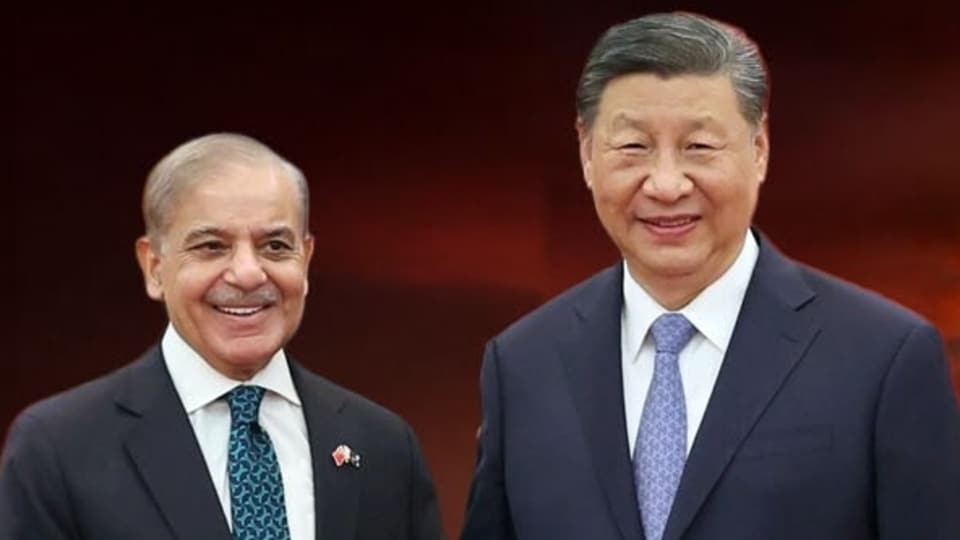
ALSO READ | Pakistan PM Shehbaz Sharif, army chief Asim Munir meet China's Xi in Beijing as Iran war looms
Space cooperation
Pakistan and China have worked together on space projects for several years. In 2011, China launched Pakistan’s communications satellite PakSat-1R. In 2018, it launched two more Pakistani satellites, PRSS-1 and PakTES-1A. Pakistan also launched PakSat-MM1 in 2024 to improve its communication services, Dawn reported.
In 2024, Pakistan’s iCube-Qamar satellite travelled aboard China’s Chang’e-6 mission. Developed by Pakistan’s Institute of Space Technology and Shanghai Jiao Tong University, it was designed to take pictures of the Moon.
The two countries later expanded their cooperation to human spaceflight. In February 2025, Pakistan’s space agency SUPARCO and the China Manned Space Agency signed an agreement for astronaut selection and training. Two Pakistani candidates, Muhammad Zeeshan Ali and Khurram Daud, were selected for training in China. Ali was later chosen for the Shenzhou-24 mission.
They also support each other on several international issues. Pakistan has backed China’s position on Taiwan, while Beijing has repeatedly supported Pakistan’s sovereignty, independence and territorial integrity.
In a joint statement issued on May 26, to mark 75 years of diplomatic ties, the two countries pledged to strengthen defence cooperation, take forward CPEC 2.0 and expand trade and regional connectivity. They also reaffirmed their commitment to a 2025-2029 action plan aimed at building a closer China-Pakistan partnership.


