E-Paper


In 2001, two Tofino protesters spent 28 days in a cedar believed to be 800 years old; a metal brace later helped preserve it
Two residents occupied Tofino's threatened Eik Cedar for 28 days in 2001. An engineered metal support later helped preserve the tree.

 Prefer HTon Google


Two people spent 28 days in the canopy of an ancient western red cedar in Tofino, British Columbia, to protest plans to cut it down. The protest brought national attention to the tree and prompted efforts to find an alternative to removing it. One proposed solution involved using engineering expertise to design a metal brace anchored into the bedrock beneath the tree.

Minutes from the District of Tofino Council Meeting on May 14, 2001, indicate the official response to the dispute. Through Resolution 301-01, council members deferred cutting the cedar tree for no more than 45 days, allowing Eik Landing Inc., the developer of adjacent lands, to prepare a rezoning application proposing support structures. The resolution required a fully designed structure sealed by the structural engineer that would address the danger posed by the tree in its existing condition without obstructing public traffic on Eik Road. The developer was required to cover all costs associated with its construction.
Why the old cedar became the object of a protest
This tree grew on the land that was part of John Eik’s holdings, who was a Norwegian settler. Eik was a Norwegian settler whose family history in the area is documented in the Tofino Arts Council publication Eik Street/ Eik Cedar. John Eik came to Canada in 1891 at the age of 22. He worked on fishing schooners operating out of Seattle. During one voyage, his ship took shelter in Clayoquot Sound, where he decided to settle.
Deep Dive

In 1896, Eik claimed 152 acres of land and initially built a cabin on a low plateau near the waterfront. The location offered fresh water, space for a garden, and a suitable anchorage. He later married Serianna Flovik, and the couple raised two children, Amelia and Hubert. In 1913, Eik built a two-storey family home using timber from the property. The family also established the Fernwood Chicken Farm, supplying eggs and poultry to early settlers. The Arts Council's account estimates that the western red cedar was already about 700 years old when Eik acquired the property.
By March 2001, the cedar had been designated a danger tree because it was considered potentially hazardous to a proposed development. The controversy formed part of a larger dispute over Eik Landing, which was being developed on the former waterfront homestead. In Tofino and Clayoquot Sound: A History, the chapter The Emerging Scene describes how developer Chris Le Fevre purchased the property, where two massive red cedars were believed to be more than 800 years old. Insurers reportedly considered the trees hazardous because of rot and the possibility of them falling, and required their removal before the project could proceed.
Following the destruction of one of the cedars, people came together in the form of the Tofino Natural Heritage Society to protect the other. The other cedar had been located right next to the main road to downtown Tofino, making the dispute visible to people passing through the area. Two protesters climbed about 24 meters into the tree and remained there for 28 days. The demonstration attracted media attention, while the newly established society began raising funds to save the cedar. Engineers and arborists also began exploring ways to support the tree rather than cut it down.
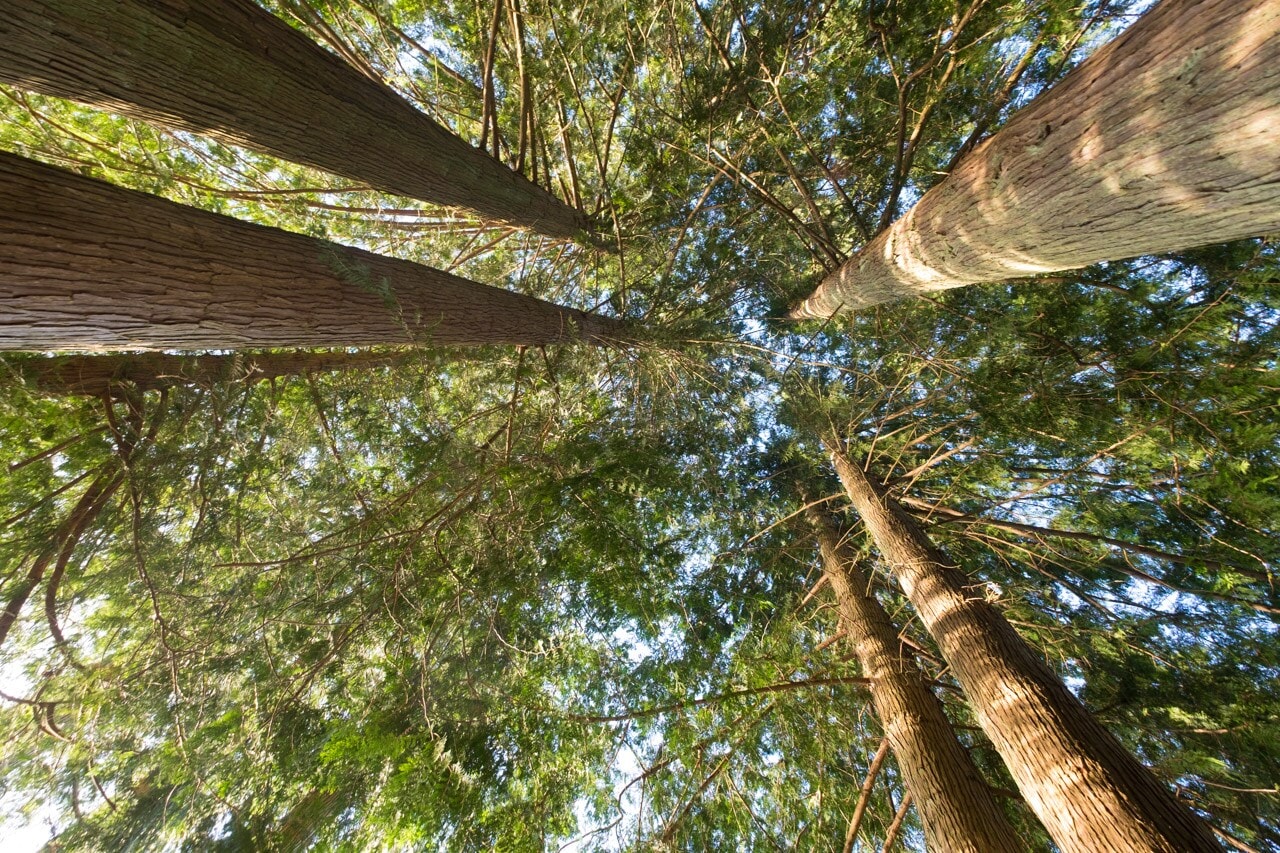
Engineering solution that helped preserve the cedar
The protest brought attention to the tree; however, finding a resolution required practical measures. Resolution 301-01 required the developer to provide an engineering proposal along with financial security to maintain or replace the support structure. The financial security had to equal 120% of the structural engineer's estimated construction costs.
The council also placed conditions on the arrangement. Before municipal staff could act on the proposal, the protestors had to leave the tree and remove their equipment, signs and other objects from District property. All demonstrations relating to the cedar also had to stop. The resolution therefore set out both the requirements for a possible preservation structure and the conditions under which the municipality would proceed.
The outcome came in the summer of 2002. According to Tofino and Clayoquot Sound: A History, engineers fitted the surviving Eik Cedar with a specially designed metal girdle anchored into the bedrock. The Tofino Natural Heritage Society had hired a structural engineer to design and install the distinctive support, according to the Arts Council's account. This engineering work provided a way to retain the cedar at its original location while addressing the concerns about its condition.
As the community became more and more popular with tourists and developed, residents faced the challenge of accommodating growth while preserving the natural features that had helped shape Tofino's character. Today, the cedar is one of the stops on a cultural walking tour organized by the Tofino Arts Council. The tour provides visitors with information about the Eik family's original homestead and the tree's significance in the community's history. Its preservation followed efforts by residents, the municipality, and engineers to find an alternative to cutting it down.