
 E-Paper



Pollution surveillance widened in Delhi with 13 new air quality monitoring stations
These air quality monitoring stations will continuously measure pollutants, including PM2.5 and PM10, alongside meteorological parameters.

 Prefer HTon Google


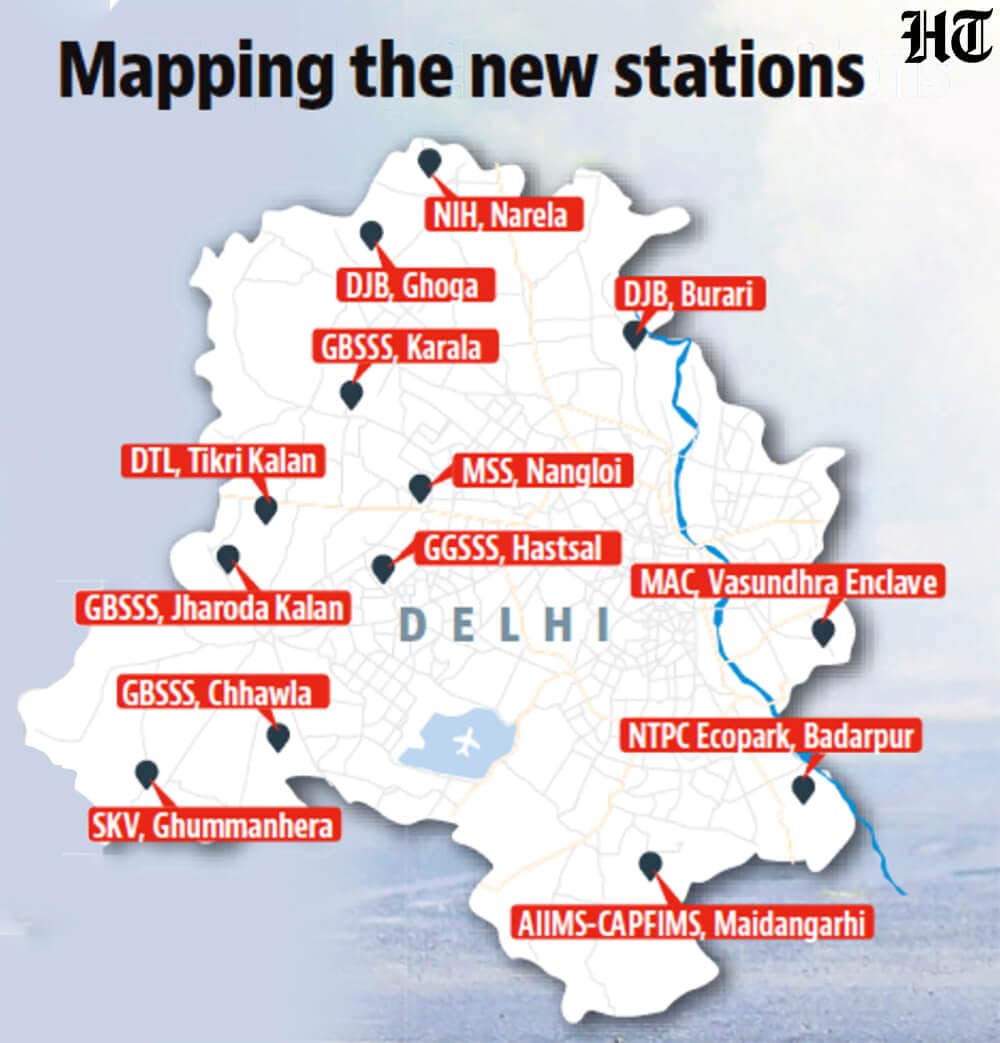
The Capital on Tuesday expanded its air quality monitoring network from 47 to 60 stations with the inauguration of 13 new continuous ambient air quality monitoring stations (CAAQMS).
The new monitoring stations have been installed at Ghummanhera, Chhawla, Karala, Hastsal, Jharoda Kalan, Burari, Narela, Maidan Garhi, Nangloi, Vasundhara Enclave and Badarpur, among others. They will continuously measure pollutants, including PM2.5 and PM10, alongside meteorological parameters. The data will be available through the Central Pollution Control Board’s server and the SAMEER mobile application.
Integrated digital monitoring platform
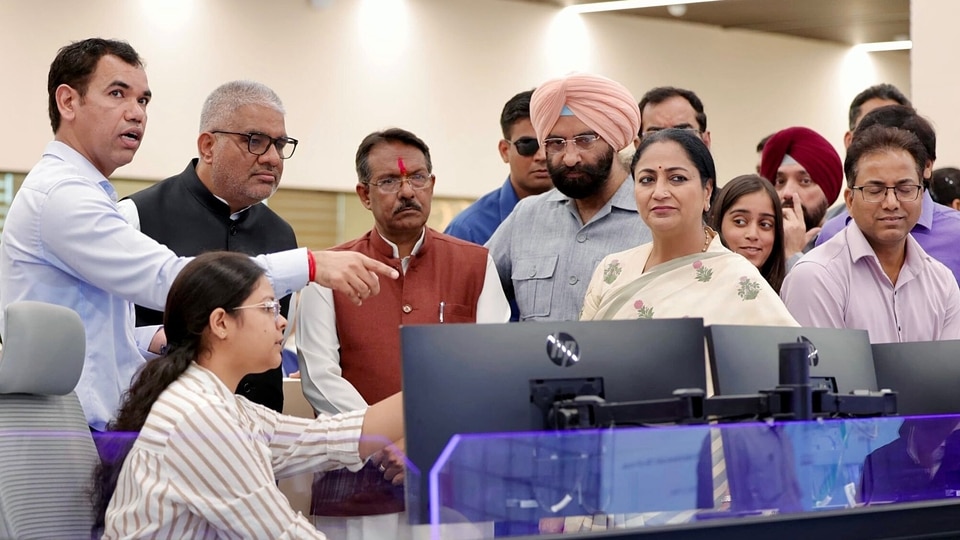
Union environment minister Bhupender Yadav and chief minister Rekha Gupta who reviewed measures to tackle air pollution at Anand Vihar, one of the Capital’s major pollution hotspots, also visited the Delhi Pollution Control Committee’s (DPCC) AI-enabled Integrated Command and Control Centre (ICCC) at Shastri Park for the virtual inauguration of the CAAQMS.
Yadav said the monitoring network was being expanded beyond population-based norms, with stations being installed across a five-kilometre-by-five-kilometre grid.
“The approach would help assess pollution levels in peri-urban and suburban areas, which are important for understanding the movement of pollutants into and out of Delhi,” he said.
The ICCC is a centralised digital platform integrating data on air quality, dust-control measures, ambient noise, industrial emissions, stubble burning, citizen complaints and enforcement vehicles. Of the 15 external data systems planned for integration, nine have been connected, while the remaining six are being integrated in phases.
Also Read I HSPCB seals three illegal RMC plants in Ghamroj amid high pollution levels
The centre employs artificial intelligence, advanced cameras, real-time data and GPS tracking to monitor pollution-control activities, including mechanical road sweeping, construction and incidents of open burning.
CM Gupta said pollution control remained a priority for her government, with efforts focused on monitoring, infrastructure and coordinated enforcement. She said modern technology and collaboration between the Centre and Delhi government would make pollution-control measures more effective.
Delhi environment minister Manjinder Singh Sirsa said the ICCC was functioning as a “war room” against pollution, with more than 700 construction sites being monitored.


Stay updated with all top Cities including, Bengaluru, Delhi, Mumbai and more across India. Stay informed on the latest happenings in World News along with Delhi Election 2025 and Delhi Election Result 2025 Live, New Delhi Election Result Live, Kalkaji Election Result Live at Hindustan Times.


