E-Paper



Ahead of UP elections , Amit Shah to address BJP’s state working committee on Oct 30
The BJP’s Uttar Pradesh tally fell to 33 seats in the 2024 Lok Sabha elections, while the Samajwadi Party won 37 and the Congress secured six.

 Prefer HTon Google


As the Bharatiya Janata Party gears up for the big political challenge in Uttar Pradesh for the 2027 assembly polls, it’s Union home minister Amit Shah who is likely to get involved in direct action with an address to the party’s state working committee in Lucknow on October 30.
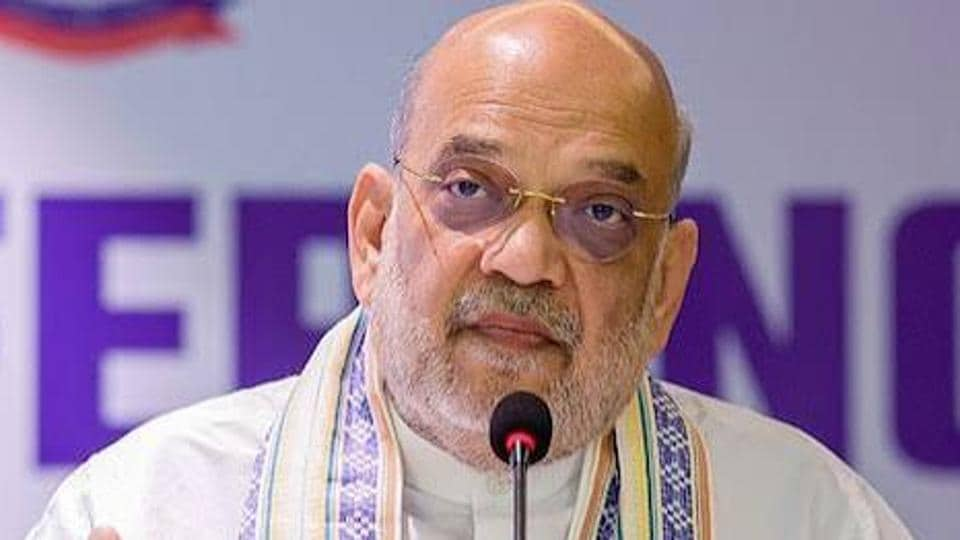
Interestingly, it was only in the run-up to the 2019 Lok Sabha polls when the BJP was faced with the seemingly formidable rainbow coalition of the Samajwadi Party-Bahujan Samaj Party (SP-BSP) in UP that he addressed the state working meeting in late 2018 in Meerut. The BJP went on to win 62 Lok Sabha seats in Uttar Pradesh in 2019.
Since then, the state has witnessed the 2022 Vidhan Sabha and 2024 Lok Sabha battles. The eight-year gap underlines the importance attached to Shah’s presence this time.
BJP faces coordination and caste-related challenges ahead of 2027
The move comes as the party looks to retain power for a third straight term in Uttar Pradesh.
Party leaders acknowledge that the party is facing a challenge ahead of 2027 polls amid the talk of the lack of coordination, cadre fatigue, caste-regional issues and the need to counter the likely Samajwadi Party-Congress alliance under the INDIA bloc umbrella which had pushed the BJP on the backfoot in the Lok Sabha polls in Uttar Pradesh in 2024.
Shah’s entry is expected to help bridge differences and prime the party machinery for the poll test ahead.
Shah’s decision to reach out to the committee is being seen as a major political move. The seriousness of the effort can be gauged from the fact that not only the 548-member state working committee, but all MLAs and MPs from the state, district presidents and other key office bearers will be present.
Hence, as the chessboard for 2027 takes shape in Uttar Pradesh, the BJP has again turned to its master strategist to steer it to a hat-trick of assembly poll wins in the most populous state.
Also read: ‘Outrage has been noted’: UP poll body apologises for controversial comment amid voter roll revision
BJP looks to revive booth-level organisation and social coalition
The party is hopeful that Shah will replicate the 2014 Lok Sabha and 2017 assembly poll model, revamp booth committees district-wise, fix non-Yadav OBC, non-Jatav Dalit equations and assign clear roles to stem resentment in the ranks.
“Amit Shah will address the opening session of the two-day state working committee of the party on October 30 in Lucknow. It will be a full-fledged meeting where the entire state executive will be present along with office bearers of the party,” Dinesh Pratap Singh, BJP chief state spokesperson, said.
A new booth management plan for Mission-2027 is expected to be unveiled at the meeting. Shah will also separately meet all district presidents to take direct feedback on booth strengthening, delivery of welfare scheme benefits and local equations.
Shah was first made the party’s UP incharge in 2013. Months later, the BJP won 71 of the 80 Lok Sabha seats in the state, catapulting the party to power at the Centre in 2014.
Three years later, when Shah was the BJP national president, the party alone won 312 seats in the 2017 UP assembly polls and the NDA’s tally touched 325.
In the 2022 Uttar Pradesh assembly elections, the BJP won 255 seats and its allies Apna Dal (S) and the Nishad Party bagged 12 and six seats respectively.
Before Shah’s entry into the UP political scene, the BJP had been reduced to a marginal player in the state, winning 10 seats each in the 2004 and 2009 Lok Sabha polls.
Also read: UP MLC polls: BJP retains three seats, leads on four, SP wins in Varanasi, ahead in Agra
How Shah built the BJP’s caste-based support base
Shah first united the “scattered” organisation and then applied a 60-40 formula, which was pitted against the SP-BSP’s 40% core support of Yadavs, Muslim, Jatavs. He consolidated the 60% upper castes, non-Yadav OBCs and non-Jatav Dalits.
The current backdrop is starkly different from 2017 or 2022 assembly polls as a resurgent SP and its likely partner Congress will look to repeat their 2024 Lok Sabha election success.
Riding on its PDA plank, the SP pulled a large chunk of OBCs and Dalits into its fold in the 2024 Lok Sabha polls, puncturing the BJP’s 60% social coalition as the SP’s tally jumped from five in 2019 to 37 seats. The Congress won six seats in Uttar Pradesh in the 2024 Lok Sabha polls. The BJP’s tally fell to 33 in the state.