E-Paper



QS Asia rankings: Indian universities slip for second consecutive year; none in top 50
The last time an Indian institution featured in the regional top 50 was in the 2025 edition, when IIT Delhi and IIT Bombay ranked 44 and 48, respectively.

 Prefer HTon Google


India’s leading universities have slipped further in the QS World University Rankings: Asia 2027, released on Wednesday, with none featuring in the top 50 for the second consecutive year. This comes even as the country’s representation rose to 325 institutions from 294 last year, making it the second most represented higher education system in the region, after mainland China, which increased its tally to 448 from 395.
The decline among the country’s top-ranked institutions comes alongside a marked contrast in research performance: Indian universities are among Asia’s strongest in research output and doctoral capacity, but have struggled to translate that strength into greater research impact. Weak performance on academic reputation and internationalisation indicators have further weighed on their rankings.
Also read | KTET Hall Ticket 2026 releasing today at ktet.kerala.gov.in, here’s how to download
Six Indian institutions — five Indian Institutes of Technology (IITs) and the Indian Institute of Science (IISc), Bengaluru — feature in the top 100 of the 2027 rankings, down from seven in the previous edition. All six have also slipped for the second consecutive year, with each having recorded a decline in both the 2026 and 2027 editions.
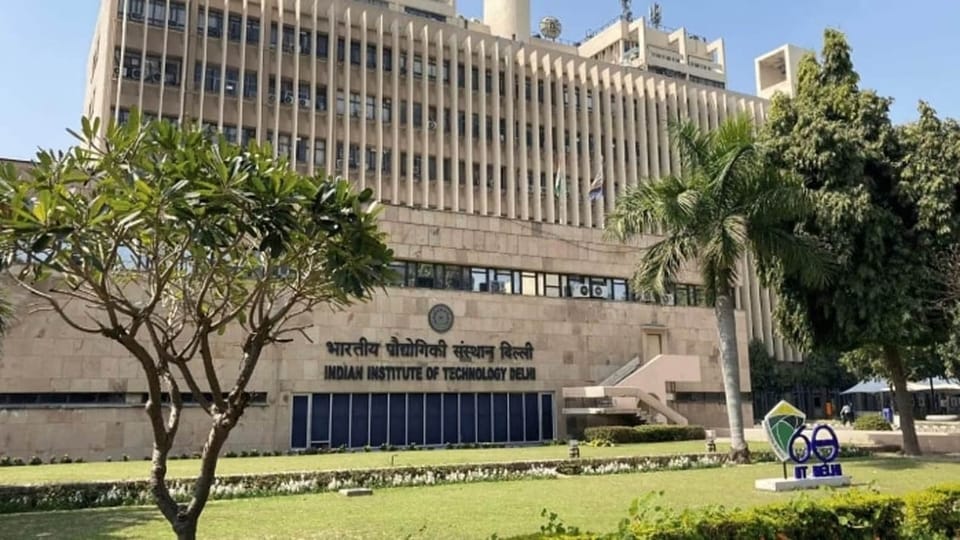
IIT Delhi, the country’s highest-ranked institution, fell seven places to 66 from 59 in the previous edition. IISc, Bengaluru, dropped 15 places to 79 from 64, while IIT Bombay slipped 12 places to 83 from 71. IIT Madras fell 15 places to 85 from 70; IIT Kharagpur dropped 13 places to 90 from 77; and IIT Kanpur fell 20 places to 97 from 77. The University of Delhi also moved out of the top 100, falling to 106 from 95.
The last time an Indian institution featured in the regional top 50 was in the 2025 edition, when IIT Delhi and IIT Bombay ranked 44 and 48, respectively. Both fell out of the top 50 in the 2026 edition.
According to QS, “rankings are relative”, meaning an institution can fall even when its overall score improves if its peers make faster progress.
India’s number of ranked institutions rose from 294 last year to 325 — a net increase of 31. Mainland China remained the most represented higher education system, with 448 institutions, while the overall rankings feature 1,722 universities from 26 higher education systems.
India now accounts for 19% of all institutions in the rankings, up from 24 institutions in 2016. Yet, 71% of Indian universities with comparable rankings declined this year, while 18% improved and 11% remained stable.
The contrast is particularly visible in the rankings’ research indicators. India has emerged as Asia’s strongest performer in research output relative to the number of academic staff, but its universities have not achieved comparable results in the influence of that research.
BSEB Sent Up Exam 2027 datesheet: Bihar Board Class 10, 12 timetable released, check dates here
Five Indian universities feature in Asia’s top 10 for Papers per Faculty — more than from any other higher education system — while 27 are in the regional top 50. The Indian Institute of Science (IISc), Bengaluru, ranks first in this indicator, followed by IIT Madras at third, IIT Delhi at seventh, IIT Roorkee at eighth and IIT Ropar at ninth. Papers per Faculty is also the only indicator in which more Indian universities improved than declined: 60% moved up, 39% fell and 1% remained unchanged.
India’s doctoral capacity is another strength. Fifteen Indian universities share first place in Asia for the proportion of academic staff holding PhD qualifications, more than double the number in the next best-performing system, Iran. A total of 47 Indian universities feature in the regional top 100 for this indicator, up from 16 in 2018. India’s average score of 75 is also well above the regional average of 56.1.
However, this research capacity has not translated into comparable research impact. Only three Indian universities feature in Asia’s top 50 for Citations per Paper, and just one is in the top 10. India’s average score on this indicator is 26.3, against the regional average of 35.2. Shoolini University is India’s highest-ranked institution for citations per paper, at eighth in Asia, despite being placed 177th overall.
“India has built remarkable research capacity. Its universities lead Asia for the number of institutions in the top 10 for Papers per Faculty, and 15 share first place for Staff with PhD. The challenge now is to translate this strength more consistently into research impact and international recognition,” QS senior vice-president Ben Sowter said in a statement.
The gap also extends to academic and employer reputation — two indicators that carry a combined 50% weight in the rankings. The average Indian score for academic reputation is 15.7, compared with the regional average of 22.4; 76% of Indian universities recorded a decline on this indicator. For employer reputation, India’s average score is 16.1 against 24.9 regionally, with 83% of its institutions recording a fall.
There are some exceptions among the leading Indian institutions. IIT Bombay ranks seventh in Asia for employer reputation and IIT Delhi tenth, making them the first Indian institutions to enter the indicator’s top 10. Six Indian universities feature in the top 50 for employer reputation, compared with five in the previous edition.
Internationalisation remains another weak area. India’s average scores are below the regional averages across all four indicators measuring international faculty, international students and student exchange. Its average score for international faculty is 17.7 against 33.3 for Asia; for international students, it is 16.9 against 29.3. The corresponding scores for inbound and outbound exchange students are 12.1 and 14.1, compared with regional averages of 20.4 and 22.6, respectively.
“The falls mainly reflect much tougher competition, not a drop in the institutions’ own performance. This is a larger edition, with 195 new entrants across Asia, and universities around India’s top institutions improved faster. The overall scores of India’s top six were broadly stable, and IIT Bombay and IIT Kharagpur actually raised theirs,” QS said.
Sowter said that although several leading Indian institutions had fallen as competition across Asia grew, the country had a strong foundation on which to build. “Continued investment in research quality, international partnerships and global visibility will help sustain its progress,” he said.
QS regional director Ashwin Fernandes said the National Education Policy (NEP) 2020 and the Anusandhan National Research Foundation (ANRF) provided a framework for the next stage of development. “Deeper international research partnerships, more international faculty and students, and closer links with industry can help ensure that research produced on this scale achieves greater impact,” he said.
“With foreign universities opening campuses in India and Indian institutions expanding overseas, the country has an opportunity to become a major global centre for education and research,” Fernandes added.
Despite the broad decline, India increased its presence in Asia’s top 200 to 21 institutions, from 20 in the previous edition and 17 in 2018.
Chandigarh University rose five places to 104, its highest position yet, while Lovely Professional University climbed 33 places to 154. Symbiosis International improved 25 places to 175, Jamia Millia Islamia moved up 14 places to 183, and Manipal Academy of Higher Education entered the top 200 at 195, from 206. Jawaharlal Nehru University also improved marginally, moving to 128 from 130.
Among institutions that slipped, BITS Pilani fell to 161 from 154, Shoolini University to 177 from 159, and UPES to 183 from 163.
The broader regional picture underlines the growing competition. The University of Hong Kong retained the top position, followed by Peking University. Tsinghua University rose six places to third, while the National University of Singapore fell to joint sixth and Nanyang Technological University to eighth. Hong Kong has five institutions in the top 10, mainland China three and Singapore two.
The rankings assess universities across 11 indicators, including academic and employer reputation, faculty-student ratio, citations per paper, papers per faculty, staff with PhDs, international research network, international faculty and student mobility. Academic reputation carries the highest weight at 30%, followed by employer reputation at 20%.