
 E-Paper



Xi's open-source AI pitch: A reminder of why Delhi endorses a third way forward
India used its Delhi AI summit to propose an AI path between Washington and Beijing. Here’s how Xi’s pitch to Brics compares against it.

 Prefer HTon Google


Chinese President Xi Jinping on Sunday proposed a Brics open-source artificial intelligence community, offering the grouping a Beijing-led alternative to the closed-model ecosystems built by American firms such as OpenAI and Anthropic.
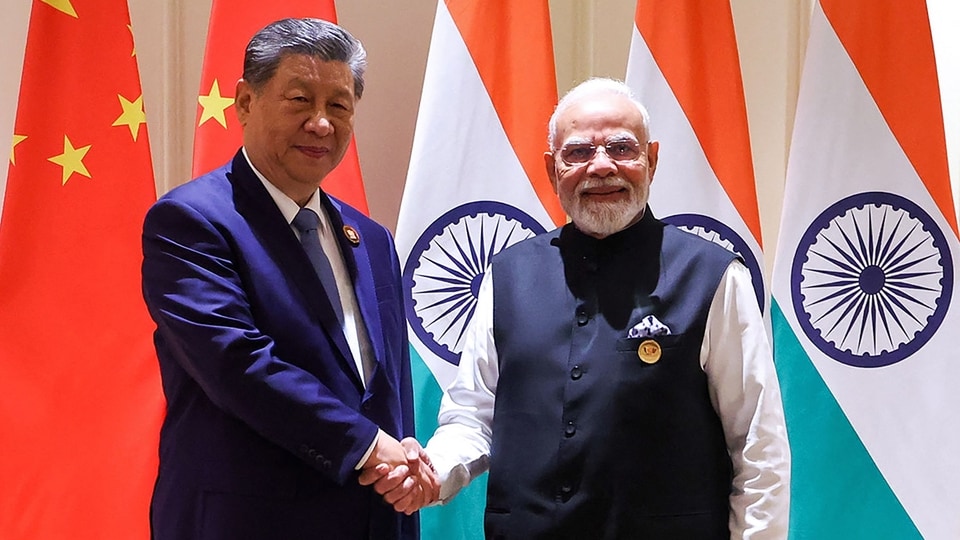
The proposal was one of five trade and technology initiatives Xi unveiled at the outreach session of the Brics Summit, and it follows Beijing’s creation of the World AI Cooperation Organisation, a grouping of about 30 countries working towards lower-cost alternatives to US-controlled AI infrastructure.
“China will be a pioneer in establishing a Brics AI open source community,” Xi said, adding that Beijing would “build an open ecosystem for AI” and support cooperation on developing and applying large language models.
India has not yet publicly responded.
The proposal comes seven months after India, jointly with France, used the AI Impact Summit it hosted in New Delhi to put forth a third way out of the US-China AI duopoly. That third way rested on three planks: strategic autonomy from handful of dominant tech powers; principles rooted in democratic values and human rights; and collaborative ecosystems built on open-access infrastructure and privacy-preserving data sharing. Xi’s proposal uses similar vocabulary and applies it to a framework Beijing would lead.
What an open weight AI model is
To understand what these three ways are, it helps to look at some technicalities of how AI models are “closed” or “open”.
An open weight AI model is one whose learned parameters — the numbers a model has trained into itself — are published for anyone to download, adapt or host. A closed model like ChatGPT or Claude keeps those weights behind an application programming interface, so users rent access to them. An open weight model such as Meta’s Llama, China’s DeepSeek and Kimi, or Alibaba's Qwen releases them. This is different from full open source: the training data and the code used to build the model are usually still private, which limits how deep independent safety testing of the model can go.
But what does it mean practically?
A closed model can only be subscribed to – a user will need to pay Anthropic (for Claude), OpenAI (for ChatGPT) or Google (for Gemini). But an open-weight model can be downloaded and configured on a local machine and run by the user.
As straightforward as it sounds, the latter method requires powerful computers and expensive memory (together known as compute) while in the case of closed models, that aspect is priced in and handled by the service providers.
The case for open models
Cost is the sharpest argument for open weights. Chinese lab DeepSeek trained a frontier-class model for a reported $5.6 million under US export restrictions on advanced chips. Researchers at UC Berkeley subsequently replicated comparable reasoning capability for around $50. India’s five-year IndiaAI Mission budget of ₹10,372 crore is roughly what OpenAI spends in six months. At that scale gap, open weights are the only realistic route to any form of sophisticated sovereign capability.
Sovereignty of use is the second. A 2025 survey, by Emeritus, found 96% of Indian professionals using AI or generative AI at work. The overwhelming majority of that use runs on foreign models and foreign compute, given the early stage of India’s own foundation-model ecosystem.
Open weight releases let Indian institutions download, fine-tune, host and audit models domestically, without a US API contract or an export licence (which can be rescinded with little say from Indians) to go with it. The same logic reduces concentration of AI capacity in a handful of California labs and lets universities and public bodies build on frontier capability without paying rent.
Third, India’s own needs.
The country’s 22 scheduled languages are commercially unattractive to closed foundation-model providers, whose training data and safety evaluations are chronically underweight on Indic material. Serious work on Indic-language capability — whether by universities, public bodies, or Indian labs — depends on being able to take an existing open weight model and adapt it, because no domestic effort will match the pre-training compute of a Californian frontier lab from scratch.
Union minister Ashwini Vaishnaw’s second New Delhi Frontier AI Impact Commitment, announced at the Delhi summit in February, was to strengthen multilingual and contextual safety evaluations of AI systems for the Global South. That commitment cannot be met on closed-model APIs alone.
The case against
One, open weight releases are effectively irreversible. Once weights are on the internet, they cannot be recalled. Malicious fine-tuning can strip built-in safety guardrails from an open weight model in hours, and the technical literature on this is now unambiguous. As frontier capability rises, containment goes from an academic concern into a proliferation problem.
Two, a closed model has a defendant when things go wrong. An open weight model distributes responsibility across the original releaser, the intermediate fine-tuner, the deployer and the end user, with no clear locus of liability.
The third is a more narrow con – at least from the perspective of the greater good: open AI as a norm could be a challenge for domestic AI companies. Indian model builders face a specific commercial problem that makes their work commercially compelling. But if open weights become the operating norm, the case for a domestic foundation model narrows. Buyers who might otherwise pay Sarvam or BharatGen can take the next Llama or DeepSeek release for free. The pro-openness argument that helps India against OpenAI’s dominance also weakens the business models of India’s own model builders.
The third way India endorses
At the Delhi summit in February, India and France framed the third way as a governance philosophy for AI, built largely on three pillars. The first was strategic autonomy: sovereign, sustainable AI capacity that avoids dependence on a small set of dominant tech powers. The second was shared principles: safe, secure and transparent AI aligned with democratic values and human rights, building on the Paris AI Action Summit and the New Delhi Impact Summit outcome documents. The third was collaborative ecosystems: open-access infrastructure, privacy-preserving data sharing along the lines of India's Data Empowerment and Protection Architecture, and joint research in fields including healthcare.
The Delhi summit was where these three planks stopped being an abstract position and became operational commitments. Union minister Ashwini Vaishnaw announced two New Delhi Frontier AI Impact Commitments there. The first was to share anonymised usage insights from AI deployment so that policy on jobs, skills and economic transformation could be built on evidence rather than assumption. The second was to strengthen multilingual and contextual safety evaluations of AI systems, with the Global South specifically in mind. French President Emmanuel Macron, addressing the summit, said Europe was not opposed to regulation, a line aimed at Washington’s laissez-faire approach as much as at anywhere else.
Also read: Sam Altman, Elon Musk back Anthropic CEO Dario Amodei’s warning to slow AI development
How Xi’s proposal compares against this
Xi’s proposal fits the collaborative ecosystems plank most closely. He proposed pooled compute, shared foundation models, joint training courses and research collaboration across Brics members. That is much the same shape of infrastructure India and France proposed in February, and it is what makes the offer tempting for countries that care about accessible AI. It does part of what India said it wanted done.
But the proposal poses a problem from a strategic autonomy perspective. India built that plank so it would not have to depend on any small set of dominant tech powers. Signing on to a Chinese-led Brics AI community, formalised on the model of Beijing’s existing World AI Cooperation Organisation, would mean swapping one dependence for another. Instead of relying on American closed labs, India would rely on a Chinese-led open ecosystem which, while far less concentrated, will still mean relying on models whose training origins are also unknown.
India and China start from different premises on the third plank; shared principles. India’s third way is anchored in democratic values and human rights. China’s AI regime requires models operating in the country to align with the Chinese state objectives, and its content rules apply regardless of whether a model is open source or closed. A Brics AI community with Beijing as its lead partner would find it hard to host the safe, secure and transparent standard India signed at Paris and New Delhi, because the lead partner’s home regime is built to a different specification. India can endorse the community and accept the principles gap, or hold to the principles and stay out.
Delhi has not yet spoken on the proposal, and the choice it faces is not obvious. India built the third way so it would not have to pick between Washington and Beijing on AI governance. Xi’s proposal makes that choice hard to defer.


