E-Paper



Number theory: Three factors that may influence Karnataka results
Most exit polls have predicted a tight contest between the Congress and BJP in the Assembly polls.
Updated on: Jun 11, 2023, 22:04:21 IST

Share via


Copy link

Results for the 224-member Karnataka assembly will be declared today. While most exit polls have predicted an edge for the Congress over the incumbent Bharatiya Janata Party (BJP), election results have often belied exit polls in the past. Irrespective of what the final result is, here are three factors which could help explain the final results.

The charts that matter
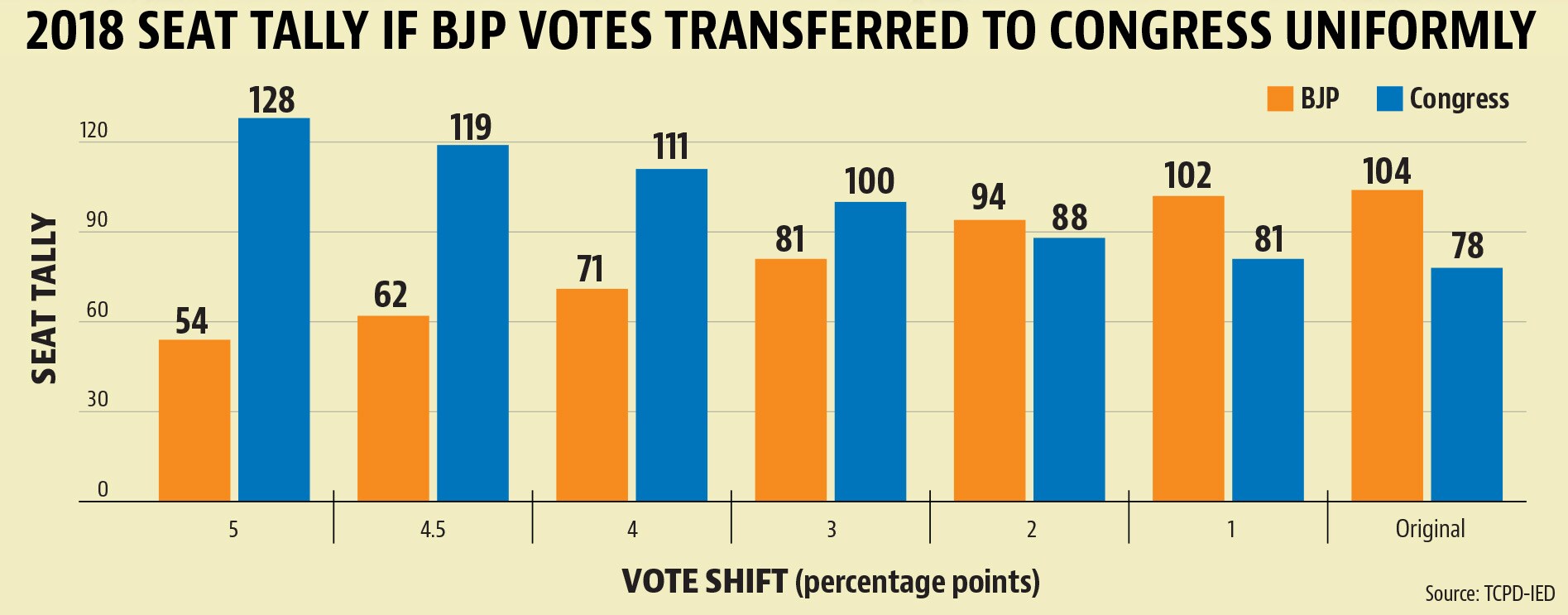
 Will anti-incumbency hurt the BJP?Karnataka has not re-elected a government with a majority since 1978. The current BJP government – it was formed after defections from the Congress and the Janata Dal (Secular), or JD(S), after the 2019 Lok Sabha elections – could face a similar fate if it faces a generalised anti-incumbency across the state. The best way to quantitatively capture anti-incumbency is to look for a uniform negative swing in vote share from the ruling party. This kind of a simulation exercise – it was used in an HT article by political scientist Neelanjan Sircar – shows that even a three percentage point negative swing from the BJP to the Congress will be enough to push the latter past the majority mark. Any increase in vote share for the BJP can of course be interpreted as pro-incumbency. To be sure, vote swings, seldom happen in a uniform way and an opposition party can also gain in elections by other routes such as consolidating opposition votes. If the BJP does not lose much in terms of vote share, then there is good reason to question the anti-incumbency narrative.
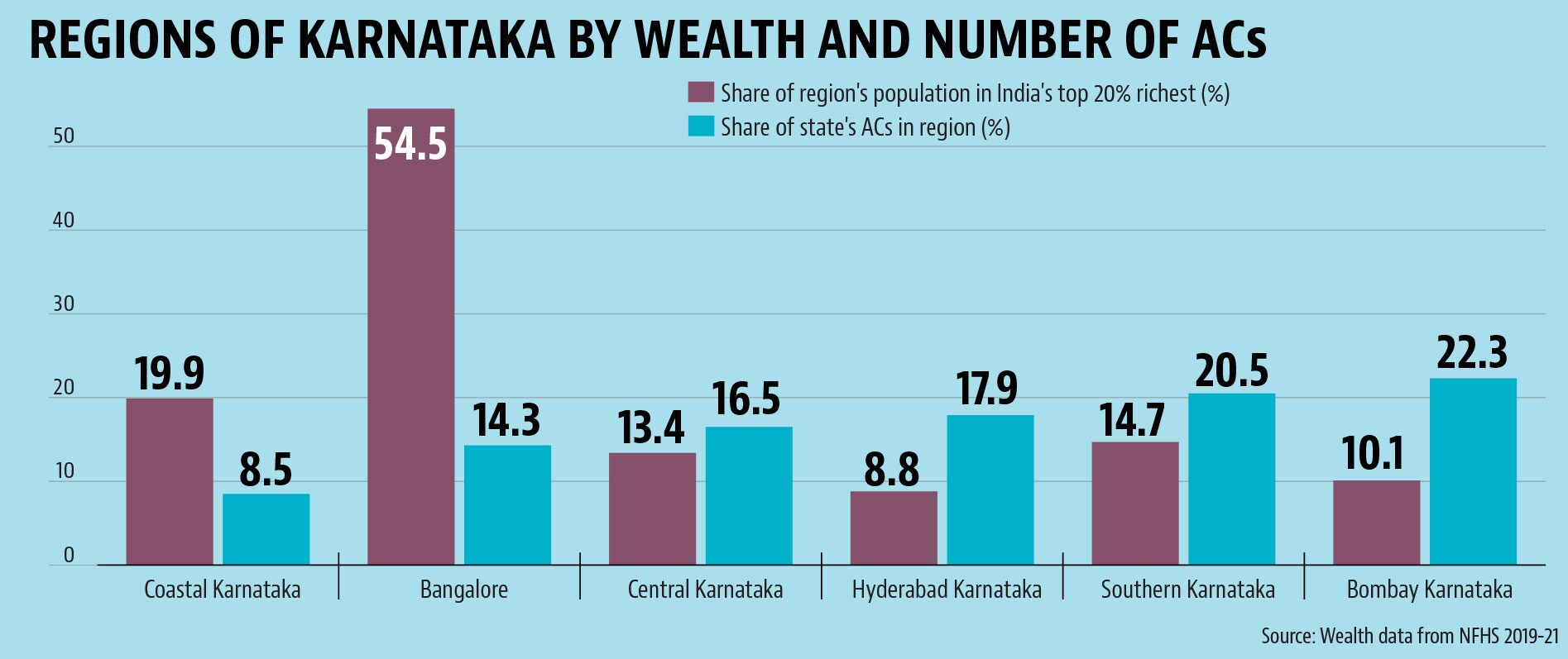
- Will Congress’s five guarantees bring back power for the party?The Congress is fought the elections from what can be described as a pro-poor platform. It promised 200 units of free power, cash transfers for women, 10kg free foodgrains, cash transfers for unemployed youth, and a host of other populist promises. Will they work for the party? Karnataka’s economic geography could matter here. As was shown in an HT analysis, the bulk of Karnataka’s poorer population is expected to be concentrated in the northern half of the state which includes the subregions of Hyderabad-Karnataka, Bombay-Karnataka and Central Karnataka. Even if the BJP retains its ground in coastal Karnataka and the Bangalore region and the JD(S) manages to retain its stronghold in southern Karnataka, the Congress stands to make significant gains in what can be described as the relatively poor belt of the state. If the Congress cannot make big gains in the northern region, one can argue that its campaign was based on a wrong premise.
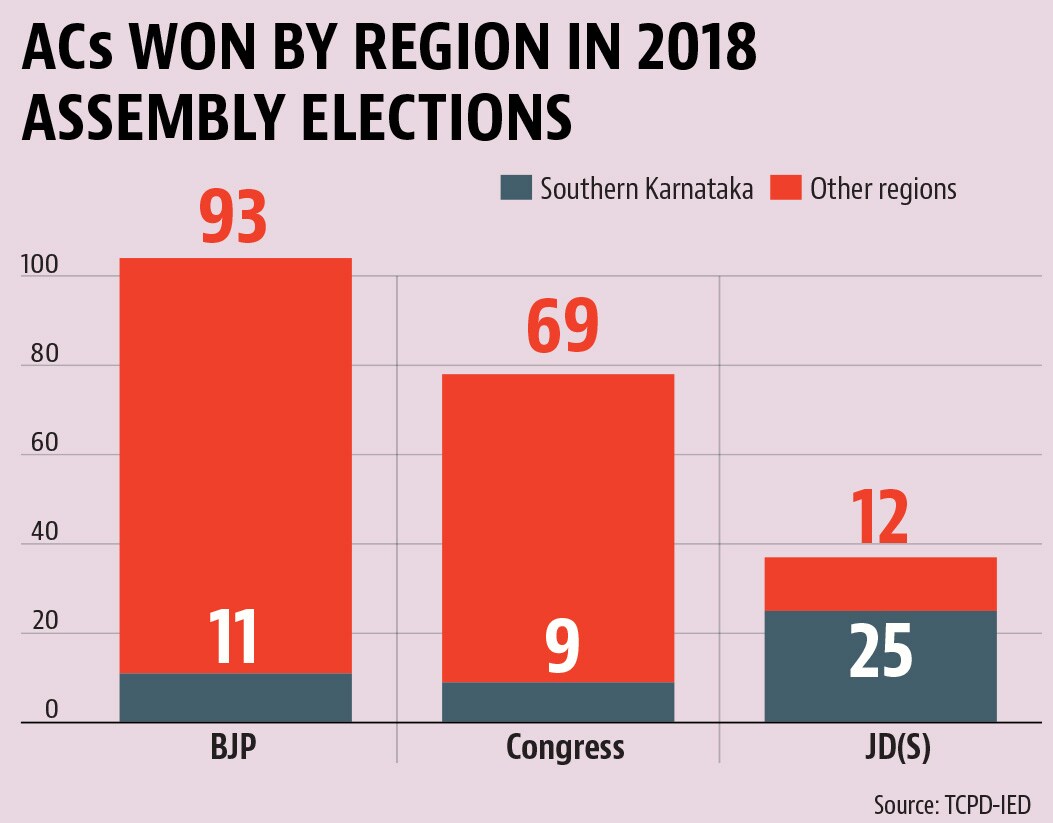
- Will the JD(S) cushion the anti-incumbency impact on the BJP?The JD(S) won 40 and 37 ACs respectively in the 2013 and 2018 assembly elections in the state. In both these elections, at least 50% of JD(S)’s MLAs came from the southern Karnataka sub-region of the state which has 46 ACs, according to a region-wise classification of ACs by Trivedi Centre for Political Data (TCPD) at Ashoka University. This is one region where the BJP has never performed well in assembly elections. Its best tally in the region since 2008 (the earliest elections for which this comparison can be made) was 11 ACs (two more than the Congress) in 2018. The Congress achieved a majority of its own in the 2013 elections because the BJP completely collapsed in other parts of the state. However, a BJP revival in 2018 and the JD(S) holding its ground in southern Karnataka reduced the Congress’s 2018 seat share by 19 percentage points compared to 2013. If the JD(S) manages to hold its ground in this subregion once again, the BJP will have a post-poll cushion if it is able to prevent a 2013-like collapse in the other parts of the state. On the other hand, significant gains by the Congress at the cost of the JD(S) will increase BJP’s problems despite performing better in direct contests with the Congress.