
 E-Paper



Patna's Bihar Museum beats New York’s Met and Paris’ Louvre, secures 9th place on World’s 100 Best Museums 2026 list

 Prefer HTon Google


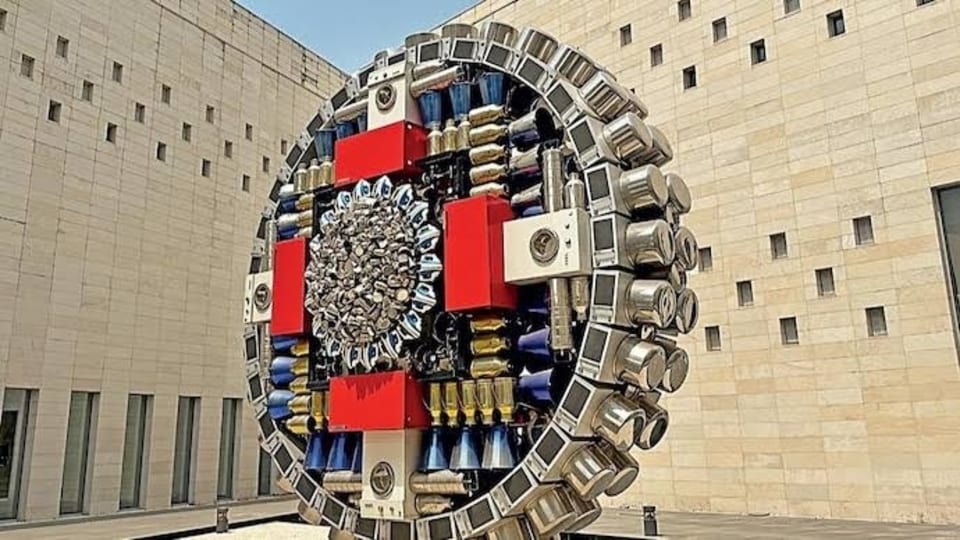
Patna's Bihar Museum has ranked ninth among the world's 100 best museums in 2026, emerging as Asia's top-ranked institution ahead of The Met and the Louvre.
Bihar Museum in Patna has earned a place among the world’s leading cultural institutions, securing the ninth position on the World’s 100 Best Museums 2026 list released by Germany-based travel guide Worth a Journey. The achievement also makes it the highest-ranked museum in Asia, placing it ahead of prominent institutions such as New York’s Metropolitan Museum of Art, which features at 10th place, and the Louvre in Paris, ranked 31st. (Also read: Want to decorate an empty wall? Here's how to choose between statement art and a gallery wall )
Patna’s Bihar Museum named Asia’s top museum in 2026 global list
According to the 2026 list, Mexico City’s Museo Nacional de Antropología secured the top spot, followed by Madrid’s Museo del Prado in second place and Denmark’s Louisiana Museum of Modern Art in third. Russia’s State Hermitage Museum in Saint Petersburg and Vienna’s Kunsthistorisches Museum rounded out the top five.
Bihar Museum is reportedly the only Indian institution to feature on this year’s list of 100 museums. Worth a Journey, a travel guide and magazine based in Munich, publishes rankings across several categories, including museums, libraries, parks, palaces and hotels. Its assessment combines algorithm-based analysis of data from institutions around the world with verification through in-person visits.
Fumihiko Maki on the Bihar Museum
Spread across more than 13 acres in Patna, Bihar Museum was established to preserve and showcase the state’s extensive history, art and cultural traditions. Its design was led by Japanese architect Fumihiko Maki, a recipient of the prestigious Pritzker Architecture Prize, in collaboration with Mumbai-based Opolis Architects.
In a 2017 interview with Architectural Digest India, Fumihiko explained that the team wanted to create something different from the conventional idea of an iconic museum building. Instead, they envisioned Bihar Museum as a campus, a connected landscape of smaller buildings and open spaces that would complement the site. The design brought together four distinct zones, entrance, education, exhibition and administration, linked by seven courtyards. Each courtyard was given its own theme and spatial character, with some designed to preserve existing trees.
Maki also described how the use of deeply recessed openings and contemporary interpretations of traditional jali screens allowed natural light into the connecting spaces while offering protection from the heat. Materials such as Corten steel, Indian granite, sandstone and terracotta were selected to establish a visual connection between the museum's contemporary design and Bihar's heritage.
Reflecting on the project's wider purpose, Maki wrote that the museum would have a lasting educational impact, adding: “The Bihar Museum will have lasting educational impact for visitors from across the world.”
A museum showcasing Bihar’s rich heritage
The museum was inaugurated in 2015, with its development continuing over the subsequent years. Its collections bring together a wide range of historical and cultural material, including archaeological discoveries, sculptures, coins, manuscripts and traditional, folk and contemporary art. The galleries offer visitors an overview of Bihar’s history, tracing its cultural evolution from ancient times to the 18th century.
The museum also features dedicated spaces designed to make the experience engaging for different audiences. Its Children’s Gallery introduces younger visitors to subjects such as wildlife, folk art, science and culture through interactive displays. The Diaspora Gallery, meanwhile, explores Bihar’s connections with communities and cultures beyond the state.
Visitors can also explore a restaurant serving Bihari cuisine and a museum shop offering souvenirs and regional crafts. Beyond its collections, the institution’s architecture and curatorial approach have attracted attention from international visitors and dignitaries. German Ambassador to India Philipp Ackermann has previously praised its architecture, heritage and presentation.


