
 E-Paper



A Buddhist monk shares simple mindfulness practices that go beyond meditation

 Prefer HTon Google


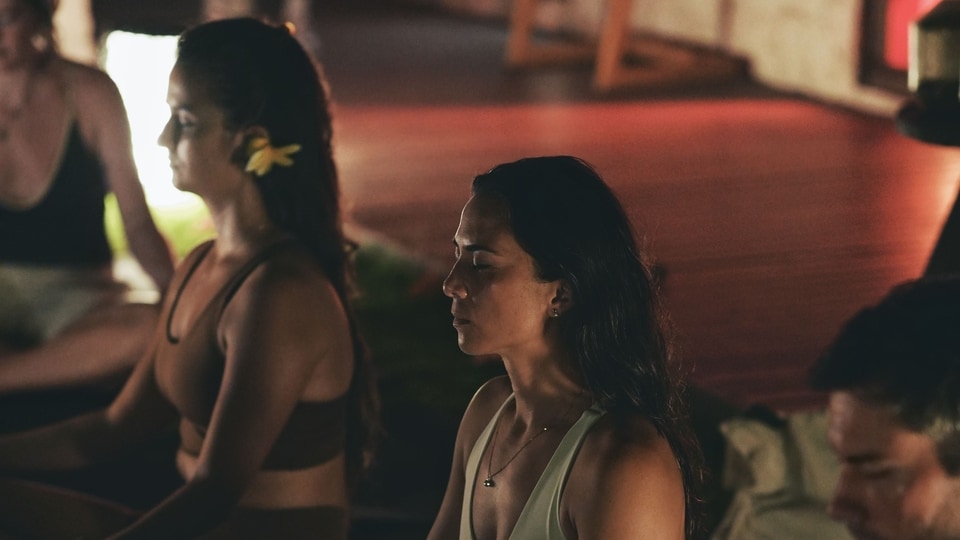
Spiritual practices often turn attention inward, but Mingyur Rinpoche says to the Guardan helping other people can bring a different kind of happiness.
Sometimes you do not need a major life change to feel different. You may simply need to notice what has become too familiar.
A recent Instagram post by the Guardian shares an interview with Tibetan Buddhist monk Yongey Mingyur Rinpoche, who explored this idea through small changes, mindfulness, and a different way of looking at difficult emotions. Rather than suggesting that people completely change their lives, his approach focuses on bringing more awareness to ordinary moments.
That idea also fits with recent mindfulness guidance from Harvard Health and Johns Hopkins. Harvard has highlighted small daily practices that can help bring attention back to the present, while Johns Hopkins describes mindfulness as paying attention to what is happening in and around you without judgment.
For a spiritual practice, that can be a useful shift. You do not always need a long meditation session, a silent retreat or a completely new routine. Sometimes the practice can begin with how you respond to an ordinary Tuesday.
Try one small change for a monotonous lifestyle
Routine can make life easier, but too much repetition can also leave you feeling like you are moving through the day on autopilot.
The Buddhist approach shared by Mingyur Rinpoche suggests making small changes when life starts to feel dull. In the Guardian interview, he gave everyday examples such as taking a different route home or trying a new ingredient while cooking. The point is not to make your life dramatic. It is to become more open to new experiences.
You can try the same idea in a way that feels realistic. Visit a café you have never tried. Read a book from a different genre. Take a new walking route. Talk to someone you normally only greet briefly.
Do you really need silence to meditate?
Many people imagine meditation as sitting alone in a quiet room with closed eyes. But mindfulness does not always have to happen in perfect silence.
Mingyur Rinpoche suggests using sounds and interruptions as part of the practice. Instead of immediately becoming irritated by traffic, construction or another person's conversation, you can notice the sound and bring your attention to it.
This does not mean you have to enjoy every distraction. You can simply notice it.
For example, if you are sitting near an open window and hear traffic, listen to the sound for a few breaths. Notice when your mind starts judging it. Then return your attention to the sound without trying to change it.
What if you stopped fighting uncomfortable feelings?
Mingyur Rinpoche describes emotions such as panic as temporary experiences rather than permanent parts of who you are. He recalls being taught not to fight panic, but to notice physical sensations and allow the experience to pass. This is not a suggestion to ignore serious mental health symptoms or avoid professional help.
As a mindfulness practice, however, you can try noticing what is happening before immediately reacting. Instead of immediately reaching for your phone or trying to distract yourself, take a few seconds to notice the sensation.
Why specific gratitude may feel different
“Be grateful” is easy advice to give, but it can become so general that it loses meaning. A more specific approach is to notice one small thing you genuinely appreciate.
Maybe your morning coffee tasted exactly the way you wanted. Perhaps you had a good conversation with a friend. Maybe the weather was pleasant during your walk. The Guardian article highlights focusing on specific experiences rather than repeating a broad gratitude statement.
You do not even need to maintain a gratitude journal. When something feels good, pause for a few seconds and actually notice it.
Can helping someone else change your day?
Spiritual practices often turn attention inward, but this approach also points outward. Mingyur Rinpoche says helping other people can bring a different kind of happiness. That does not have to mean doing something extraordinary. A small act can be enough.
Send a message to someone you have not spoken to in a while. Help a colleague with a small task. Check on a neighbour. Let someone go ahead of you in a queue. The point is not to collect good deeds or expect something in return. It is simply to move your attention away from yourself for a moment.
How to bring mindfulness into a busy day?
Recent Harvard Healthhas also focused on mindfulness practices that can fit into ordinary routines, rather than requiring large amounts of time.
You can start with one minute. Stop what you are doing. Feel your feet on the floor. Notice your breathing. Listen to the sounds around you. Look at what is directly in front of you.
You do not need to empty your mind. You do not have to chase a completely new life to feel more present in the one you already have.
Sometimes, a small change is enough to make you look at it differently.


