Against the odds 75 years ago, the founders of the Indian Republic set it on the path to becoming a liberal and democratic nation. It has weathered many seasons since, but its robust foundation, laid in the early years, has ensured that it has overcome impossible odds to evolve into one of the world’s leading nations.
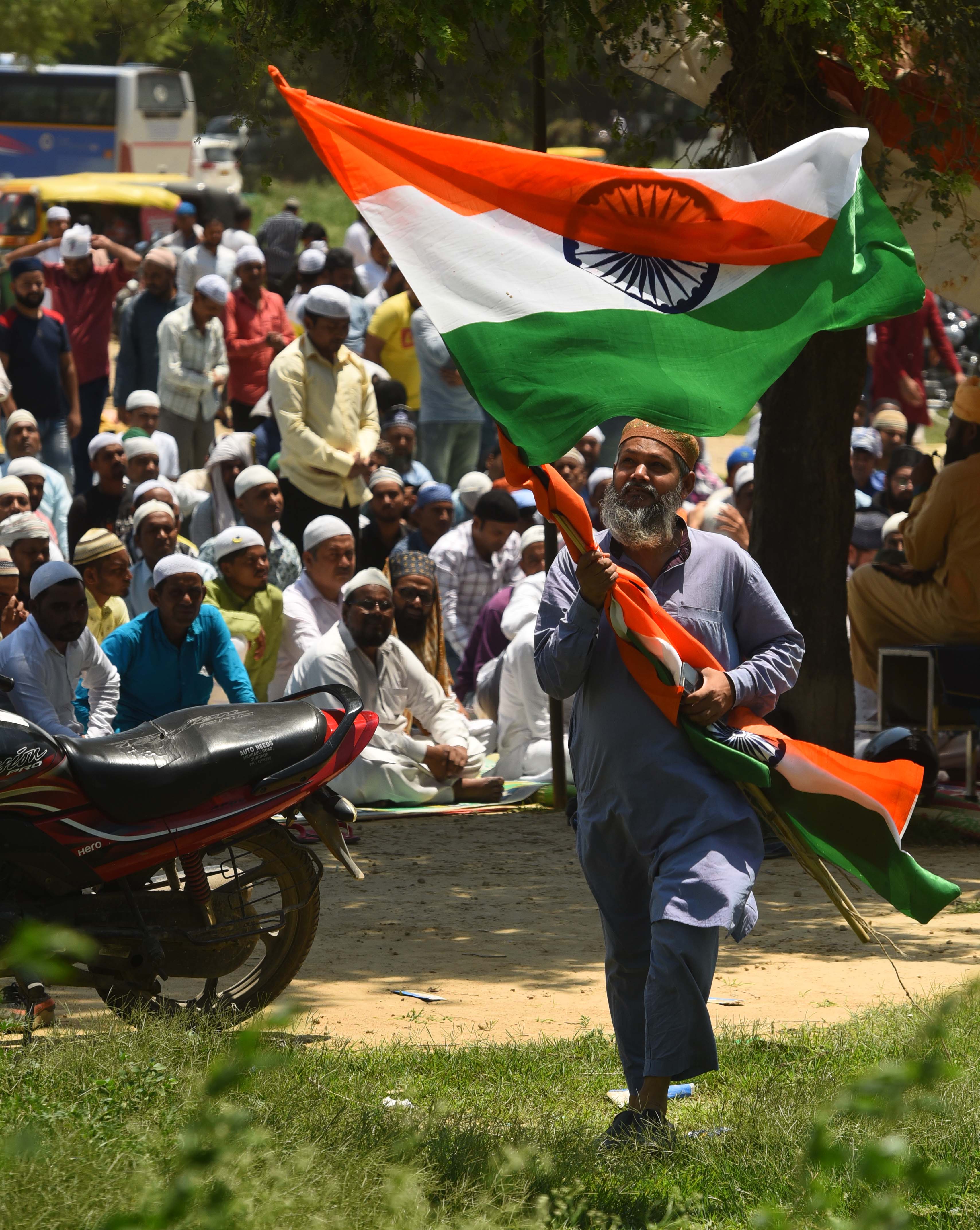
Over the next 25 years, India has to deal decisively with growing economic inequalities, bring greater integrity to its institutions, return to the spirit of social harmony, and widen opportunities and freedoms for all. (HT Photo)
It is now forgotten that many had prophesied that India would fail, as a poor country divided by religion, region, language, caste and tribe that had just emerged from a violent Partition and centuries of colonial exploitation. And yet, India succeeded in becoming a federal, progressive polity that accommodated all aspirations. National integration was achieved while ensuring that our many cultures and identities were strengthened because it was understood that diversity is our strength. Across our differences, every citizen has an equal claim on India.
This generous political imagination was reinforced by a scientific temper that invested in modern agriculture, heavy industry, science and technology. The policy of non-alignment kept India from becoming another arena of superpower competition. It allowed India to thrive as a democracy during the Cold War when so many other countries disintegrated into chaos and dictatorship. India was an influential voice in the global community in its early years, one that became stronger as the nation became stronger and more prosperous.
As challenges emerged, a young and Independent India discovered innovative solutions. The Green Revolution brought about self-reliance as food shortages loomed, while Panchayati Raj made more democratic decision-making possible. When the time was right, the economic controls that had guided the economy in its early years were replaced by liberalisation to stimulate the creative energies of our people and speed up the pace of economic growth. This is not a linear story, but one of responding to our shifting contexts in a fair and inclusive way, with a particular focus on the marginalised.
Under the United Progressive Alliance, we understood that it was important to make sure that resources and opportunities flowed to all citizens in a time of rapid growth and rising inequality. The government invested in health and education and initiatives such as the Mahatma Gandhi National Rural Employment Guarantee Act, the Food Security Act and Accredited Social Health Activists (ASHAs) as well as the Right to Information Act and Aadhaar, improved welfare effectiveness and lifted tens of millions out of poverty. While elites and then Opposition parties ridiculed these measures, they have been a lifeline during the pandemic and times of economic distress.
This nurturing framework, which sustained India for many decades, is now under direct attack. Inequality has never been higher in Independent India. Power has become intensely concentrated over the past eight years in a handful of politicians and businesspersons, which is undermining our democracy and our institutions. Constitutional values and principles are under assault, with the bonds of social harmony being deliberately stretched to breaking point in order to keep voters polarised for electoral gains. The independence of our institutions is being eroded and their role as balancers of the competing demands and aspirations of a wide range of social groups is being intentionally undermined. All too frequently, previously independent authorities have been reduced to tools of the executive, ready to do its bidding in a partisan and heavy-handed way. As a result, election outcomes are being subverted by money power sustained by electoral bonds and cronyism. State agencies turn on any political party that opposes the current dispensation. Painstakingly built public enterprises, which are held in common by all citizens, are being hollowed out and sold to one or two private bidders.
Authoritarian tendencies are becoming clearer, with the erosion of fundamental rights being accompanied by a narrow imposition of conformity and obedience from dutiful citizens. Weaker sections, minorities, women and civil society are under constant attack, supported by significant sections of the media. Parliament is not being allowed to function, forcing discontent to spill onto the streets. This dangerous cocktail will only weaken our national fabric and create openings for India’s internal and external enemies. If democracy is to triumph over oligarchy, we must come together and resist these powerful forces.
Women have made much progress in the last 75 years, but there is still a long way to go. Male violence remains an overriding concern and even now many teenage girls are compelled to drop out of school. Girls are taught that they are secondary, to mute their voices, to deny their selves and depend on men for protection. The government’s patriarchal instincts and view of women solely in traditional gender roles as wife, daughter, sister make a bad situation worse.
These challenges call for a new commitment to the hopes with which this nation was founded. Over the next 25 years, India has to deal decisively with growing economic inequalities, bring greater integrity to its institutions, return to the spirit of social harmony, and widen opportunities and freedoms for all. This means focusing on the real economy, raising employment in core government activities such as health and education, and opening opportunities for the excluded. This could involve a basic income in place of inefficient subsidies, reining in growing monopolies and committing to support job-creating businesses.
In an environment of worsening climate stress and pollution, we have to preserve our forests and commons, address soil and water degradation. We need a democratic environmentalism to make sure that India grows in the right way, creating mass prosperity without sacrificing the well-being of those who come after us.
The future we seek will have to be achieved by us. Patriotism means that we have a stake in each other, and we must unite in this common cause.
India turned 75 on August 15. It is a moment of celebration but also of quiet reflection and planning – to ensure a strong and prosperous India in 2047. As the country stands on the cusp of history, HT brings together India’s top minds with one question – what is your vision for India@100? Their responses will be carried in these pages over the next few months.
Sonia Gandhi is a Member of Parliament and president of the Congress

 E-Paper