
 E-Paper



BJP seeks to reset political narrative with spotlight on development model, economy to avoid reservation battle
The party is seeking to reassure upper-caste voters while retaining support among SC and OBC communities ahead of key electoral battles.

 Prefer HTon Google


The Bharatiya Janata Party (BJP) leadership is keen to reset the political narrative to keep the spotlight on issues such as the government’s “development model” and “accomplishments in the economic and other sectors” to avert being caught in a bind between pro-reservation and anti-reservation groups exerting pressure on the government to meet their demands, said people aware of the details.
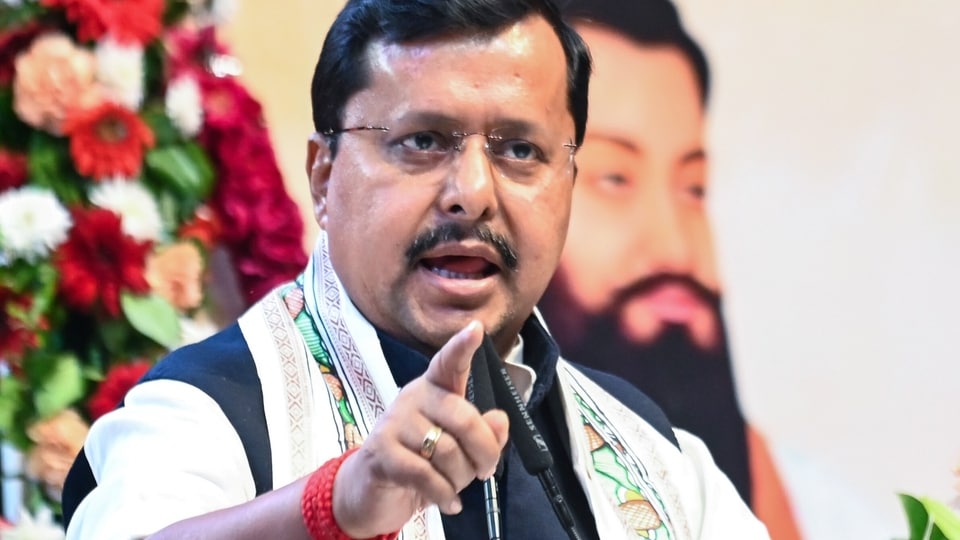
The BJP has successfully used social engineering to give representation to various castes and communities, particularly socially marginalised groups. However, several party leaders said the so-called upper castes (UCs), a core BJP votebank, are showing signs of disenchantment over issues including political representation and are demanding a review of caste-based quotas in government jobs and educational institutions.
“There has been a long-standing demand to revisit the existing quotas for the SC, ST and OBCs, but the discontent among the UCs was exacerbated by the UGC (University Grants Commission) equity regulation (that has been challenged in court)...” a senior BJP functionary said on condition of anonymity.
Paper leaks, quota sub-categorisation add to BJP’s worries
The functionary said the party also faces challenges from continuing anger over paper leaks and irregularities in the education sector, while the issue of sub-categorisation of quotas has triggered a war of words between two NDA allies, the Lok Janshakti Party (LJP) and Hindustani Awam Morcha (HAM).
“…All together these are challenges for the government,” the functionary added.
Last week, HAM leader Jitan Ram Manjhi raised the issue of sub-categorisation and a creamy layer for SCs, claiming quotas were being monopolised by relatively empowered Dalit communities while extremely marginalised groups such as Musahars remained deprived. LJP chief Chirag Paswan opposed the suggestion, saying sub-categorisation would weaken overall Dalit unity.
As tensions between the allies escalated, with both leaders demanding each other’s resignation, concerns within the BJP also grew.
Also read: Back BJP’s ‘double-engine model’ for Punjab’s development: Poonia
Party cadres told to focus on economic, development gains
A second BJP functionary said party cadres had been instructed to avoid getting caught between pro- and anti-reservation groups and instead focus on “7.8% GDP, infrastructure gains and other development issues.”
“We will go to the people with the details of the policy decisions taken to improve the lives of the marginalised. But we also want the UCs to acknowledge that the government has made efforts to address their concerns as well,” the functionary said.
Also read: BJP will strike deal with SAD to bring back 3 farm laws: Mann
EWS quota offered economic criterion for reservation
In 2019, the Union government introduced a 10% quota for the Economically Weaker Sections (EWS). Introduced through the 103rd Constitutional Amendment Act, the quota intended to meet the UCs demand to make economic criteria a condition for reservation.
Last week, Union minister JP Nadda met representatives of the group behind the ‘Reservation Hatao Andolan’ at Jantar Mantar on August 21. The group has demanded that caste-based reservation in education and government jobs be replaced with quotas based on income.
The government did not disclose details of the meeting. Nadda, however, said in a social media post that the sides would “meet again soon.”
Also read: ‘Assist the poor, irrespective of caste’: 5 demands at Reservation Hatao Andolan in Delhi
BJP wary of repeating 2024 reservation narrative
A third BJP leader from poll-bound Uttar Pradesh, where caste and reservation are key electoral issues, said the party was walking a tightrope.
“We saw what happened in the 2024 Lok Sabha election when we could not counter the Opposition’s narrative that we wanted to change the Constitution and scrap reservation (the BJP failed to get a majority on its own). Last month we lost the Bankipur bypoll (in Bihar) because the UCs were upset. This is a challenging situation for us and in UP where SC and OBCs together are a decisive force but the UCs can also sway the outcome,” the leader said.
Also read: Nadda reaches out to group seeking income-based quotas over caste reservations
Caste arithmetic makes balancing act harder
According to the 2011 Census, OBCs are estimated to account for 45-50% of the population, UCs around 20%, SCs 20.7% and STs 0.5%.
The BJP is also facing sustained pressure from the Opposition to revisit reservation policies based on population.
The Congress has been demanding “jitni abadi, utna haq” (proportional representation based on population). It has also called for scrapping the Supreme Court-mandated 50% cap on reservation through a constitutional amendment to enable reservation based on population share.


