E-Paper



Australia brought in the giant sensitive plant as an ornamental curiosity; it has affected 140,000 hectares, with 4.6 million hectares at risk
Brought to the Northern Territory in the late 1800s as an ornamental curiosity, mimosa now affects up to 140,000 hectares, with 4.6 million at risk.

 Prefer HTon Google


Sometimes a plant that looks interesting can end up becoming a huge headache. According to the Northern Territory Government, mimosa (Mimosa pigra), also known as the giant sensitive plant, was deliberately introduced to the Northern Territory in the late 1800s as an ornamental curiosity. Up to 140,000 hectares of land are now estimated to be affected. Up to 4.6 million hectares of Australian land are considered at risk of infestation.

A plant with a thorny side
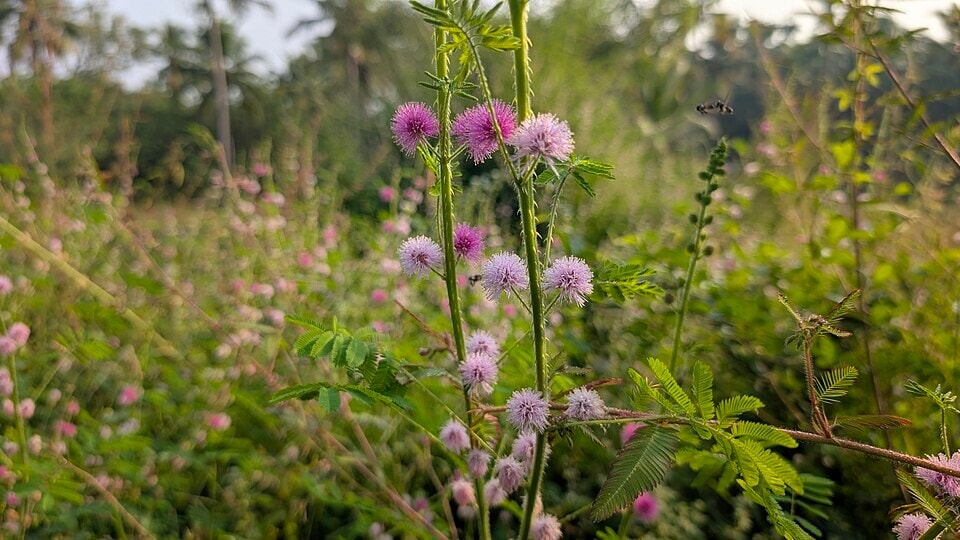
Mimosa is native to tropical America, ranging from Mexico to northern Argentina. Its fern-like leaves close when touched, and its fluffy round flower heads are pink to mauve. But the plant is also spiny. Adult plants are shrubs, branching, up to 6 meters high. Each flower head has up to 100 little flowers. The government says that, under the right conditions, mimosa can form dense, thorny thickets dominated by a single species.
How far it has spread
The Northern Territory Government explains that up to 140,000 hectares of land in the territory are already impacted. That’s 10 percent of the territory’s wetlands. Mimosa has invaded 15 catchments and three islands. It is well established in many river systems across the Top End, including the Daly, Mary and Adelaide rivers. Two known outbreaks are outside the territory. One is at Lake Proserpine in eastern Queensland, and the other is near Kununurra in Western Australia. Both outbreaks are actively managed. The government says mimosa could spread through wetland areas across northern Australia.
Deep Dive

Why it moves so fast
The seeds are a big reason. A single plant can produce 200,000 seeds a year. They can be transported by water, machinery, vehicles, animals and people. When the first rains come, most seeds sprout. But the seeds are protected by a tough outer coating and so can lie dormant in sandy soils for as long as 20 years.
A 1993 study by W. M. Lonsdale in the Journal of Ecology examined the rate of movement of mimosa. It studied wetlands in the floodplains of the Adelaide River, some 70 kilometers (43 miles) east of Darwin. Using aerial photographs, the author found that in five of six years the plant spread an average of 76 meters or more a year in the wetland system. A model also indicated that, with wind alone, a stand would expand by at most 18.3 meters a year.
The damage and the reaction
The spread of mimosa has damaged wetland ecosystems, pasture production, conservation land management and social and cultural land use. Dense thickets can overgrow grasslands and reduce the carrying capacity of floodplain pasture. They can keep people and animals out of areas, make mustering more difficult and limit Indigenous people’s ability to harvest bush food.
Mimosa is a Weed of National Significance. A statutory weed management plan outlines the legal control requirements. Control methods include herbicides, hand pulling, bulldozing and fire. Biological control is also being tried. Since the start of mimosa biocontrol research in 1979, a total of 15 agents have been released, including 13 insects and two fungal pathogens. Currently, nine are actively working to reduce the growth, spread and seed production of mimosa, and the government says some have been very successful. There has been a wide range of projects involving Indigenous land managers, the pastoral sector and the Territory Government.
Everyday habits also count. The government advises people to remove mud, which can carry seeds, from boats and vehicles before traveling to a new area and to avoid driving through infested areas. If you fish, boat, or travel through wetland country, those are simple habits worth keeping.