
 E-Paper



‘Thin-fat’ Indians? Health coach on why ‘40 is new 60 for Indian metabolism’; diabetes, fatty liver rising at young age

 Prefer HTon Google


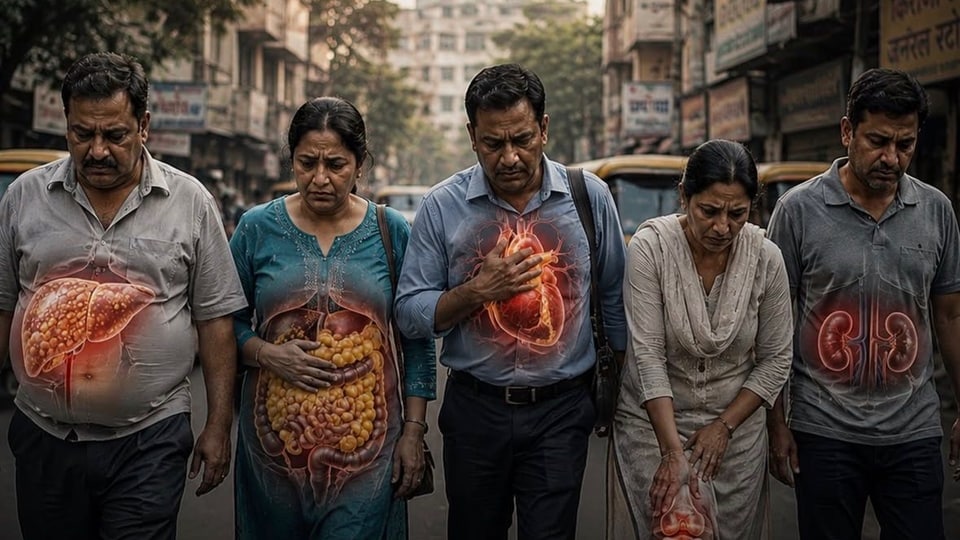
Young Indians are facing diabetes, fatty liver and heart disease, even at normal weights. Health coach Adithya Nataraj explains the role of metabolic health.
Indians are increasingly developing lifestyle-related health conditions at a younger age, with insulin resistance, type 2 diabetes, fatty liver disease, obesity and cardiovascular disease becoming growing concerns. Health coach Adithya Nataraj says the issue is not simply about body weight, but what is happening metabolically beneath the surface.
“We develop these diseases years earlier than the West. Across India, we're seeing earlier diabetes, earlier heart disease, more insulin resistance, rising fatty liver and climbing obesity, often a full decade sooner than Western populations,” Adithya shares in his September 2 Instagram post. (Also read: Why two Indians of the same age can look worlds apart: Doctor explains how muscle mass may shape the way you age )
Why being slim doesn’t always mean being metabolically healthy
According to him, metabolic problems can affect people who appear slim or have a BMI within the normal range. “And we develop them at a lower body weight. You can look slim, have a ‘normal’ BMI, and still carry the metabolism of someone much heavier,” he says. This is why, he argues, looking only at weight or BMI may not provide a complete picture of an individual's metabolic health.
Adithya believes there is no single reason behind this trend. “It isn’t one villain. Genetics, environment and lifestyle stack on top of each other — all pointing in the same direction,” he says. “Same diseases, younger, and slimmer bodies. That’s the real Indian health story.” He describes it as a mismatch between the body’s adaptations to scarcity and today’s environment of abundant, easily available food.
“Built for famine, now living in constant abundance,” Adithya says. He points to the ‘thin-fat phenotype’, where a person may have relatively low muscle mass while carrying more body fat despite appearing lean. “Scarcity didn’t change our genes. It changed how babies are built in the womb. Low muscle, preserved fat. Researchers call this the thin-fat phenotype,” he says.
According to Adithya, this becomes more significant in a world where food is constantly available, and physical activity has declined. “Today, with food available every hour and almost no physical work, the same wiring quietly works against us,” he says. “We became overfed and undernourished in a single generation.”
Traditional Indian food vs today’s modern plate
He also distinguishes traditional Indian diets from today’s increasingly processed food environment. “The problem was never our traditional food. It’s the modern version of it,” he says.
Traditional diets often included millets, dals, vegetables, fermented foods, dairy and seasonal produce, while today’s plates may contain more refined flour, sugar, packaged snacks and ultra-processed foods. “In a single generation, the Indian plate flipped, traditional to industrial, whole to refined, seasonal to packaged. The body never got the memo,” Adithya says.
Another concern, he says, is the decline in everyday movement. “We sit 8–10 hours a day, rarely strength train, and walk far less than any generation before us,” he says. Skeletal muscle plays an important role in glucose uptake, making muscle maintenance relevant to metabolic health. “We lost the organ that protects our metabolism. Muscle is the glucose vault,” Adithya says.
He describes the potential cycle as a metabolic loop: “Less muscle → less glucose storage → higher insulin → more fat stored → faster metabolic ageing.” He says the cycle can worsen with continued inactivity, poor nutrition and muscle loss. “Once this loop starts, it accelerates. Each year of unaddressed muscle loss makes the next year worse. The body ages faster than the calendar says,” he says.
Diabetes, fatty liver and heart disease: different outcomes, shared risk factors
Nataraj says metabolic dysfunction can manifest in several ways:
- Type 2 diabetes: Insulin resistance can progress to prediabetes and type 2 diabetes, showing up in Indians in their 30s and 40s. Skinny bodies, hidden fat, rising sugar.
- Fatty liver: Fat storage in the liver can lead to fatty liver, now common even in lean, young Indians.
- Heart health: He highlights factors such as chronic inflammation and elevated Lp(a). Chronic inflammation + high Lp(a) can lead to damaged arteries and early heart attacks.
- Hormonal health: He points to PCOS, falling testosterone and thyroid-related concerns, which he says are linked to insulin resistance.
- One metabolic clock: These aren’t four separate problems. They’re one accelerated metabolic clock ticking beneath the surface.
How to improve metabolic health
Nataraj recommends focusing on muscle, movement, nutrition, sleep and stress:
1. Build muscle: Strength train 3–4 times a week. The single biggest lever you have against metabolic ageing.
2. Prioritise protein: Eat protein at every meal. 25–30g per meal. This is what holds the muscle you build.
3. Walk regularly: Walk daily and again after meals. 8,000–10,000 steps a day, plus a 10-minute walk after every meal.
4. Sleep well: Sleep 7–8 hours. Your nightly repair and hormone-reset window.
5. Choose whole foods: Dal, sabzi, millets, fermented food and seasonal fruit over packaged snacks.
6. Manage stress: Yoga, breathwork, time outdoors. Lower the cortisol that ages you from the inside.
Ultimately, Adithya says metabolic health cannot be judged by appearance or body weight alone. “You can’t change your genes. But you decide what they hear.”
Note to readers: This article is for informational purposes only and not a substitute for professional medical advice. Always seek the advice of your doctor with any questions about a medical condition.
This report is based on user-generated content from social media. HT.com has not independently verified the claims and does not endorse them.


Catch your daily dose of Fashion, Taylor Swift, Health, Festivals, Travel, Relationship, Recipe and all the other Latest Lifestyle News on Hindustan Times Website and APPs.


